
MCH Test: Meaning, Normal Range, Low & High MCH Causes, Symptoms, and Complete Medical Guide
What Is the MCH Test?
The MCH test, or Mean Corpuscular Hemoglobin test, looks at the average amount of hemoglobin contained within each red blood cell. Hemoglobin is the protein responsible for carrying oxygen from the lungs to tissues throughout the body. While some blood tests focus on how many red blood cells are present, MCH helps assess how well each individual cell is equipped to perform its role.
This value is routinely reported as part of a Complete Blood Count (CBC). In day-to-day clinical work, doctors use MCH to better understand patterns seen in anemia. A lower value suggests that red blood cells are carrying less hemoglobin than expected, while a higher value points toward cells that contain more hemoglobin, often because they are larger or formed differently. On its own, MCH does not provide a diagnosis, but it offers useful direction when interpreting blood results.
How MCH Is Determined
MCH is not produced by the body. It is a calculated laboratory value based on two measured parameters: the hemoglobin level and the red blood cell count. Automated analyzers perform this calculation as part of routine CBC testing.
Although the calculation happens inside the laboratory, the factors that influence MCH originate within the body. Red blood cell production in the bone marrow, availability of key nutrients, and the normal development of red cells all affect how much hemoglobin ends up in each cell. Because of this, MCH reflects the quality of red blood cell formation rather than the total number of cells alone.
Importance of the MCH Value
MCH plays a supportive role in helping clinicians interpret blood reports in a structured way.
Helps Classify Anemia Types
Doctors often use MCH to broadly group anemia patterns. Lower values suggest cells with reduced hemoglobin content, while higher values suggest cells that are relatively hemoglobin-rich. These patterns help narrow the clinical focus.
Shows Hemoglobin Distribution in Cells
MCH provides insight into how much hemoglobin is present within individual red blood cells. This can help differentiate between conditions that may appear similar on basic testing but differ in red cell quality.
Works With Other CBC Values
MCH is interpreted alongside MCV, MCHC, hemoglobin, and RBC count. Together, these values offer a clearer and more reliable picture of overall blood health than any single parameter.
Helps Detect Early Changes
In some situations, changes in MCH may be noticed before more obvious abnormalities develop. This makes it useful during routine health checks or ongoing monitoring.
Causes of Low MCH (Hypochromic Anemia)
Low MCH indicates that red blood cells contain less hemoglobin than normal, often appearing paler under microscopic examination. Clinically, this pattern points toward reduced hemoglobin formation rather than a simple drop in red cell numbers.
Iron deficiency is the most common association, as iron is essential for hemoglobin synthesis. Long-standing blood loss can gradually deplete iron stores and lead to similar findings. Inherited conditions affecting hemoglobin production, such as thalassemia, may also show low MCH even when iron levels are adequate.
Less commonly, interference with red blood cell production due to chronic medical conditions or toxic exposure may influence MCH values. Doctors focus on identifying the underlying process rather than the laboratory number alone.
Symptoms of Low MCH
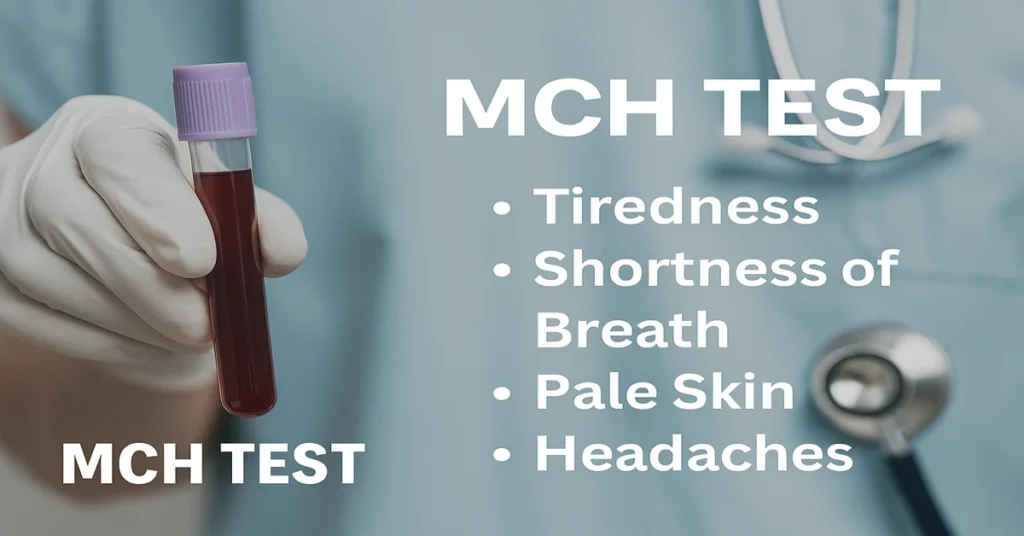
Symptoms linked with low MCH generally reflect reduced oxygen delivery. People may notice ongoing tiredness, weakness, shortness of breath with routine activity, or difficulty maintaining concentration. Pale skin, cold extremities, dizziness, or a faster heartbeat may also occur.
From a clinical perspective, these symptoms tend to progress gradually and are assessed in combination with other blood findings.
Causes of High MCH (Hyperchromic Anemia)
High MCH means that individual red blood cells contain more hemoglobin than usual. This pattern is often seen when red blood cells are larger or develop abnormally.
Vitamin B12 and folate deficiencies are common contributors, as these nutrients are essential for proper red blood cell maturation. Liver conditions, thyroid disorders, prolonged alcohol exposure, and certain medications can also influence cell development and increase MCH values.
In practice, a high MCH prompts doctors to review the broader clinical context and related blood indices before drawing conclusions.
Symptoms of High MCH
Symptoms associated with high MCH are often nonspecific and may overlap with other forms of anemia. Persistent fatigue, reduced mental clarity, and changes in skin tone are commonly reported. In some cases, nerve-related symptoms such as tingling or numbness may be present, particularly when vitamin B12 deficiency is involved.
Clinically, these symptoms reflect altered red blood cell development rather than excess oxygen delivery.
Normal MCH Reference Range
Reference ranges may vary slightly between laboratories, but commonly accepted values include:
- Normal MCH: 27 – 33 picograms (pg) per cell
- Low MCH: Below 27 pg
- High MCH: Above 33 pg
These ranges help identify patterns and guide further interpretation alongside other CBC parameters.
Sample Type and Collection
- Sample Required: Whole blood
- Collection Tube: Lavender-top EDTA tube
Blood is drawn from a vein, usually in the arm. The MCH value is automatically generated as part of the CBC report. The procedure is routine, and results are often available the same day.
Test Preparation
No fasting is required for an MCH test. Hydration status is considered during result interpretation. Doctors also review medications, alcohol use, and relevant medical history when assessing MCH values.
Additional blood tests may be ordered depending on the overall CBC pattern, but MCH is typically evaluated as part of a broader assessment.
When to Consult a Doctor
Medical advice is recommended if unexplained fatigue, weakness, pallor, or neurological symptoms persist. Follow-up is also important when MCH values remain consistently outside the reference range on repeated testing.
People with chronic medical conditions, inherited blood disorders, or those requiring regular monitoring are often assessed more closely to ensure accurate interpretation.
Important Word Explanations
- Hypochromic: Describes red blood cells that contain less hemoglobin than normal.
- Hyperchromic: Describes red blood cells that contain more hemoglobin than normal.
- Picogram (pg): A unit used to measure very small quantities, such as hemoglobin content per cell.
- Erythropoietin: A hormone that supports red blood cell production in the bone marrow.
- CBC (Complete Blood Count): A blood test that measures multiple components of blood, including red cells, white cells, and platelets.
~END~
I dugg some of you post as I thought they were extremely helpful very helpful