
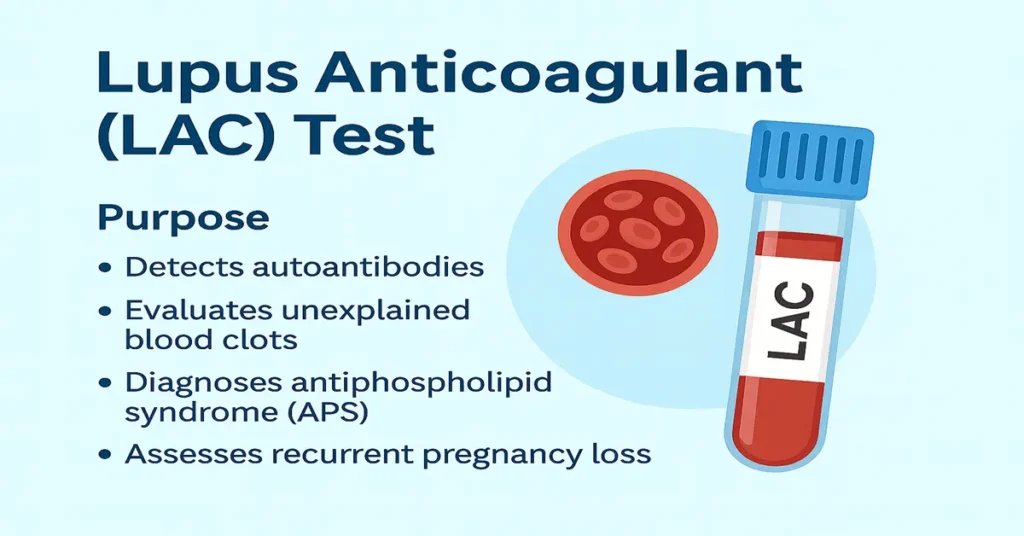
Overview
The Lupus Anticoagulant (LAC) Test is a specialized blood test used to detect abnormal antibodies known as lupus anticoagulant antibodies. These antibodies are not normally present in healthy individuals. They develop when the immune system becomes misdirected and begins reacting against the body’s own clotting-related proteins.
Despite the name, a positive lupus anticoagulant test does not mean that a person has lupus. Many individuals with LAC do not have systemic lupus erythematosus (SLE). Instead, this test is most often used when doctors are evaluating unexplained blood clots, repeated pregnancy loss, or abnormal clotting test results, particularly when Antiphospholipid Syndrome (APS) is suspected.
Because abnormal clotting can lead to serious and sometimes life-threatening complications, the LAC test plays an important role in identifying people who may be at increased risk and need closer medical follow-up.
What Is the Lupus Anticoagulant (LAC) Test?
The LAC test looks for antibodies that interfere with phospholipids—fat-like molecules that are essential for normal blood clotting in laboratory tests.
When these antibodies are present, they can prolong clotting times in tests such as aPTT or dRVVT, making the blood appear to clot more slowly in the lab. Paradoxically, inside the body, these same antibodies increase the risk of abnormal clot formation. This contrast between laboratory findings and real-world clotting risk is a key feature of lupus anticoagulant antibodies.
The test helps clinicians determine whether clotting abnormalities are related to an autoimmune process rather than inherited clotting disorders, trauma, or temporary illness.
Where Are Lupus Anticoagulant Antibodies Produced?
Lupus anticoagulant antibodies are produced by the immune system, mainly by certain white blood cells involved in antibody production. They are not generated by organs such as the liver or kidneys.
Their development reflects immune dysregulation, in which the body mistakenly forms antibodies against its own clotting-related structures. Possible contributing factors include autoimmune conditions, infections, genetic susceptibility, and exposure to certain medications. In many patients, however, no clear trigger is identified.
Why Is the LAC Test Important? (Main Functions & Clinical Use)
Lupus anticoagulant antibodies do not serve a protective role. Their importance lies in what they signal clinically.
They interfere with clotting tests, leading to prolonged clotting times that prompt further investigation. More importantly, their presence is associated with an increased risk of blood clots in veins and arteries.
Detection of LAC is a key step in diagnosing Antiphospholipid Syndrome, an autoimmune condition linked to thrombosis and pregnancy-related complications. Identifying these antibodies helps doctors assess clotting risk and plan appropriate monitoring. In patients with known LAC, repeat testing is often used to confirm persistence of the antibodies over time.
Causes of Low or Negative LAC Levels
A negative LAC result is considered normal. It usually indicates that lupus anticoagulant antibodies are not present at detectable levels.
This may reflect the absence of autoimmune clotting activity, remission of a previously active condition, or testing performed during a period when antibodies are temporarily undetectable. Very early disease can occasionally produce negative results, which is why clinical context remains important.
Symptoms When LAC Is Low or Negative
There are no symptoms directly related to a low or negative LAC result. If symptoms such as clotting or pregnancy complications are present despite a negative test, doctors look for other explanations.
Causes of High or Positive LAC Levels
A positive LAC test is most commonly associated with Antiphospholipid Syndrome. It may also be seen in some people with systemic lupus erythematosus, though not all lupus patients have LAC.
Transient positivity can occur during certain infections or with the use of specific medications, such as some antibiotics or anti-seizure drugs. In rare cases, malignancy may be associated with these antibodies. Because temporary positivity is possible, repeat testing after at least 12 weeks is usually recommended to confirm persistence.
Symptoms When LAC Is High
Symptoms related to a positive LAC test arise from abnormal clot formation rather than from the antibodies themselves. These may include leg pain or swelling from deep vein thrombosis, sudden chest pain or breathlessness from pulmonary embolism, or neurological symptoms such as weakness or speech difficulty due to stroke or transient ischemic attack.
In pregnancy, LAC may be associated with recurrent miscarriages or complications such as preeclampsia. Some individuals also develop characteristic skin changes, such as mottled or purplish patterns. Severe clotting events require urgent medical care.
Reference Ranges
Results are typically reported as:
- Negative: Lupus anticoagulant not detected
- Positive: Lupus anticoagulant detected
Interpretation relies on a combination of tests rather than a single value. These often include dRVVT, aPTT, mixing studies, and confirmatory phospholipid-neutralization assays. Doctors consider the full testing profile together with clinical findings.
Sample Type
The test is performed on a plasma blood sample, collected in a citrate (light blue-top) tube to prevent clotting before analysis. Other sample types are not used.
Test Preparation
Fasting is usually not required. Patients should inform their doctor about current medications, especially blood thinners, hormonal therapies, or anti-seizure drugs, as these can influence results. Medications should never be stopped without medical advice. Pregnancy or plans for pregnancy should also be discussed before testing.
When to Consult a Doctor
Medical evaluation is important if symptoms such as leg swelling, chest pain, sudden shortness of breath, severe headache, stroke-like symptoms, or repeated pregnancy loss occur. Skin changes or unexplained abnormal clotting tests also warrant assessment.
Emergency care is required for signs of stroke, severe breathing difficulty, sudden collapse, or other symptoms suggestive of a major clotting event.
Important Word Explanations
- Autoantibody: An antibody that mistakenly targets the body’s own tissues
- Thrombosis: Formation of a blood clot within a blood vessel
- DVT: A clot in the deep veins, usually of the legs
- Pulmonary embolism: A blood clot that travels to the lungs
- APS: An autoimmune disorder associated with clots and pregnancy complications
- aPTT / dRVVT: Laboratory tests used to evaluate blood clotting time
~END~
Related Posts
None found