
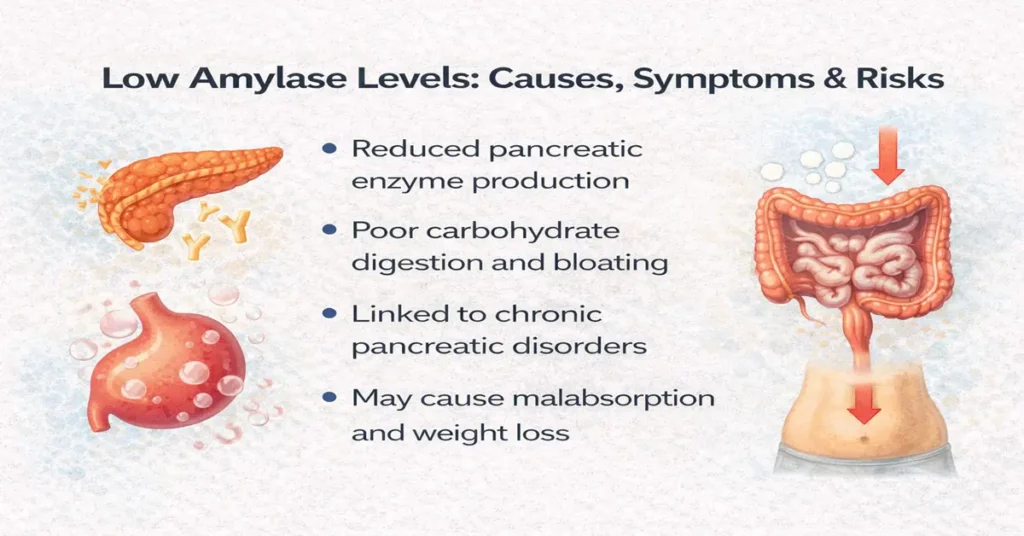
Causes and Symptoms of Low Amylase Levels
Amylase is a digestive enzyme that helps break down carbohydrates into simpler sugars so the body can absorb and use them for energy. It is produced mainly by the pancreas, with a smaller contribution from the salivary glands. When amylase levels fall below the normal range, it can reflect reduced enzyme production, impaired release, or long-standing digestive or pancreatic issues.
Low amylase levels are discussed less often than high amylase, mainly because they are less dramatic in presentation. Still, in routine lab practice, persistently low values—especially when symptoms are present—do carry clinical meaning. They should never be ignored or interpreted in isolation.
Overview of Low Levels
Low amylase means the body is producing or releasing less enzyme than expected. Since amylase plays a role in carbohydrate digestion, reduced levels may affect how efficiently food is broken down in the gut.
Clinically, many people with mildly low amylase feel completely normal. These results are often picked up incidentally during routine blood work. Doctors usually pause here and correlate the value with symptoms, nutritional status, and other enzyme levels before attaching significance.
Concern increases when low amylase is persistent, clearly below the reference range, or accompanied by digestive complaints. In such cases, it may reflect reduced pancreatic reserve rather than a temporary fluctuation.
Major Medical Causes of Low Amylase Levels
One of the most common causes is chronic pancreatitis. Long-standing inflammation gradually damages enzyme-producing cells, leading to reduced amylase output over time.
Advanced pancreatic damage, fibrosis, or long-term structural disease can also lower amylase levels. Patients who have undergone pancreatic surgery may show permanently reduced enzyme levels due to loss of functional tissue.
Severe malnutrition, especially prolonged protein deficiency, can impair enzyme synthesis. In routine practice, this is sometimes seen in individuals with chronic illness or poor nutritional intake.
Liver disease may indirectly influence amylase levels by affecting overall metabolism and digestion. Conditions affecting salivary gland function can also contribute, though this usually causes only a mild reduction since pancreatic amylase forms the major share.
Symptoms Seen in Low Levels
Symptoms, when present, usually relate to digestion rather than the enzyme value itself. Common complaints include bloating, excessive gas, and a heavy or uncomfortable feeling after meals, particularly carbohydrate-rich meals.
Some people experience loose stools or diarrhea due to incomplete digestion. Over time, poor digestion can lead to unintended weight loss.
Abdominal discomfort after eating is common when an underlying pancreatic condition exists. Fatigue and low energy may develop if calorie absorption is consistently reduced.
It is important to remember that low amylase itself does not cause symptoms. The symptoms reflect the underlying condition responsible for reduced enzyme production.
Health Risks of Persistently Low Levels
Persistently low amylase, when linked to digestive inefficiency, can contribute to long-term nutritional imbalance. Poor carbohydrate digestion may reduce overall calorie availability.
If other digestive enzymes are also affected, the risk of broader malabsorption increases, potentially leading to vitamin and mineral deficiencies.
When low amylase reflects chronic pancreatic disease, additional risks may include progressive digestive dysfunction, worsening abdominal symptoms, and metabolic complications over time.
Early recognition allows doctors to intervene before these issues significantly affect quality of life.
How Levels Are Safely Addressed
Amylase is an enzyme, not something that should be artificially “boosted.” Safe management always focuses on identifying and addressing the underlying cause.
In cases of pancreatic insufficiency, doctors may prescribe digestive enzyme replacement to support digestion. This helps symptoms but does not change the underlying enzyme production.
From a practical standpoint, maintaining good nutrition, avoiding alcohol excess, and managing known pancreatic or liver conditions under medical supervision are the most effective ways to support digestive enzyme balance.
Self-directed enzyme use or unverified remedies are not recommended.
Additional Information
Low amylase is often assessed alongside lipase, another pancreatic enzyme. In routine lab interpretation, normal lipase with low amylase is usually less concerning than when both are reduced.
Because enzyme levels can fluctuate, repeat testing is common before drawing conclusions. Imaging or additional tests may be suggested if symptoms persist or worsen.
Doctors always look at the overall clinical picture rather than a single lab number.
Test Preparation
Amylase testing usually requires minimal preparation. Some laboratories advise short fasting, depending on protocol.
Alcohol should be avoided before testing, as it can influence pancreatic enzyme levels. Patients should inform their healthcare provider about all medications and supplements, as some can affect results.
Following lab instructions improves reliability of the report.
When to See a Doctor
Medical advice should be sought if there is persistent bloating, unexplained weight loss, chronic diarrhea, or abdominal discomfort.
People with a history of pancreatic disease, heavy alcohol use, or pancreatic surgery should take low amylase results seriously, even if symptoms are mild.
Early evaluation helps prevent long-term digestive complications.
Sample Type
Amylase is most commonly measured using a blood sample drawn from a vein in the arm. In selected cases, urine amylase testing may be used for additional assessment.
Results are always interpreted alongside other tests and clinical findings.
Important Word Explanations
Amylase: A digestive enzyme that breaks down carbohydrates into simpler sugars
Pancreas: An organ that produces digestive enzymes and hormones related to blood sugar control
Chronic Pancreatitis: Long-term inflammation of the pancreas leading to reduced enzyme production
Malabsorption: Poor absorption of nutrients from food
Enzyme Supplement: A prescribed aid used to support digestion when natural enzymes are low
People Also Ask
Is a low amylase level serious?
Not always. Mildly low levels without symptoms are often not clinically significant.
Can low amylase be temporary?
Yes. Levels can fluctuate and may return to normal on repeat testing.
Does low amylase always mean pancreatic disease?
No. It can occur with nutritional issues, liver disease, or without any serious condition.
When do doctors usually worry about low amylase?
When levels are persistently low and accompanied by digestive symptoms or weight loss.
Is repeat testing common for low amylase?
Yes. Repeat testing is often done to confirm whether the finding is persistent.
Should low amylase be treated directly?
No. Doctors treat the underlying cause, not the enzyme number itself.
~END~