
Causes and Symptoms of Low Aldolase Levels
Overview of Low Levels
Aldolase is an enzyme involved in energy production, especially in muscle tissue. It plays a role in breaking down glucose during glycolysis, a basic process that allows muscles and other tissues to generate energy. Aldolase is found mainly in skeletal muscles, the heart, and the liver. Small amounts normally circulate in the blood due to routine cell turnover.
Low aldolase levels are discussed less often than high levels, but they can still be clinically meaningful in the right context. A low value by itself does not automatically indicate disease. In routine lab practice, it is often seen in people with reduced muscle mass, prolonged inactivity, or chronic health conditions rather than a primary enzyme problem. Understanding why aldolase is low helps clinicians decide whether the result is expected, incidental, or worth further evaluation.
Major Medical Causes of Low Aldolase Levels
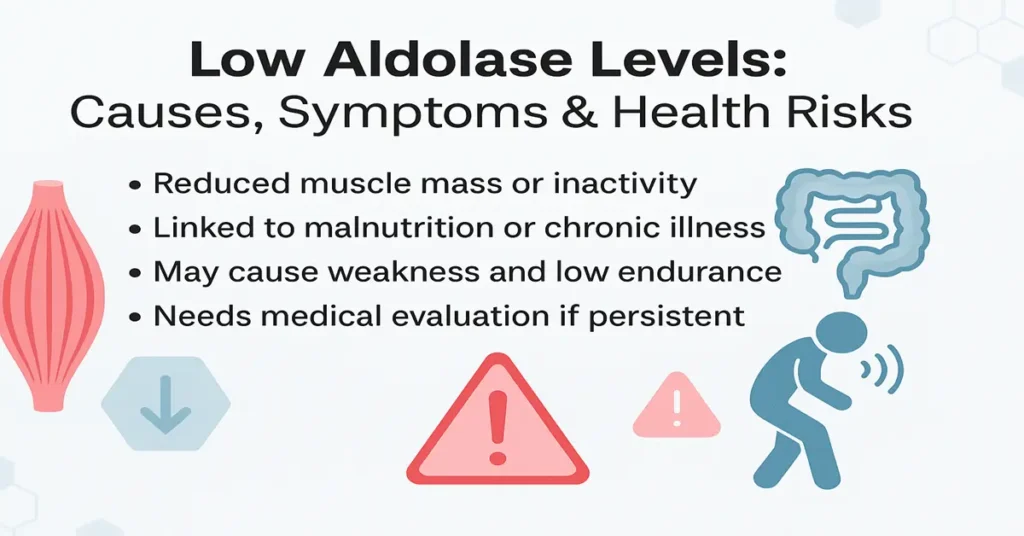
One of the most common reasons for low aldolase levels is reduced muscle mass. Since aldolase largely comes from muscle tissue, people who are elderly, bedridden, or physically inactive for long periods may show lower enzyme release into the blood. This is a common finding in patients recovering from prolonged illness or hospitalization.
Chronic malnutrition or inadequate protein intake can also lead to low aldolase levels. When the body lacks sufficient nutrients, muscle tissue gradually breaks down and overall enzyme production decreases. Clinically, this is often seen in people with long-standing gastrointestinal disorders, eating disorders, or chronic systemic illness.
Rare genetic or metabolic conditions can interfere with enzyme production at the cellular level. In such cases, aldolase activity may be low despite normal muscle mass. These conditions are uncommon and are usually investigated alongside multiple other metabolic tests.
Severe or end-stage liver disease may contribute indirectly to low aldolase levels. Although the liver is not the main source of aldolase, advanced liver dysfunction affects overall protein synthesis and enzyme balance in the body.
Long-term use of certain medications, such as steroids or drugs that suppress muscle metabolism, can also reduce muscle activity over time. This secondary muscle loss may reflect as lower aldolase values on testing.
Symptoms Seen in Low Levels
Low aldolase levels themselves do not usually cause symptoms. Instead, symptoms are related to the underlying condition responsible for the low reading.
People with reduced muscle mass often report generalized weakness, easy fatigue, and reduced physical endurance. Tasks that were previously manageable, such as climbing stairs or carrying light objects, may feel more tiring.
When malnutrition is a contributing factor, symptoms may include unintended weight loss, muscle thinning, low energy, hair loss, and slower recovery from illness or injury. In older adults, low aldolase may be seen along with frailty, balance issues, and a higher risk of falls.
In rare metabolic disorders, symptoms may appear earlier in life and include poor growth, low stamina, and exercise intolerance. These cases are usually evaluated in specialist settings with a broader metabolic workup.
Health Risks of Persistently Low Levels
Persistently low aldolase levels are not usually harmful on their own. However, they may point toward underlying risks related to muscle health and nutrition.
Long-term muscle loss increases the likelihood of falls, fractures, and reduced independence, particularly in elderly individuals. In clinical practice, low muscle enzyme levels often act as a signal to assess physical strength, mobility, and nutritional status more closely.
Low aldolase may also reflect poor nutritional reserve, which can weaken immunity, delay healing, and worsen outcomes in chronic diseases. In hospitalized or critically ill patients, it may be part of a pattern seen with prolonged bed rest and systemic illness.
In people with advanced liver disease or complex metabolic conditions, low aldolase is usually interpreted as one piece of a larger biochemical picture rather than a standalone concern.
How to Improve Levels Safely
Aldolase levels should not be treated as a direct target. There is no safe or appropriate way to artificially increase aldolase levels without addressing the underlying cause.
When low aldolase is linked to reduced muscle mass, gradual and supervised physical activity may help improve overall muscle function. In real-world practice, this often involves physiotherapy, gentle resistance exercises, or mobility programs tailored to the individual’s condition and capacity.
If malnutrition is identified, correction under medical or dietetic supervision is essential. This focuses on improving overall nutritional intake rather than trying to change enzyme levels directly.
When medications are suspected to affect muscle metabolism, clinicians may review treatment plans and make adjustments if appropriate. In liver disease or metabolic disorders, managing the primary condition remains the safest approach.
Aldolase is a marker that reflects what is happening in the body; it is not something that should be manipulated independently.
Additional Information
Low aldolase levels are usually interpreted alongside other muscle and metabolic markers such as creatine kinase (CK), lactate dehydrogenase (LDH), and liver function tests. A single low value rarely provides enough information by itself.
Reference ranges can vary slightly between laboratories, and mild reductions are often not clinically significant. Clinicians always correlate results with symptoms, physical findings, and the patient’s overall health status.
In many cases, low aldolase is an incidental finding that leads to reassurance rather than active intervention.
Test Preparation
No special preparation is usually required for an aldolase test. Patients may be advised to avoid strenuous exercise for 24 to 48 hours before sample collection, as heavy muscle activity can influence enzyme levels.
It is important to inform the healthcare provider about current medications, supplements, and recent illnesses. If the test is combined with other blood investigations, fasting instructions may be provided.
When to See a Doctor
Medical advice should be sought if low aldolase levels are accompanied by persistent muscle weakness, unexplained weight loss, severe fatigue, or difficulty performing daily activities.
Repeated low results, especially when seen with other abnormal tests, should also be evaluated. People with chronic illness, liver disease, or suspected nutritional deficiencies benefit from timely medical assessment.
Sample Type
The aldolase test is performed using a blood sample drawn from a vein, usually from the arm. The sample is analyzed in a laboratory to measure enzyme activity.
Important Word Explanations
Aldolase: An enzyme involved in glucose breakdown for energy, mainly found in muscle tissue.
Enzyme: A protein that speeds up chemical reactions in the body.
Muscle Wasting: Loss of muscle mass due to illness, inactivity, or poor nutrition.
Metabolic Disorder: A condition affecting how the body processes nutrients and energy.
Malnutrition: Inadequate intake or absorption of nutrients needed for normal function.
People Also Ask
Is a low aldolase level serious?
Usually not by itself. Doctors look at symptoms and other tests before deciding its significance.
Can low aldolase be temporary?
Yes. It can be seen during illness, inactivity, or recovery and may normalize over time.
Does low aldolase always mean muscle disease?
No. It often reflects low muscle mass or nutrition rather than a primary muscle disorder.
When do doctors usually worry about low levels?
When low values are persistent and accompanied by weakness, weight loss, or other abnormal tests.
Is repeat testing common?
Yes. Repeat tests are often done to see if levels remain low or return to normal.
Can medications affect aldolase levels?
Yes. Some long-term medications can indirectly lower levels by affecting muscle activity.
~END~