
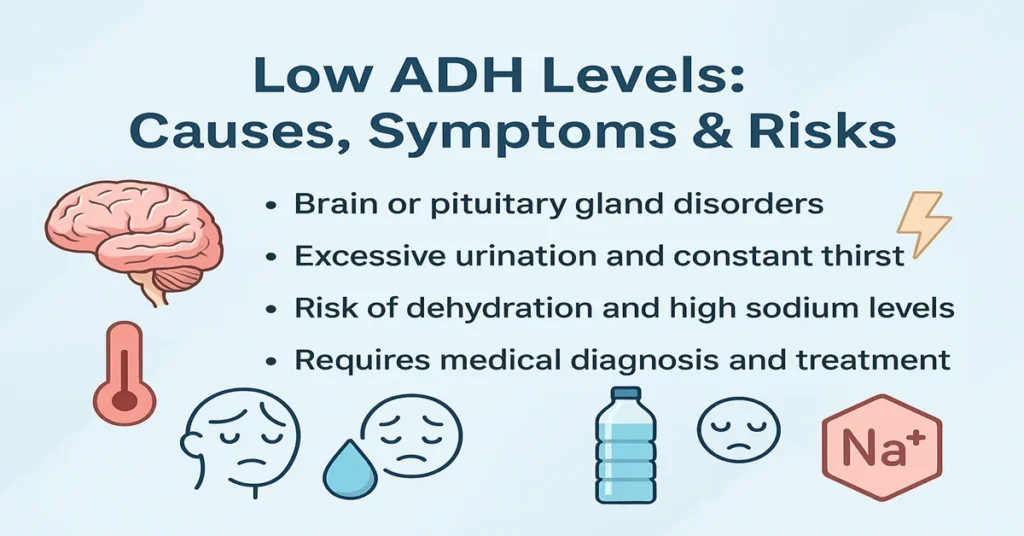
Causes and Symptoms of Low ADH Levels
Antidiuretic hormone (ADH), also called vasopressin, plays a critical role in maintaining the body’s water balance and blood concentration. In day-to-day clinical practice, even small disturbances in ADH levels can lead to noticeable changes in urine output, thirst, and hydration status. Low ADH levels are medically important because they can cause excessive water loss, dehydration, and electrolyte imbalance if they go unrecognized.
This article explains low ADH levels in a clear, practical way—covering why they occur, how they present clinically, and why timely medical evaluation matters. ADH is a tightly regulated hormone, so correction and management must always be guided by a doctor rather than self-treatment.
Overview of Low Levels
ADH is produced in the hypothalamus and released into the bloodstream from the posterior pituitary gland. Its primary job is to signal the kidneys to conserve water when the body needs it. When ADH levels are low, or when the hormone is not released properly, the kidneys fail to concentrate urine. As a result, large amounts of dilute urine are passed.
Clinically, this situation is most often associated with central diabetes insipidus. Despite the name, this condition has no relation to blood sugar or diabetes mellitus. It is purely a disorder of water regulation. Patients may notice symptoms gradually, or sometimes quite suddenly after head injury, surgery, or illness affecting the brain.
Recognizing low ADH early is important. Prolonged water imbalance does not just cause discomfort—it can affect kidney function, brain function, and overall metabolic stability.
Major Medical Causes of Low ADH Levels
Low ADH levels usually arise from conditions that interfere with hormone production or release from the brain.
Damage to the hypothalamus or pituitary gland is one of the most common causes. This may occur after head injury, brain surgery, radiation therapy, or due to tumors in the pituitary region. In routine hospital settings, post-surgical or post-traumatic cases are frequently seen.
Inflammatory and infectious conditions involving the central nervous system can also reduce ADH secretion. Meningitis, encephalitis, or other brain infections may temporarily or permanently impair hormone release.
Some cases are congenital. Rare genetic disorders affect ADH synthesis from birth, leading to symptoms early in life. In other patients, no clear cause is found even after detailed evaluation. These cases are labeled idiopathic low ADH.
Certain medications may suppress ADH release as a side effect, particularly drugs used in psychiatric conditions or cancer therapy. Long-standing pituitary disease or previous brain irradiation can also result in chronically low hormone levels.
Symptoms Seen in Low Levels
The hallmark clinical feature of low ADH is excessive urination. Patients often report passing unusually large volumes of pale, dilute urine throughout the day and night. Nocturnal urination is especially common and frequently disrupts sleep.
Intense thirst accompanies this water loss. Many patients describe an unrelenting urge to drink water, even shortly after fluid intake. This thirst is a compensatory response as the body attempts to maintain hydration.
As dehydration progresses, more general symptoms appear. These include dry mouth, fatigue, dizziness, headaches, and reduced concentration. Muscle weakness or cramps may develop due to shifting electrolyte levels.
In more severe or prolonged cases, symptoms can escalate to confusion, low blood pressure, rapid heartbeat, and reduced alertness. In children, chronic low ADH may present as poor growth, irritability, or delayed development rather than clear complaints of thirst.
Health Risks of Persistently Low Levels
When low ADH levels are not addressed, continuous water loss places strain on multiple organ systems. Chronic dehydration can impair kidney function and increase the risk of kidney injury over time.
One of the most serious complications is hypernatremia—an abnormally high sodium level in the blood. This occurs because water is lost faster than sodium. Elevated sodium can affect brain cells and may lead to confusion, seizures, or altered consciousness in severe cases.
In older adults, dehydration related to low ADH increases the risk of falls, weakness, and sudden drops in blood pressure. In people with pre-existing kidney or heart disease, the effects can be more pronounced.
Prompt diagnosis and appropriate management usually prevent these complications and help restore stable water balance.
How to Improve Levels Safely
There is no safe way to raise ADH levels naturally or at home. Because ADH is controlled by complex brain mechanisms, unsupervised attempts to alter hormone levels can be harmful.
Medical management focuses on the underlying cause. In central diabetes insipidus, doctors commonly prescribe desmopressin, a synthetic form of ADH. This medication helps the kidneys conserve water and significantly reduces excessive urine output.
Fluid intake is carefully guided rather than unrestricted. Patients are advised to drink enough to prevent dehydration but not excessively, as overhydration can cause its own problems.
Regular monitoring of blood sodium, urine output, and hydration status is an important part of safe long-term care. If medications are contributing to low ADH, doctors may adjust or change them when possible.
Ongoing follow-up with an endocrinologist helps ensure that treatment remains effective as the body’s needs change over time.
Additional Information
Low ADH levels must be distinguished from conditions where ADH is present but the kidneys do not respond to it. Although the symptoms may look similar, management strategies differ. This is why proper testing is essential.
In practice, ADH results are interpreted along with serum sodium, plasma osmolality, and urine osmolality. Together, these tests provide a clearer picture of how the body regulates water.
Symptoms may fluctuate depending on fluid intake, weather, physical activity, and intercurrent illness. Because of this variability, laboratory confirmation is far more reliable than symptom assessment alone.
Test Preparation
ADH testing often requires careful preparation. Patients may be advised not to overdrink fluids before testing, as excess water intake can temporarily suppress ADH levels.
Some medications may need adjustment before the test, but this should only be done under medical advice. In certain cases, controlled fluid restriction or specialized testing protocols are used in hospital settings.
Following preparation instructions closely is essential for obtaining meaningful results.
When to See a Doctor
Medical evaluation is recommended if there is persistent excessive thirst, frequent urination, unexplained dehydration, or ongoing fatigue. Sudden onset of these symptoms after head injury, brain surgery, or severe illness requires prompt attention.
Children with growth concerns, ongoing bedwetting beyond the expected age, or unexplained irritability should also be assessed. Early diagnosis significantly improves outcomes and quality of life.
Sample Type
The ADH test is usually performed on a blood sample drawn from a vein. In many cases, urine samples and additional blood tests are taken at the same time to assess overall water balance.
For complex cases, dynamic testing under controlled conditions may be required to identify the exact cause of water regulation problems.
Important Word Explanations
Antidiuretic Hormone (ADH): A hormone that helps the kidneys conserve water and reduce urine output.
Diabetes Insipidus: A condition marked by excessive urination and thirst due to ADH deficiency or resistance.
Hypothalamus: A brain region that controls hormone production and water balance.
Pituitary Gland: A small gland that releases hormones regulating many body functions.
Hypernatremia: High sodium levels in the blood, often due to excessive water loss.
People Also Ask
Is low ADH always serious?
Not always, but it should never be ignored. Persistent low levels can lead to dehydration and electrolyte imbalance if untreated.
Can low ADH be temporary?
Yes. It may be temporary after head injury, surgery, or infection and can improve as the condition resolves.
Does low ADH always mean diabetes insipidus?
Often, but not always. Doctors confirm the diagnosis with additional tests before making conclusions.
When do doctors usually worry about low ADH?
When symptoms are severe, sodium levels are abnormal, or urine output is consistently very high.
Is repeat testing common?
Yes. Repeat testing helps confirm the diagnosis and monitor response to treatment.
Can symptoms vary from day to day?
Yes. Fluid intake, activity level, and illness can all affect how symptoms appear.
~END~