
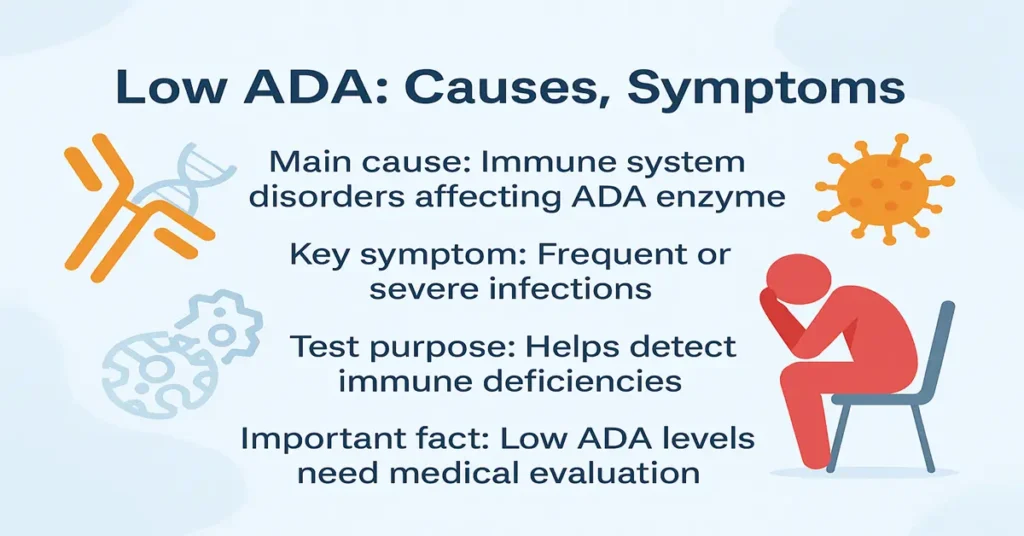
Causes and Symptoms of Low ADA Levels
Overview of Low Levels
Adenosine Deaminase (ADA) is an important enzyme involved in the normal functioning of the immune system, particularly in the development and activity of T-lymphocytes. In routine lab practice, ADA is most often discussed when levels are high, especially during tuberculosis evaluation. Low ADA levels are less common, but when they appear, they usually point toward problems in immune system development or function.
Low ADA means the body is not breaking down adenosine efficiently. Over time, this interferes with normal immune cell survival and response. Clinically, doctors become alert when ADA is low because it does not reflect a mild imbalance. It often signals an underlying immune deficiency that needs careful evaluation. Understanding the causes and symptoms helps identify these conditions early, especially in children.
Major Medical Causes of Low ADA Levels
Low ADA levels are uncommon and are usually linked to significant medical conditions rather than temporary or lifestyle-related issues.
Severe Combined Immunodeficiency (SCID)
One of the most important causes of very low ADA levels is ADA-related SCID. This is a rare inherited disorder in which the immune system is profoundly weak. Because ADA activity is almost absent, immune cells fail to develop properly, leaving the body unable to fight infections.
Congenital ADA Deficiency
Some individuals are born with genetic defects affecting ADA production. This leads to low enzyme activity from infancy. These children often develop infections early in life and may show poor immune responses from the beginning.
Genetic Mutations Affecting ADA Regulation
Certain genetic variations may reduce ADA expression or activity without causing classic SCID. These cases may present later in life with milder but still clinically relevant immune dysfunction.
Conditions Reducing Lymphocyte Count
ADA is highly concentrated in lymphocytes. Disorders that damage bone marrow or reduce lymphocyte production can result in low ADA levels as a secondary effect.
Severe or Prolonged Immunosuppression
In rare cases, long-standing severe illness, advanced malnutrition, or prolonged immunosuppressive therapy may contribute to reduced ADA activity, though these are usually mild reductions and not the primary cause.
Symptoms Seen in Low Levels
Symptoms of low ADA are mainly related to impaired immune defense. ADA itself does not cause symptoms; the consequences of immune weakness do.
Frequent or Recurrent Infections
Repeated bacterial, viral, or fungal infections are common. Infections may be unusually severe or difficult to treat.
Poor Growth and Development in Infants
Babies with congenital ADA deficiency may fail to gain weight properly and show delayed physical development.
Respiratory Infections
Chronic cough, pneumonia, or repeated chest infections are often seen because the lungs are especially vulnerable when immunity is weak.
Chronic Diarrhea
Persistent diarrhea can occur due to intestinal infections that a healthy immune system would normally control.
Fatigue and Reduced Activity
Ongoing infections and immune stress often lead to low energy levels and general weakness.
Opportunistic Infections
Infections that rarely affect healthy individuals may develop, which is a strong clinical signal of immune compromise.
Health Risks of Persistently Low Levels
If low ADA levels are not identified and managed, the consequences can be serious.
Severe Immune Dysfunction
Low ADA disrupts T-cell development, making the immune system ineffective even against common pathogens.
Failure to Thrive in Children
Without early intervention, children may show poor physical and developmental progress.
Repeated Hospitalizations
Frequent infections often require emergency treatment or long hospital stays.
Organ Damage from Chronic Infections
The lungs, liver, gut, and other organs may suffer long-term damage due to repeated infections.
Life-Threatening Risk in Untreated SCID
In ADA-related SCID, the condition can become fatal in early childhood if not treated promptly.
How to Improve Levels Safely
ADA levels cannot be corrected through diet, supplements, or home remedies. Management is always medical and specialist-guided.
Enzyme Replacement Therapy
In ADA deficiency, enzyme replacement can temporarily restore ADA activity and improve immune function.
Bone Marrow or Stem Cell Transplant
This can provide a long-term solution by enabling the body to produce healthy immune cells with normal ADA activity.
Gene Therapy (Selected Cases)
In some specialized centers, gene therapy may be used to correct the underlying genetic defect.
Supportive Infection Management
Preventive antibiotics and careful infection control are often required alongside definitive treatment.
All treatment decisions are made by immunology specialists based on disease severity and patient age.
Additional Information
Low ADA values are interpreted very differently from high ADA values. While high ADA reflects immune activation or inflammation, low ADA almost always suggests impaired immune development. Doctors usually combine ADA results with lymphocyte counts, genetic testing, and clinical history before reaching a conclusion.
Early diagnosis makes a major difference, especially in infants. With timely treatment, long-term outcomes improve significantly.
Test Preparation
ADA testing usually does not require special preparation. Patients should inform the doctor about current medications, recent infections, and any family history of immune disorders. Normal eating and drinking are usually allowed unless advised otherwise.
When to See a Doctor
Medical evaluation is important if there are:
Frequent or severe infections
Poor growth or weight gain in children
Repeated hospital admissions for infections
Chronic diarrhea or lung infections
A known family history of immune deficiency
Early consultation is especially critical in infants and young children.
Sample Type
ADA can be measured in different sample types depending on the clinical purpose:
Blood (serum or plasma)
Pleural fluid
Peritoneal fluid
Cerebrospinal fluid
For evaluating low ADA related to immune deficiency, blood samples are most commonly used.
Important Word Explanations
Adenosine Deaminase (ADA): An enzyme essential for normal immune cell function.
SCID: A severe inherited immune deficiency affecting multiple immune cells.
Enzyme Replacement Therapy: Medical treatment that supplies a missing enzyme.
Opportunistic Infection: Infection occurring due to a weakened immune system.
Lymphocytes: White blood cells crucial for immune defense.
People Also Ask
Is a low ADA level serious?
It can be serious, especially in children, because it often reflects immune deficiency rather than a minor imbalance.
Can low ADA be temporary?
True low ADA due to immune deficiency is usually persistent. Temporary mild reductions are uncommon.
Does low ADA always mean SCID?
No, but SCID is an important cause. Other genetic or immune conditions can also lower ADA.
When do doctors worry about low ADA results?
Doctors become concerned when low ADA is combined with frequent infections or poor immune function.
Is repeat testing common for low ADA?
Yes. Repeat tests and additional immune studies are often done to confirm the diagnosis.
Can adults have low ADA levels?
Yes, but it is rare. When seen, it usually relates to underlying immune or bone marrow disorders.
~END~