
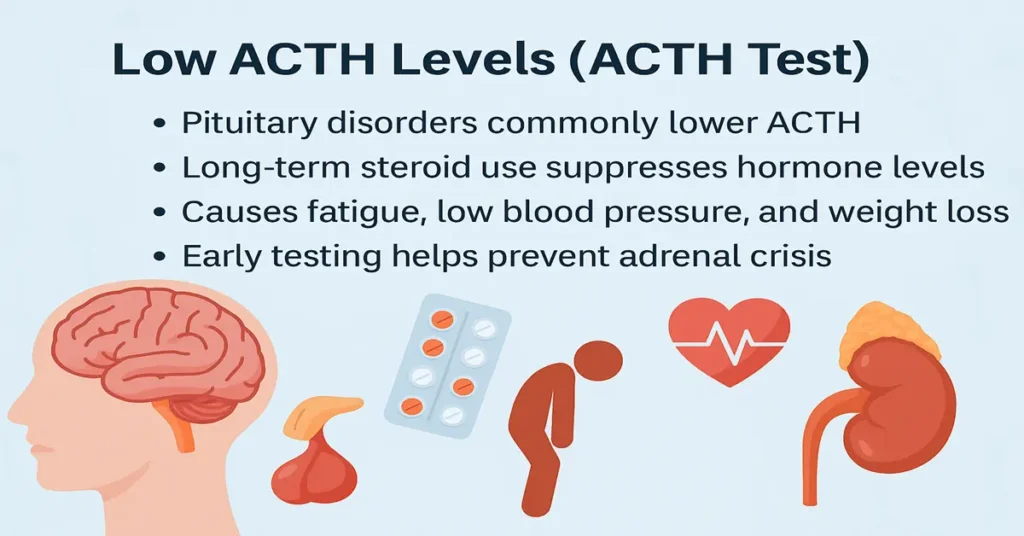
Causes and Symptoms of Low ACTH Levels
Overview of Low Levels
Adrenocorticotropic hormone (ACTH) is produced by the pituitary gland and acts as the main signal that tells the adrenal glands to produce cortisol. Cortisol is essential for maintaining blood pressure, blood sugar, stress response, and overall metabolic balance. When ACTH levels are low, the adrenal glands do not receive enough stimulation, and cortisol production drops accordingly.
In real clinical practice, low ACTH is not a very common finding, but when it appears, it is taken seriously. It usually points toward a problem with pituitary function or long-term suppression from external steroid medications. Unlike many routine lab abnormalities, low ACTH is important because the body’s ability to respond to stress depends heavily on cortisol. If this system is impaired, even minor illnesses can become risky. That is why understanding the causes and recognizing symptoms early is crucial.
Major Medical Causes of Low ACTH Levels
Low ACTH almost always reflects either reduced pituitary output or suppression of the normal hormone feedback system.
Pituitary disorders
Damage to the pituitary gland is one of the most direct causes. Tumors, surgery, radiation therapy, infections, or inflammation can reduce ACTH production. In routine endocrinology practice, low ACTH from pituitary causes is often accompanied by deficiencies in other pituitary hormones as well.
Long-term steroid use
This is one of the most common real-world causes. Medications such as prednisone or dexamethasone provide cortisol-like effects to the body. When taken for long periods, the pituitary senses that cortisol is already present and reduces ACTH production. Over time, this suppression can make the adrenal glands inactive, which becomes evident when steroids are reduced or stopped abruptly.
Hypopituitarism
In hypopituitarism, the pituitary fails to produce multiple hormones adequately. ACTH deficiency in this setting usually occurs along with symptoms related to other hormone deficiencies, making the overall picture more complex.
Adrenal tumors producing cortisol
In rare situations, an adrenal tumor produces cortisol independently. The pituitary responds by lowering ACTH output. Here, low ACTH is a secondary response rather than the primary problem.
Autoimmune conditions
Autoimmune inflammation of the pituitary, such as lymphocytic hypophysitis, can gradually reduce ACTH secretion. These cases often progress slowly, and symptoms may be subtle in the beginning.
Severe or chronic illness
Prolonged illness or extreme physiological stress can sometimes alter hormone regulation and temporarily suppress ACTH. This is less common but still clinically relevant when interpreting results.
Symptoms Seen in Low ACTH Levels
Symptoms of low ACTH mainly arise because cortisol levels fall. The pattern and severity depend on how quickly the hormone level drops and what triggered it.
Fatigue is usually the earliest and most consistent symptom. People often describe feeling exhausted even after adequate rest. Muscle weakness and low stamina may make daily tasks feel unusually difficult.
Low blood pressure is another common feature. Some individuals feel dizzy or lightheaded, especially when standing up. This happens because cortisol helps maintain vascular tone.
Unintentional weight loss may occur due to disrupted metabolism and reduced appetite. Along with this, low blood sugar episodes can develop, leading to shakiness, sweating, irritability, or confusion.
Mood and mental changes are also seen. Patients may report low mood, irritability, anxiety, or reduced stress tolerance. These symptoms are often mistaken for primary mental health conditions until hormone testing is done.
Some people develop salt cravings, nausea, or vague abdominal discomfort. In more severe cases, vomiting and abdominal pain may occur.
The most dangerous situations arise during physical stress such as infection, injury, or surgery. Because the body cannot increase cortisol output, symptoms can worsen rapidly, leading to adrenal crisis.
Health Risks of Persistently Low Levels
Persistently low ACTH places the body at risk for adrenal insufficiency. This condition limits the body’s ability to respond to stress and maintain stable blood pressure and blood sugar.
If untreated, individuals may experience repeated episodes of severe fatigue, dizziness, low blood sugar, and infections. Mental clarity and overall quality of life can decline gradually.
The most serious complication is adrenal crisis. This is a medical emergency marked by severe weakness, vomiting, confusion, very low blood pressure, and shock. Without immediate treatment, it can be life-threatening. Clinically, this is why confirmed low ACTH is never ignored and always followed up carefully.
How to Improve Levels Safely
ACTH is a hormone regulated by a complex feedback system, and it cannot be safely increased through home remedies or lifestyle measures. Management is always medical and supervised.
If pituitary disease is present, treating the underlying condition may help restore hormone balance. In people with steroid-induced suppression, doctors carefully adjust medications to allow gradual recovery of ACTH production.
Many patients require cortisol replacement therapy. While this does not raise ACTH directly, it replaces what the body lacks and prevents symptoms and complications. During illness or surgery, medication doses often need temporary adjustment to mimic the body’s natural stress response.
Regular follow-up with an endocrinologist is essential to ensure stability and prevent emergencies.
Additional Information
ACTH levels can show short-term variation due to sleep patterns, stress, or medication timing. For this reason, interpretation is always cautious.
ACTH testing is usually paired with cortisol testing to understand whether the problem lies in the pituitary or the adrenal glands. In some cases, stimulation tests are used to assess how well the adrenal glands can respond.
Test Preparation
ACTH is typically measured in the early morning because hormone levels follow a daily rhythm and peak at that time. Patients may be advised to avoid stress and inform the doctor about current medications, especially steroids. The sample needs quick processing, as ACTH is a fragile hormone.
When to See a Doctor
Medical evaluation is necessary for persistent fatigue, unexplained weight loss, dizziness, or symptoms suggesting low blood pressure or low blood sugar. Immediate medical attention is required for severe weakness, repeated vomiting, confusion, or collapse. Anyone on long-term steroid therapy should never stop medication without medical guidance.
Sample Type
ACTH is measured using a blood sample drawn from a vein. Because the hormone breaks down quickly, proper handling and rapid laboratory processing are essential for accurate results.
Important Word Explanations
ACTH: A pituitary hormone that signals the adrenal glands to produce cortisol.
Adrenal insufficiency: A condition where cortisol production is inadequate.
Steroid suppression: Reduced ACTH production caused by long-term steroid use.
Adrenal crisis: A life-threatening state due to critically low cortisol levels.
Pituitary gland: A hormone-producing gland in the brain that regulates multiple endocrine functions.
People Also Ask
Is low ACTH always serious?
It can be significant, especially if cortisol levels are also low, but severity depends on symptoms and cause.
Can low ACTH be temporary?
Yes. Medication effects or acute illness can cause temporary suppression.
Does low ACTH always mean pituitary disease?
No. Long-term steroid use is a very common cause.
When do doctors worry most about low ACTH?
Concern increases when symptoms are present or cortisol levels are clearly low.
Is repeat testing common for ACTH?
Yes. Repeat testing helps confirm results and assess trends over time.
~END~
you should rank 1 on the google, piece of writing, thank alot for this.