
Overview
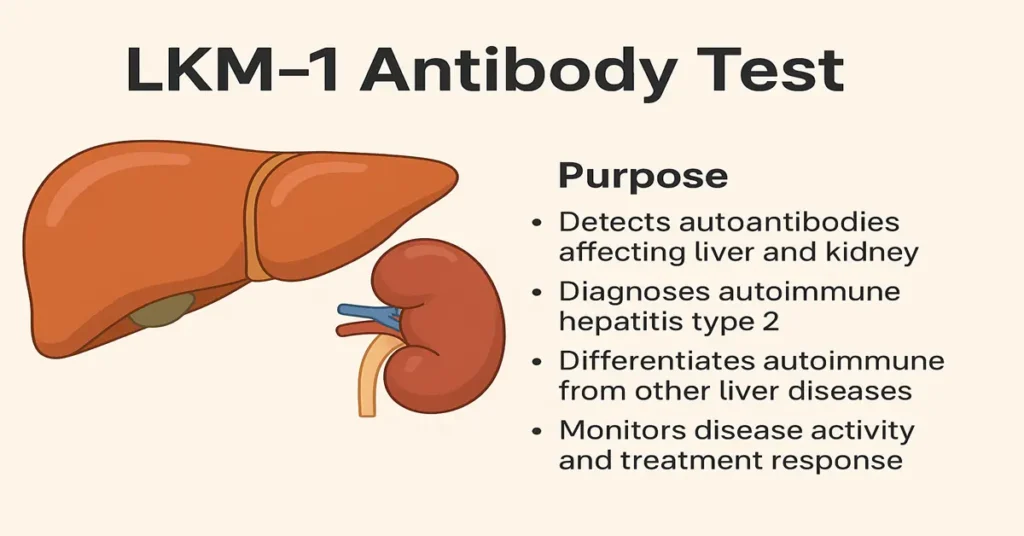
The LKM-1 Antibody Test is a specialized autoimmune blood test used to detect Liver Kidney Microsomal type 1 (LKM-1) antibodies in the bloodstream. These antibodies are not normally present. They appear when the immune system mistakenly targets the body’s own liver cells instead of protecting them. The presence of LKM-1 antibodies is closely associated with Autoimmune Hepatitis Type 2 (AIH-2), a rare but significant liver disorder that is seen more often in children, adolescents, and young adults.
Clinicians usually consider this test when liver-related symptoms are present or when routine liver function tests show unexplained abnormalities. Because many liver conditions can produce similar symptoms and lab changes, the LKM-1 test helps narrow the diagnosis and distinguish autoimmune hepatitis from other causes such as viral hepatitis, alcohol-related injury, fatty liver disease, or medication-related liver damage.
This test is typically ordered alongside other autoimmune and liver investigations, including ANA, SMA, liver enzymes, and bilirubin levels. It is not used as a general screening test but rather as a targeted investigation when autoimmune liver disease is part of the clinical consideration.
What Does the LKM-1 Antibody Test Measure?
The test detects antibodies that react against specific microsomal components inside liver and kidney cells, most notably the enzyme cytochrome P450 2D6. Under normal circumstances, antibodies help defend the body against infections. In autoimmune conditions, however, the immune response becomes misdirected and begins to attack healthy tissues.
A positive result indicates that LKM-1 antibodies are present and supports the possibility of autoimmune hepatitis type 2. A negative result means these antibodies were not detected, making LKM-1–associated disease less likely. Results are always interpreted alongside symptoms, liver enzyme patterns, and other test findings.
Where Are LKM-1 Antibodies Produced in the Body?
LKM-1 antibodies are produced by B-lymphocytes, a group of immune cells responsible for antibody formation. These antibodies are not produced by the liver or kidneys themselves. Instead, they arise from an abnormal immune response in which the body incorrectly identifies its own liver cells as harmful.
The exact trigger for this immune misdirection is not fully understood. Genetic susceptibility, environmental factors, and infections may all contribute. In some individuals, chronic hepatitis C infection has been associated with the presence of LKM-1 antibodies, although this does not always indicate classic autoimmune hepatitis.
Why Are LKM-1 Antibodies Important? (Main Functions & Clinical Use)
LKM-1 antibodies do not serve a protective or beneficial role. Their significance lies in what they indicate clinically.
They are an important marker for Autoimmune Hepatitis Type 2, particularly in younger patients. Their detection helps clinicians differentiate autoimmune liver disease from other inflammatory or infectious causes of liver injury. In selected cases, repeat testing may also be used to follow disease activity or assess changes over time.
Occasionally, LKM-1 antibodies are found in unusual or overlapping autoimmune patterns, which further emphasizes the need to interpret results in the broader clinical context rather than in isolation.
Causes of Low or Negative LKM-1 Levels
A negative LKM-1 result generally suggests that autoimmune hepatitis type 2 is unlikely. This may be seen in individuals without autoimmune liver disease, in patients whose disease is inactive or well controlled, or in very early stages before antibodies are detectable.
It is also important to note that other forms of autoimmune hepatitis exist, such as type 1, which are associated with different antibodies. In such cases, LKM-1 levels may remain negative despite autoimmune liver involvement.
Symptoms When LKM-1 Levels Are Low/Negative
Low or negative LKM-1 antibody levels do not produce symptoms by themselves. If symptoms are present, they are usually related to another liver condition or a different underlying cause, which requires separate evaluation.
Causes of High or Positive LKM-1 Levels
Positive LKM-1 antibody results are most commonly associated with Autoimmune Hepatitis Type 2. This association is strongest in children and young adults.
In a smaller number of cases, LKM-1 antibodies may be detected in people with chronic hepatitis C infection or in rare autoimmune overlap syndromes. A positive result typically prompts further assessment rather than serving as a diagnosis on its own.
Symptoms When LKM-1 Levels Are High
Symptoms linked to positive LKM-1 antibodies reflect ongoing liver inflammation rather than the antibodies themselves. These may include persistent fatigue, jaundice, abdominal discomfort or swelling, dark urine, pale stools, itching, and loss of appetite.
If liver inflammation progresses, complications such as cirrhosis, fluid accumulation, or mental confusion related to liver dysfunction may occur. These features signal more advanced disease and require careful medical management.
Reference Range
Results are usually reported as:
- Negative: LKM-1 antibodies not detected
- Positive: LKM-1 antibodies detected
Some laboratories provide titers or intensity values. Higher levels can suggest stronger autoimmune activity, but interpretation always depends on clinical findings and other investigations.
Sample Type
The test requires a serum blood sample, collected from a vein. No other sample types are used.
Test Preparation
Fasting is generally not required. Patients should inform their doctor about current medications, previous hepatitis infections, or a family history of autoimmune disease. Recent illnesses or liver procedures may influence interpretation and are taken into account by clinicians.
When to Consult a Doctor
Medical review is appropriate if symptoms such as persistent fatigue, jaundice, abdominal swelling, itching, dark urine, or pale stools develop. These features may indicate liver inflammation and warrant prompt evaluation.
Urgent medical attention is required if there is severe abdominal pain, confusion, vomiting of blood, black stools, fainting, or breathing difficulty, as these may reflect serious liver-related complications.
Important Word Explanations
- Autoimmune: A condition in which the immune system attacks the body’s own tissues
- Antibody: A protein produced by the immune system to recognize specific targets
- Hepatitis: Inflammation of the liver
- Cirrhosis: Long-term scarring and structural damage of the liver
- Jaundice: Yellowing of the skin or eyes due to liver dysfunction
- B-lymphocytes: Immune cells responsible for producing antibodies
~END~
Related Posts
None found