
Overview
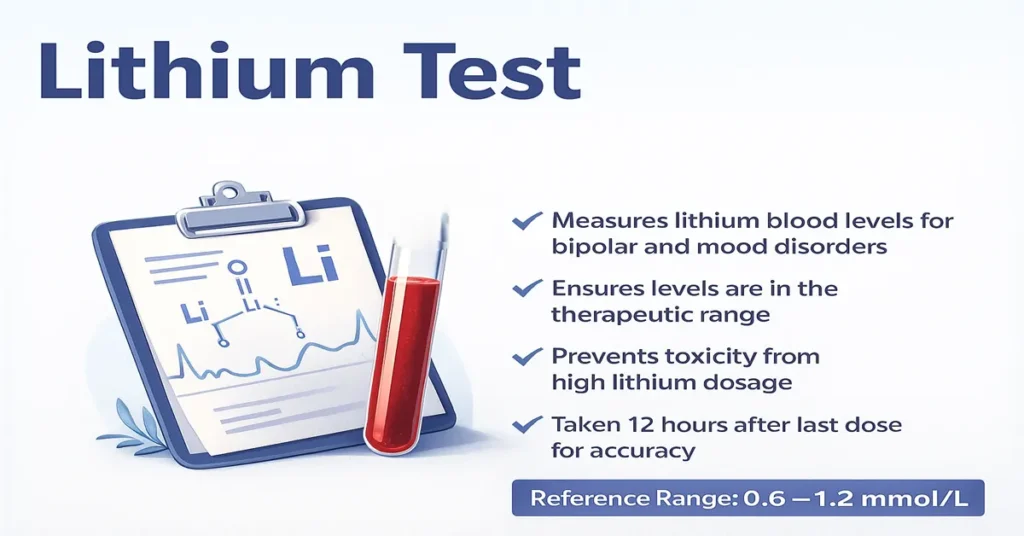
The Lithium Test, also known as the Lithium Blood Level Test, measures the amount of lithium circulating in the bloodstream. Lithium is a well-established mood-stabilizing medication commonly prescribed for bipolar disorder and, in some cases, as an add-on treatment for depression, schizoaffective disorder, or related conditions.
Lithium is highly effective, but it has a narrow therapeutic range. This means the difference between a helpful dose and a harmful one can be small. If the level is too low, mood symptoms may return. If it rises too high, lithium can become toxic. For this reason, regular blood level monitoring is an essential part of safe lithium therapy. The test helps clinicians confirm that the level is appropriate for both effectiveness and safety.
Is Lithium Produced in the Body?
No. Lithium is not produced naturally by the human body. It is a naturally occurring element found in the environment, but it enters the body only through prescribed medications such as lithium carbonate, lithium citrate, or lithium chloride.
After ingestion, lithium is absorbed through the stomach and intestines and enters the bloodstream. It is not significantly metabolized. Instead, it is filtered and eliminated almost entirely by the kidneys. Because kidney function plays such a central role in lithium clearance, any change in kidney health, hydration status, or fluid balance can affect blood lithium levels. This is one of the main reasons routine monitoring is required.
Why Is the Lithium Test Important?
Lithium dosing must be individualized. People vary in how they absorb and eliminate the drug, and these factors can change over time. The lithium test helps clinicians confirm that the dose is appropriate for the patient’s current situation.
When lithium levels are within range, mood stabilization is more reliable. When levels fall below the target range, symptoms of bipolar disorder or depression may reappear. When levels rise above the safe range, lithium can affect the nervous system, kidneys, and other organs.
The test is especially useful when doses are being adjusted, when kidney function changes, when new medications are added, during pregnancy, in older adults, or when symptoms do not match expectations. For patients on long-term therapy, periodic testing helps ensure continued safety over months or years.
Causes of Low Lithium Levels
Lower-than-expected lithium levels usually reflect reduced exposure to the medication rather than a problem with the test itself. This can occur if doses are missed, taken inconsistently, or prescribed at a level that is insufficient for the individual.
Reduced absorption due to gastrointestinal upset, increased elimination by the kidneys, or interactions with certain substances that enhance lithium clearance may also lower blood levels. From a clinical standpoint, a low level signals that mood stabilization may not be fully supported at that time.
Symptoms of Low Levels
Low lithium levels do not cause direct physical harm. The concern arises from reduced therapeutic effect. Patients may notice the return of mood swings, irritability, sleep disturbance, low mood, increased energy, or features of mania or hypomania. These changes often prompt clinicians to review adherence, dosing, and blood levels together.
Causes of High Lithium Levels
Elevated lithium levels most often result from reduced clearance rather than excessive intake alone. Dehydration, reduced kidney function, or sudden changes in fluid or sodium balance can cause lithium to accumulate. Certain medications, including some pain relievers, blood pressure drugs, and diuretics, can also reduce lithium excretion.
Taking higher doses than prescribed or accidental overdose may raise levels further. Because lithium handling is closely tied to kidney function, even small physiological changes can lead to noticeable shifts in blood concentration.
Symptoms of High Lithium (Lithium Toxicity)
High lithium levels can affect the nervous system and require prompt medical attention. Early signs may include nausea, vomiting, diarrhea, tremors, muscle weakness, drowsiness, or unusual fatigue.
With higher levels, symptoms may progress to confusion, slurred speech, blurred vision, poor coordination, marked tremors, agitation, or seizures. In severe cases, reduced consciousness or coma can occur. Clinically, these findings are treated as urgent, as lithium toxicity can be serious if not addressed quickly.
Reference / Therapeutic Range
The commonly accepted therapeutic range for lithium is approximately 0.6 – 1.2 mmol/L, though the ideal target varies by individual.
Levels above about 1.5 mmol/L are generally considered toxic. Target ranges may differ depending on age, whether treatment is for acute mania or maintenance therapy, kidney function, and concurrent medications. Clinicians adjust goals based on the overall clinical picture rather than a single number.
Sample Type and Timing
The test is performed on a serum blood sample drawn from a vein.
For accurate interpretation, blood is typically collected about 12 hours after the last dose, known as a trough level. This timing reflects the lowest concentration in the dosing cycle and provides the most consistent basis for comparison over time.
Who Should Get a Lithium Test?
Lithium level testing is recommended when starting treatment, after dose changes, or when symptoms suggest under- or over-exposure. It is particularly important for older adults, people with kidney disease, patients who are dehydrated, pregnant individuals, those taking interacting medications, and long-term lithium users.
Regular monitoring is common in maintenance therapy, often every few months, with more frequent testing when clinical circumstances change.
Other Tests Done Alongside
Because lithium can affect kidney and thyroid function over time, clinicians often order kidney function tests, thyroid tests, electrolyte levels, and, in some cases, heart monitoring in older patients. These tests help ensure that lithium remains safe as part of long-term treatment.
Test Preparation
Fasting is usually not required. Patients are generally advised to take lithium as prescribed unless told otherwise. Maintaining usual hydration and avoiding sudden changes in salt intake before testing is important for consistent results.
Patients should inform their doctor about missed doses, vomiting or diarrhea, pregnancy, kidney problems, or use of medications such as pain relievers or diuretics, as these factors influence interpretation.
When to Consult a Doctor
Medical review is advised if mood symptoms worsen, if tremors, excessive sleepiness, or confusion develop, or if gastrointestinal symptoms occur. People with kidney disease should seek advice if new symptoms appear.
Urgent medical care is required if there are seizures, loss of consciousness, or breathing difficulty, as these may indicate severe lithium toxicity.
Important Word Explanations
- Therapeutic range: The blood level at which a medication is effective and generally safe
- Toxicity: Harmful effects caused by excessive drug levels
- Trough level: Blood concentration measured just before the next dose
- Mood stabilizer: A medication used to reduce mood swings
- Mania: A state of abnormally elevated mood and energy
- Kidney clearance: Removal of substances from the body through the kidneys
~END~
Related Posts
None found