
Overview
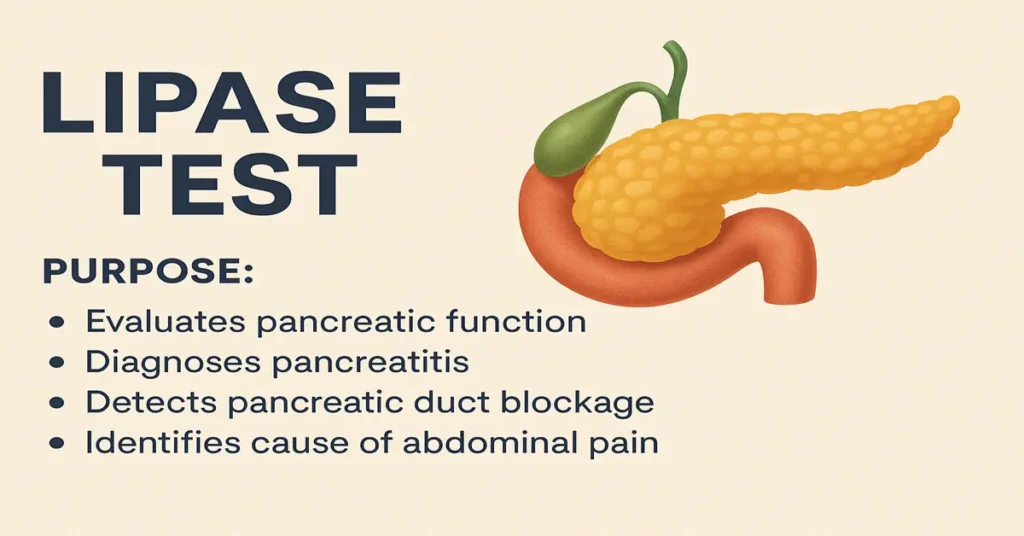
The Lipase Test is a commonly used blood test that helps doctors assess how well the pancreas is functioning. Lipase is a digestive enzyme, meaning it helps the body carry out chemical processes—in this case, breaking down fats from the food we eat so they can be absorbed and used for energy. Under normal conditions, only small amounts of lipase circulate in the blood. When the pancreas becomes irritated, inflamed, or injured, lipase levels in the blood often rise.
Because of this close relationship, the lipase test is one of the most reliable laboratory markers for evaluating pancreatic health, especially when acute pancreatitis is suspected. It is frequently ordered when a person develops sudden abdominal pain, particularly pain in the upper abdomen that may radiate to the back. The test itself is simple and quick, but it provides valuable information that helps doctors understand the cause and seriousness of digestive symptoms.
What Is the Lipase Test?
The Lipase Test measures the concentration of lipase enzyme in the blood. In healthy individuals, lipase is mostly released into the digestive tract, not the bloodstream. When the pancreas is inflamed or damaged, however, lipase can leak into the blood in higher amounts.
Clinically, this makes the test useful in evaluating conditions such as acute pancreatitis, flare-ups of chronic pancreatitis, obstruction of pancreatic ducts, and, in some cases, pancreatic tumors. It may also be used when abdominal pain or digestive symptoms are unexplained. Doctors often interpret lipase results together with other findings, and sometimes alongside an amylase test, to form a clearer picture of pancreatic involvement.
Where Is Lipase Produced in the Body?
Lipase is produced mainly by the pancreas, an organ located behind the stomach that plays a key role in digestion. The pancreas releases lipase into the small intestine, where it helps digest dietary fats.
Smaller amounts of lipase are also produced by other tissues, including the stomach, tongue, and liver. However, these sources contribute very little to blood levels. From a clinical perspective, changes in lipase levels are most often linked to pancreatic activity, which is why the pancreas remains the primary focus when results are abnormal.
Why Is Lipase Important? (Main Functions)
Lipase is essential for normal digestion. Its main function is to break down triglycerides, the fats present in food, into smaller components that the body can absorb. Without adequate lipase activity, fat digestion becomes inefficient.
Because fats are needed to absorb vitamins such as A, D, E, and K, lipase also plays an indirect role in nutrient absorption. In addition, lipase serves as a useful marker of pancreatic health. When levels rise significantly, they often point toward pancreatic inflammation. For clinicians, this makes the lipase test helpful in distinguishing pancreatic causes of abdominal pain from problems arising in other organs.
Causes of Low Lipase Levels
Low lipase levels are less commonly encountered than high levels. When they do occur, they often suggest reduced pancreatic enzyme production, usually due to long-standing or advanced pancreatic damage. Conditions such as chronic pancreatitis, cystic fibrosis, or long-term pancreatic insufficiency may be associated with lower enzyme output.
In these situations, low lipase reflects diminished pancreatic function rather than an acute problem. Doctors consider these results in the context of symptoms and other investigations.
Symptoms of Low Lipase Levels
Low lipase levels themselves do not cause symptoms directly. Instead, symptoms arise from poor fat digestion. Patients may notice indigestion after fatty meals, bulky or greasy stools, bloating, excess gas, unintended weight loss, or signs of vitamin deficiencies over time. These features tend to develop gradually rather than suddenly.
Causes of High Lipase Levels
Elevated lipase levels are more commonly seen and are often associated with pancreatic inflammation. Acute pancreatitis is the most frequent cause, but flare-ups of chronic pancreatitis can also raise levels. Other situations, such as blockage of pancreatic or bile ducts, pancreatic tumors, abdominal trauma, or reduced clearance in kidney disease, may also lead to increased lipase in the blood.
In acute pancreatitis, lipase levels can rise several times above the normal range. Doctors interpret the degree of elevation alongside symptoms and imaging findings.
Symptoms of High Lipase Levels
High lipase levels usually appear together with symptoms of pancreatic irritation or inflammation. These may include severe upper abdominal pain, often spreading to the back, nausea, vomiting, fever, abdominal tenderness, loss of appetite, and dehydration. Such symptoms can vary in intensity and often prompt urgent medical evaluation.
Reference Ranges
Reference ranges can vary slightly between laboratories, but a commonly used normal range for serum lipase is approximately 0–160 U/L. Levels that are several times higher than the upper limit are often suggestive of acute pancreatitis.
Doctors do not rely on the number alone. Results are always interpreted together with clinical symptoms, medical history, and, when needed, imaging studies.
Sample Type
The test is performed on a blood sample, using serum or plasma drawn from a vein. In rare or specialized situations, urine lipase may be measured, but blood testing is the standard approach.
Test Preparation
Some doctors recommend fasting for several hours before the test, although this is not always required. Patients should follow the specific instructions provided.
It is important to inform the doctor about recent alcohol intake, current medications, or recent abdominal injury or surgery, as these factors can influence results. Certain medicines can affect lipase levels, but medications should never be stopped without medical advice.
When to Consult a Doctor
Medical evaluation is recommended if there is sudden or severe abdominal pain, pain radiating to the back, persistent vomiting, fever with abdominal discomfort, yellowing of the skin or eyes, unexplained weight loss, or greasy stools. Emergency care is needed if pain is intense, worsening, or accompanied by signs of dehydration or breathing difficulty.
Important Word Explanations
- Enzyme: A substance that speeds up chemical reactions in the body
- Pancreas: An organ involved in digestion and blood sugar regulation
- Triglycerides: The main form of fat in food and the body
- Steatorrhea: Fatty, greasy stools caused by poor fat digestion
- Pancreatitis: Inflammation of the pancreas
- Pancreatic insufficiency: Reduced ability of the pancreas to produce digestive enzymes
~END~