
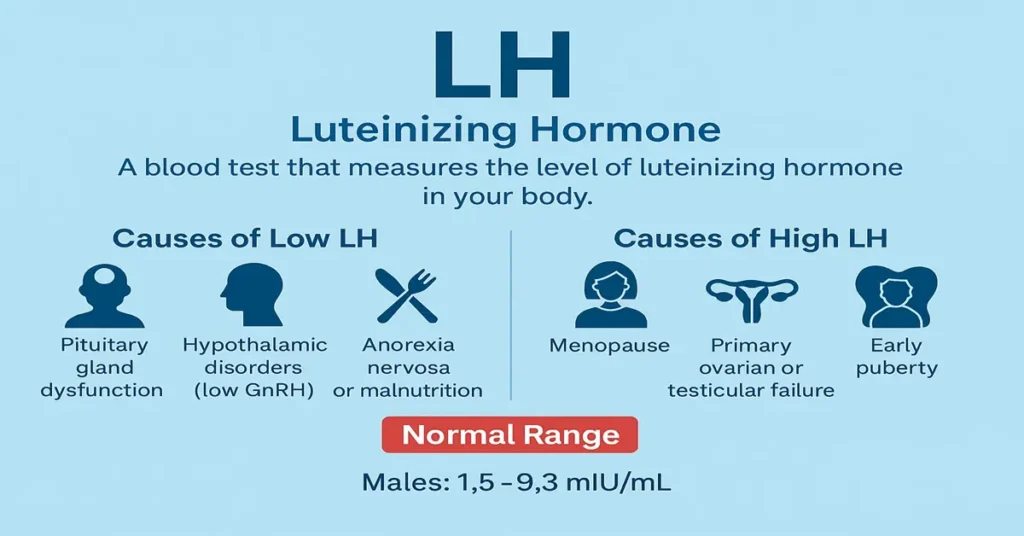
LH (Luteinizing Hormone) Test – Complete, Easy, and Detailed Guide
Introduction
The LH (Luteinizing Hormone) test is a commonly used blood test that helps doctors understand how the reproductive hormone system is functioning. LH plays a central role in fertility and sexual development in both women and men. It is produced by the pituitary gland, a small but highly influential gland located at the base of the brain.
In women, LH helps regulate the menstrual cycle and is responsible for triggering ovulation. In men, it supports testosterone production, which in turn affects sperm production and overall male reproductive health. Because of this wide influence, LH testing is often requested when there are concerns about fertility, irregular menstrual cycles, delayed or early puberty, or suspected hormonal imbalance involving the pituitary gland or reproductive organs.
What is LH?
LH, or Luteinizing Hormone, belongs to a group of hormones known as gonadotropins. It works closely with FSH (Follicle Stimulating Hormone) to coordinate normal reproductive function.
In females, LH levels naturally fluctuate during the menstrual cycle. A mid-cycle rise in LH, commonly called the LH surge, signals the ovary to release an egg. After ovulation, LH supports the production of progesterone, which prepares the uterus for a possible pregnancy.
In males, LH levels are more stable. The hormone stimulates specific cells in the testes to produce testosterone, which is essential for sexual development, libido, and sperm production.
Measuring LH in the blood provides useful insight into how well the brain and reproductive organs are communicating.
Where is LH Produced in the Body?
LH is produced by the anterior pituitary gland. Its release is controlled by signals from the hypothalamus, which secretes GnRH (Gonadotropin-Releasing Hormone). GnRH acts as a trigger that tells the pituitary when to release LH and FSH.
Once released into the bloodstream, LH travels to its target organs:
- In females, it acts on the ovaries
- In males, it acts on the testes
This coordinated system — involving the hypothalamus, pituitary gland, and reproductive organs — is known as the hypothalamic-pituitary-gonadal axis. Proper functioning of this axis is essential for normal puberty, fertility, and hormonal balance.
Main Functions and Importance of LH
LH has distinct but equally important roles in women and men.
In females, LH is responsible for initiating ovulation by causing the ovary to release a mature egg. After ovulation, LH supports the corpus luteum, a temporary structure that produces progesterone and helps maintain the second half of the menstrual cycle.
In males, LH stimulates testosterone production. Adequate testosterone levels are necessary for sperm development, muscle strength, bone health, and normal sexual function.
Overall, LH is essential for puberty, menstrual regularity, fertility, sexual development, and long-term reproductive health. When LH levels are outside the expected range, these processes can be disrupted.
Causes of Low LH Levels
Low LH levels indicate reduced stimulation from the pituitary gland or hypothalamus. This can affect hormone production in the ovaries or testes.
Common Causes
Low LH may be seen in conditions affecting the pituitary or hypothalamus, during periods of severe physical or emotional stress, in chronic illness, or with certain medications. It may also occur in situations where overall energy availability is low, such as severe malnutrition or extreme physical training.
Symptoms of Low LH Levels
Symptoms depend on age and sex.
In females, low LH may be associated with irregular or absent menstrual cycles, difficulty conceiving, and low estrogen-related symptoms. In adolescents, it may contribute to delayed puberty.
In males, low LH can be linked to reduced testosterone levels, which may present as low libido, reduced muscle mass, fertility issues, or delayed puberty in younger individuals.
Because LH influences multiple hormone pathways, symptoms are often gradual and may overlap with other hormonal conditions.
Causes of High LH Levels
High LH levels usually suggest that the ovaries or testes are not responding adequately to stimulation. The pituitary gland compensates by producing more LH in an effort to stimulate hormone production.
Common Causes
In women, elevated LH is commonly seen after menopause and may also be present in certain ovarian conditions. In men, high LH may reflect testicular dysfunction. Genetic conditions, early puberty, and some pituitary disorders can also affect LH levels.
Symptoms of High LH Levels
Symptoms vary depending on the underlying cause.
In females, high LH may be associated with irregular cycles, difficulty conceiving, or features linked to hormonal imbalance. In men, it may be linked to low testosterone effects such as reduced energy, fertility concerns, or changes in sexual function.
High LH itself is a signal rather than a disease and usually prompts further evaluation to understand the root cause.
Reference (Normal) Ranges
LH levels vary based on age, sex, and menstrual cycle phase.
Females
- Follicular phase: 1.9 – 12.5 mIU/mL
- Ovulation peak: 8.7 – 76.3 mIU/mL
- Luteal phase: 0.5 – 16.9 mIU/mL
- Postmenopausal: 15.9 – 54.0 mIU/mL
Males
- 1.5 – 9.3 mIU/mL
Children (pre-puberty)
- Typically very low, often below 3.0 mIU/mL
Reference ranges can vary slightly between laboratories and must be interpreted in clinical context.
Sample Type
Sample Type: Serum (blood)
Tube Used: Red Top (Plain)
Fasting: Not required unless combined with other hormonal tests
The test involves a routine blood draw and is usually completed within a few minutes.
Test Preparation
No special preparation is required in most cases. It is important to inform the doctor about any hormone-related medications, including contraceptives or fertility treatments. In women, test timing may be aligned with the menstrual cycle to improve interpretation. Strenuous exercise just before testing is generally avoided, as it may temporarily influence hormone levels.
When to Consult a Doctor
Medical evaluation is advised if there are concerns such as irregular or absent periods, difficulty conceiving, delayed or early puberty, reduced libido, erectile dysfunction, or unexplained infertility. LH results are often reviewed alongside other hormone tests, such as FSH, estrogen, progesterone, testosterone, or prolactin, to build a complete picture of reproductive hormone function.
Important Word Explanations
LH (Luteinizing Hormone)
A pituitary hormone that triggers ovulation in females and testosterone production in males.
FSH (Follicle Stimulating Hormone)
A hormone that works alongside LH to regulate fertility and reproductive function.
GnRH
A hormone from the hypothalamus that signals the pituitary to release LH and FSH.
Pituitary Gland
A small gland at the base of the brain that controls many hormonal systems.
Ovaries / Testes
Reproductive organs responsible for hormone production and egg or sperm formation.
Corpus Luteum
A temporary ovarian structure that produces progesterone after ovulation.
PCOS
A hormonal condition often associated with irregular cycles and altered LH-FSH balance.
~END~
Related Posts
None found