
Overview
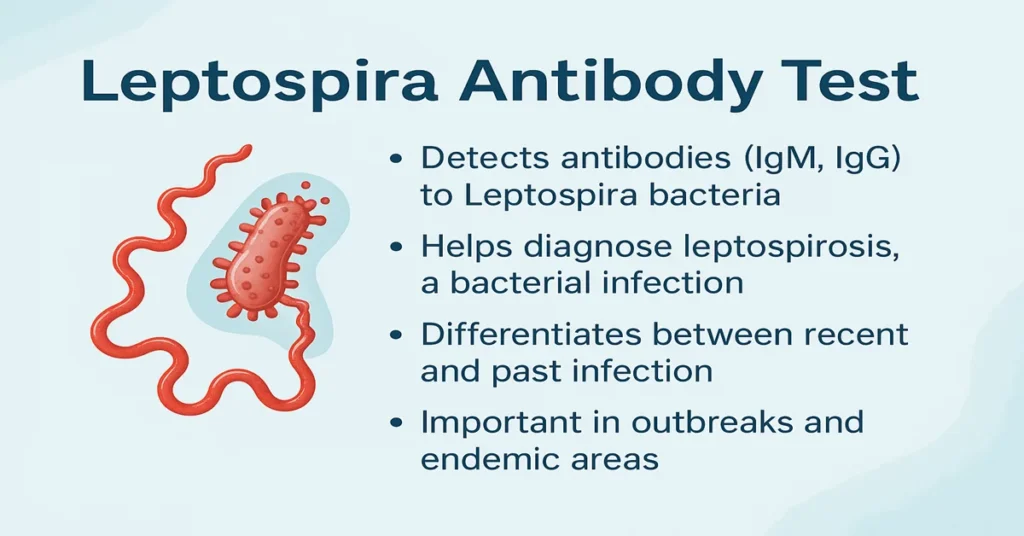
The Leptospira Antibody Test is a blood test used to detect antibodies (IgM and IgG) produced by the immune system in response to Leptospira bacteria. These bacteria cause leptospirosis, a zoonotic infection transmitted from animals to humans. Infection most commonly occurs through contact with water, mud, or soil contaminated with the urine of infected animals such as rats, dogs, cattle, pigs, and other rodents.
Leptospirosis is seen more often in tropical climates, during monsoon seasons, and in flood-prone areas. People at higher risk include farmers, sewage and sanitation workers, veterinarians, animal handlers, and individuals exposed to stagnant or floodwater. Early diagnosis is important because, in some patients, the infection can progress beyond a flu-like illness and involve the kidneys, liver, lungs, or brain. The Leptospira Antibody Test helps clinicians determine whether infection is recent or occurred in the past, allowing timely clinical decisions and closer monitoring.
Where Are These Antibodies Produced in the Body?
When Leptospira bacteria enter the body, the immune system responds by producing antibodies. These antibodies are generated by B-lymphocytes, which mature into plasma cells. These immune cells are mainly located in the blood, bone marrow, lymph nodes, and spleen.
Once formed, antibodies circulate in the bloodstream. IgM antibodies usually appear first and are considered a marker of recent or active infection. IgG antibodies appear later and may remain detectable for months or even years, reflecting past exposure. Understanding this timing helps doctors interpret test results more accurately.
Why Is the Leptospira Antibody Test Important?
This test has an important role in the evaluation and management of suspected leptospirosis. A positive result confirms that the immune system has encountered Leptospira, supporting the diagnosis when symptoms are non-specific.
By distinguishing between IgM and IgG antibodies, clinicians can better understand whether the infection is recent or occurred in the past. This distinction is clinically useful, particularly when symptoms have been present for several days.
Leptospirosis can, in some cases, affect vital organs and lead to complications such as kidney impairment, liver involvement, bleeding tendencies, lung disease, or inflammation of the brain. Early identification allows doctors to anticipate potential complications and monitor patients more closely. The test is also valuable during outbreaks or after flooding, helping both clinicians and public health teams identify cases and assess disease spread in affected communities.
Causes of Low or Negative Antibody Levels
Low or negative antibody results are commonly seen when a person has not been exposed to Leptospira. They may also occur if testing is performed very early in the illness, before the immune system has had time to produce detectable antibodies.
Individuals with weakened immune responses—due to conditions such as immunodeficiency, malnutrition, or certain chronic illnesses—may produce lower antibody levels. In such cases, results need careful interpretation, and repeat testing may be advised if clinical suspicion remains high.
Symptoms When Test Is Negative
Low or negative antibody levels do not cause symptoms themselves. A patient may still experience symptoms suggestive of leptospirosis in the early phase of illness, even if antibodies are not yet detectable. When symptoms persist and exposure history is suggestive, clinicians often recommend repeating the test after a short interval to look for rising antibody levels.
Causes of High or Positive Antibody Levels
A positive antibody test generally indicates exposure to Leptospira. Elevated IgM levels suggest a recent or current infection, while IgG positivity usually reflects past infection or previous exposure.
Occasionally, antibody tests may show cross-reactivity with other infections, leading to less specific results. In such situations, doctors may use additional tests, such as the Microscopic Agglutination Test (MAT) or molecular methods, to confirm the diagnosis and clarify the clinical picture.
Symptoms Associated with High/Positive Levels
When leptospirosis is active, patients may develop symptoms such as sudden fever, chills, headache, and muscle pain—often involving the calf muscles. Redness of the eyes, nausea, vomiting, abdominal discomfort, and jaundice may also be seen as the illness progresses.
In a smaller number of cases, the disease can become more severe, leading to kidney or liver dysfunction, meningitis, bleeding into the lungs, or breathing difficulty. This severe presentation, known as Weil’s disease, requires urgent medical attention and close hospital monitoring.
Reference Ranges
Results are typically reported qualitatively and may vary depending on the testing method used, such as ELISA or MAT:
- Negative: No detectable antibodies
- Equivocal / Borderline: Unclear result; repeat testing advised
- Positive: Detectable IgM or IgG antibodies, suggesting current or past infection
Because antibody levels can change over time, doctors may repeat testing after 7–14 days to confirm a rising pattern when recent infection is suspected.
Sample Type
The test is performed on a venous blood sample (serum). The procedure is simple and generally safe, with only minor discomfort or bruising at the needle site.
Who Should Get This Test?
Doctors may recommend this test for individuals with recent exposure to floodwater, contaminated environments, or animals, especially when accompanied by fever and muscle pain. It is also considered in patients with jaundice, kidney or liver abnormalities, recent travel to endemic areas, or occupational exposure such as farming, sewage work, or veterinary practice.
What Other Tests May Be Done Along With It?
To support diagnosis and assess organ involvement, clinicians may also order blood counts, liver and kidney function tests, urine analysis, or more specific tests such as MAT or PCR for Leptospira DNA. These tests help build a complete clinical picture rather than relying on a single result.
How Reliable Is the Test?
IgM antibodies are more useful in early illness, while IgG reflects longer-term exposure. Very early testing can produce false-negative results, which is why repeat testing is common when symptoms and exposure history suggest leptospirosis. Interpretation always takes timing and clinical context into account.
Test Preparation
Fasting is usually not required. Patients should inform their doctor about recent antibiotic use, immune system conditions, pregnancy, or the timing of symptom onset. If symptoms have started only recently, repeat testing may be recommended after a few days.
When to Consult a Doctor
Medical evaluation is advised if high fever develops after exposure to floodwater or animals, especially when accompanied by severe muscle pain, yellowing of the skin or eyes, reduced urine output, breathing difficulty, or confusion. Early medical attention can significantly reduce the risk of serious complications.
Important Word Explanations
- Antibodies: Proteins produced by the immune system to recognize and fight infections
- IgM: An antibody type indicating recent or current infection
- IgG: An antibody type indicating past infection or exposure
- Zoonotic: An infection transmitted from animals to humans
- Jaundice: Yellowing of the skin and eyes due to liver involvement
- Meningitis: Inflammation of the protective membranes around the brain
- Weil’s disease: A severe form of leptospirosis involving multiple organs
~END~
Related Posts
None found