
Overview
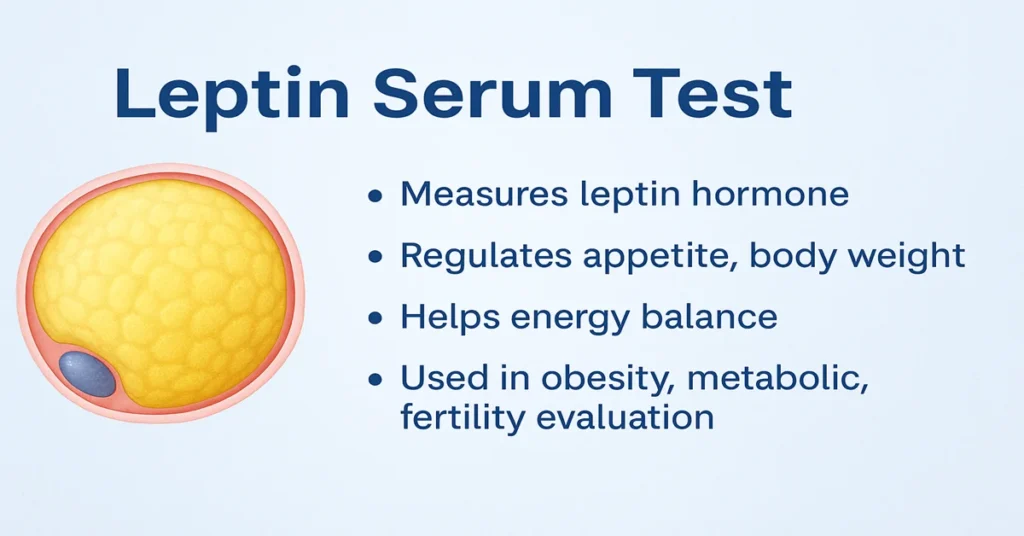
The Leptin Serum Test is a blood test used to measure leptin, a hormone produced mainly by body fat (adipose tissue). Leptin plays an important role in regulating hunger, body weight, and overall energy balance. Under normal conditions, leptin sends signals to the brain—particularly to the hypothalamus—indicating that the body has adequate energy stores. This signaling helps reduce appetite and supports weight stability. Clinically, leptin is best understood as a hormone that reflects the body’s energy status rather than simply a trigger for hunger or fullness.
Because leptin is closely connected with metabolism, reproductive function, and hormonal regulation, this test is sometimes included in the evaluation of obesity, unexplained weight changes, fertility concerns, and selected metabolic or endocrine conditions. The result is not interpreted on its own but adds useful context to other clinical and laboratory findings.
Where Is Leptin Produced in the Body?
Leptin is produced primarily by adipocytes, the fat cells found in white adipose tissue. In general, a greater amount of body fat is associated with higher circulating leptin levels. However, this relationship is not always linear, as the body’s sensitivity to leptin can vary from person to person.
Smaller amounts of leptin are also produced in other tissues, including the stomach, placenta during pregnancy, skeletal muscle, and bone marrow. These sources contribute minimally to overall blood levels. From a clinical perspective, body fat remains the main determinant of leptin concentration, which is why leptin results are commonly interpreted alongside body weight and body composition.
Functions and Importance of Leptin
Leptin has effects that extend beyond appetite control. One of its primary functions is the regulation of appetite and satiety. When leptin levels are adequate, signals to the brain help suppress hunger and support a feeling of fullness. When levels are lower, appetite tends to increase. This feedback mechanism helps the body maintain energy balance over time.
Leptin also contributes to longer-term regulation of body weight by influencing both energy intake and energy expenditure. Rather than causing rapid changes, it supports gradual metabolic adjustments.
In reproductive health, leptin plays a permissive role. Adequate leptin levels signal that the body has sufficient energy reserves to support puberty, ovulation, and normal menstrual cycles. Very low levels may interfere with these processes.
Leptin also interacts with glucose metabolism and insulin signaling, linking it to broader metabolic regulation. During pregnancy, leptin levels naturally rise, reflecting increased energy requirements and placental activity. In addition, leptin has immune-related functions and can influence inflammatory pathways, acting in part as an immune signaling molecule.
Causes of Low Leptin Levels
Low leptin levels are most often seen in states of reduced body fat or limited energy stores. This may occur in individuals who are underweight, malnourished, or experiencing prolonged calorie deficiency. Certain eating disorders and periods of extreme physical exertion can also be associated with lower leptin levels.
In rare cases, genetic conditions affecting leptin production or disorders involving hypothalamic regulation may result in unusually low concentrations. Clinically, low leptin is viewed as a signal of reduced energy availability rather than a diagnosis in itself.
Symptoms of Low Leptin Levels
Low leptin levels may be associated with increased hunger, difficulty maintaining weight, low energy, or disturbances in reproductive function such as delayed puberty or fertility concerns. These features reflect the body’s response to perceived energy deficiency rather than the hormone level alone. Symptoms vary widely and are always interpreted in the broader clinical context.
Causes of High Leptin Levels
Higher leptin levels are most commonly observed in individuals with increased body fat. In many such cases, the issue is not insufficient leptin but reduced responsiveness to its signal, often referred to as leptin resistance. Despite high circulating levels, the brain may not respond appropriately.
Elevated leptin levels may also be seen in association with conditions such as polycystic ovary syndrome, insulin resistance, type 2 diabetes, chronic kidney disease, inflammatory states, and pregnancy. These findings usually reflect underlying metabolic or hormonal changes rather than isolated leptin excess.
Symptoms of High Leptin Levels
When leptin levels are high but signaling is impaired, individuals may experience persistent hunger, difficulty controlling weight, or features linked with metabolic imbalance. These findings are not caused by leptin alone and are typically part of a broader metabolic pattern that requires careful clinical assessment.
Why Is the Leptin Serum Test Done?
Doctors may recommend a leptin test when appetite regulation, weight patterns, or reproductive function do not align with expectations based on clinical evaluation. It can be helpful in cases of unexplained weight gain or loss, suspected leptin deficiency, obesity with possible leptin resistance, delayed puberty, infertility, or certain metabolic or hormonal conditions.
The test helps clarify whether leptin signaling may be contributing to the overall clinical picture. Results are usually reviewed alongside other investigations, such as glucose, insulin, thyroid function, or reproductive hormone tests.
Reference Ranges
Reference ranges may vary slightly between laboratories. Commonly reported values include:
- Men: approximately 0.5 – 12 ng/mL
- Women: approximately 4 – 25 ng/mL
Women generally have higher leptin levels due to differences in body fat distribution and hormonal influences. Body mass index and total fat mass strongly affect these values, which is why individual context is always considered during interpretation.
Sample Type
The test requires a venous blood sample. Aside from brief discomfort or mild bruising at the needle site, there are no significant risks associated with sample collection.
Test Preparation
In many cases, no special preparation is required. Some laboratories may suggest an overnight fast or a morning sample, as leptin levels can show mild daily variation. Patients may be asked to mention pregnancy, menstrual status, or current medications. Following the specific instructions provided by the healthcare provider or laboratory is recommended.
When to Consult a Doctor
Medical consultation is appropriate when there are ongoing concerns such as unexplained weight changes, persistent hunger or loss of appetite, delayed puberty, menstrual irregularities, fertility difficulties, or signs of metabolic imbalance. Fatigue, weakness, or obesity that does not respond as expected to standard approaches may also prompt further evaluation.
Clinicians typically interpret leptin results as part of a comprehensive assessment rather than as a standalone explanation.
Important Word Explanations
- Leptin: A hormone produced mainly by fat cells that signals energy stores to the brain
- Hypothalamus: A region of the brain involved in appetite, hormone regulation, and temperature control
- Adipose tissue: Body fat
- Satiety: The feeling of fullness after eating
- Insulin resistance: Reduced responsiveness of body tissues to insulin
- Metabolic syndrome: A cluster of metabolic risk factors including obesity and abnormal glucose regulation
- Cytokine: A signaling molecule involved in immune responses
- PCOS: A hormonal condition in women that can affect menstrual cycles and fertility
~END~
Related Posts
None found