
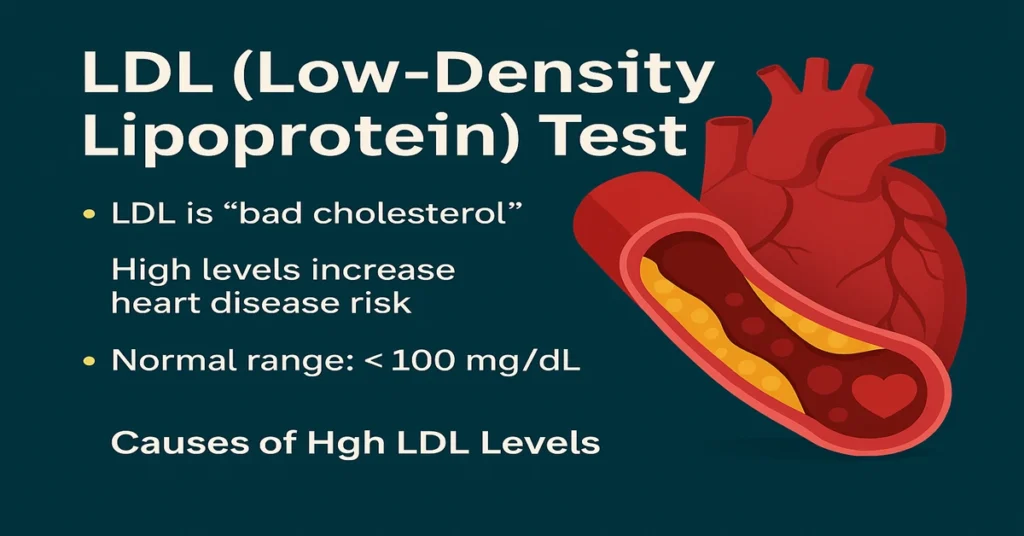
LDL (Low-Density Lipoprotein) Test: Meaning, Functions, Causes, Symptoms, Ranges and Complete Guide
What is LDL (Low-Density Lipoprotein)?
LDL stands for Low-Density Lipoprotein and is commonly referred to as “bad cholesterol.” In laboratory reports, LDL represents the portion of cholesterol carried from the liver to different tissues through the bloodstream. It is an essential part of normal metabolism, but it becomes clinically significant when levels remain elevated over time.
LDL earns its “bad” label because excess amounts tend to deposit cholesterol within the inner lining of blood vessels. This gradual accumulation narrows arteries and interferes with blood flow, increasing the long-term risk of heart disease, stroke, and circulation-related problems. In day-to-day practice, doctors focus less on a single LDL value and more on how persistently high levels affect overall cardiovascular risk.
Where is LDL Produced in the Body?
LDL is not produced as a standalone substance. It forms naturally during the body’s normal fat transport process, primarily involving the liver.
The liver first releases very-low-density lipoproteins (VLDL), which carry triglycerides to tissues for energy use or storage. As these triglycerides are delivered, the particle becomes smaller and denser, eventually transforming into LDL. At this stage, LDL mainly carries cholesterol rather than triglycerides.
This delivery system is necessary for normal cell function. Problems arise only when LDL circulation exceeds the body’s needs, allowing cholesterol to remain in the bloodstream and settle into vessel walls.
Functions and Importance of LDL
Despite its reputation, LDL plays an important physiological role. In controlled amounts, it supports several essential processes.
LDL transports cholesterol from the liver to cells throughout the body. Cholesterol is a structural component of cell membranes, helping them remain stable and flexible. It is also required for the production of several hormones and for the formation of vitamin D.
From a clinical viewpoint, LDL is not harmful by itself. Its importance lies in balance. When LDL delivery exceeds what tissues can safely use, cholesterol begins to accumulate where it should not, particularly inside arteries.
Causes of Low LDL Levels
Low LDL levels are relatively uncommon and are usually detected incidentally during routine testing. When present, they often reflect changes in metabolism rather than a direct disease process.
Conditions that increase metabolic rate, reduce cholesterol production, or interfere with absorption may lower LDL values. In some individuals, medication effects or inherited lipid conditions also contribute. Doctors interpret low LDL in the context of symptoms, medical history, and other laboratory findings rather than as an isolated concern.
Symptoms of Low LDL
Most people with low LDL do not experience specific symptoms. In rare situations where LDL levels are extremely low, subtle effects related to hormone balance or energy regulation may be observed. These findings are uncommon and are usually linked to underlying medical or genetic conditions rather than the LDL value itself.
Causes of High LDL Levels
Persistently high LDL is one of the most clinically important lipid abnormalities. It develops due to a combination of metabolic, genetic, and environmental influences.
From a laboratory perspective, elevated LDL reflects increased cholesterol delivery into circulation or reduced clearance from the blood. Conditions affecting thyroid function, glucose control, kidney or liver health can contribute, as can inherited lipid disorders. Lifestyle patterns and certain medications may also influence LDL levels. Doctors assess these contributing factors together rather than attributing high LDL to a single cause.
Symptoms of High LDL
High LDL itself does not cause immediate symptoms. This is why it is often described as a “silent” cardiovascular risk factor. Many individuals feel completely well while cholesterol continues to accumulate within arteries over years.
Symptoms typically appear only when blood flow becomes significantly restricted. At that stage, signs may involve the heart, brain, or peripheral circulation. Because of this delayed presentation, regular lipid testing plays a key role in early risk detection.
Reference Ranges for LDL Cholesterol
Although reference ranges may vary slightly between laboratories, LDL values are generally interpreted as follows:
- Below 100 mg/dL: Optimal
- 100–129 mg/dL: Near optimal
- 130–159 mg/dL: Borderline high
- 160–189 mg/dL: High
- 190 mg/dL and above: Very high
Clinicians interpret these ranges in combination with age, medical history, and other lipid values rather than in isolation.
Sample Type
Sample Type: Serum
Tube Used: Red top (plain tube)
LDL measurement is usually part of a fasting lipid profile. In many reports, LDL is calculated using other lipid values, while direct measurement is used when triglyceride levels are significantly elevated.
Test Preparation
Accurate LDL assessment typically requires short-term fasting. Alcohol intake and recent dietary changes can temporarily influence lipid values, so these factors are reviewed during interpretation. Patients are generally advised to maintain their usual routine before testing rather than making sudden adjustments.
When to Consult a Doctor
Medical review is recommended when LDL levels remain elevated across repeated tests or appear alongside other cardiovascular risk factors. Individuals with diabetes, thyroid disorders, high blood pressure, or a family history of early heart disease benefit from regular lipid monitoring.
Doctors use LDL results as one part of a broader risk assessment, guiding further evaluation or follow-up when needed.
Important Word Explanations
- Cholesterol: A fat-like substance required for cell structure and hormone production.
- Plaque: A buildup of cholesterol and other materials inside blood vessel walls.
- Atherosclerosis: Gradual narrowing of arteries due to plaque accumulation.
- Lipid Profile: A blood test measuring total cholesterol, LDL, HDL, and triglycerides.
- Familial Hypercholesterolemia: An inherited condition causing very high LDL levels from an early age.
~END~