
Overview
Calcium is one of the most essential minerals in the human body. Although most calcium is stored in bones and teeth, a small but critical portion circulates in the bloodstream. This circulating calcium exists in two main forms: calcium bound to proteins such as albumin, and ionized (free) calcium, which is the biologically active form.
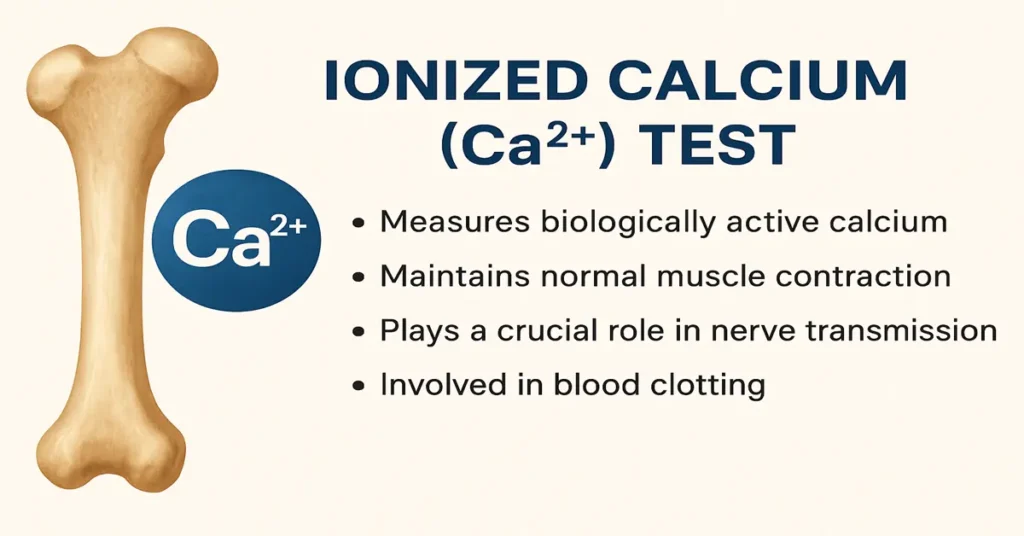
The Ionized Calcium (Ca²⁺) Test specifically measures this free calcium. Because ionized calcium directly affects muscle contraction, nerve signaling, heart rhythm, and blood clotting, this test provides a more accurate reflection of calcium activity than total calcium in certain clinical situations, particularly when protein levels are abnormal.
What Is the Ionized Calcium Test?
The ionized calcium test is a blood test that measures calcium that is not bound to proteins and is immediately available for physiological use. Unlike total calcium, which includes both bound and unbound forms, this test focuses solely on the active fraction.
Clinically, doctors often rely on ionized calcium when total calcium values may be misleading. This commonly occurs in patients with low albumin levels, critical illness, liver disease, kidney failure, or significant metabolic disturbances. In these settings, ionized calcium gives a clearer picture of true calcium status.
Where Does Calcium Come From in the Body?
Calcium is not produced by the body and must be obtained externally.
Sources
Dietary sources include dairy products, green leafy vegetables, nuts, seeds, and fortified foods. Supplements may also contribute in some individuals.
Absorption
Calcium is absorbed in the intestines, a process that depends heavily on adequate vitamin D levels. Without sufficient vitamin D, calcium absorption may remain inadequate even when intake appears sufficient.
Regulation of Calcium Levels
Blood calcium levels are tightly regulated by three key hormones. Parathyroid hormone increases blood calcium by influencing bone, kidney, and intestinal handling of calcium. Vitamin D enhances intestinal absorption of calcium. Calcitonin, produced by the thyroid gland, helps lower blood calcium by promoting calcium deposition in bones.
Together, these mechanisms maintain calcium within a narrow range necessary for normal body function.
Why Is Ionized Calcium Important? (Main Functions)
Ionized calcium is essential for many vital processes. It enables normal muscle contraction, including the coordinated contraction of the heart. It allows nerves to transmit signals effectively throughout the body. It plays a key role in blood clotting and supports bone mineralization. Ionized calcium is also involved in enzyme activation and intracellular signaling.
Because these processes are highly sensitive to calcium levels, even small shifts in ionized calcium can affect muscle strength, heart rhythm, and neurological function.
Causes of Low Ionized Calcium (Hypocalcemia)
Low ionized calcium levels may occur in a variety of clinical settings. Common associations include vitamin D deficiency, reduced parathyroid hormone activity, chronic kidney disease, severe magnesium deficiency, and critical illness such as sepsis. Certain medications and conditions like pancreatitis or large-volume blood transfusions may also lower ionized calcium.
In some individuals, total calcium may appear normal while ionized calcium is reduced, particularly when albumin levels are low or acid–base balance is altered.
Symptoms of Low Ionized Calcium
Symptoms of low ionized calcium reflect increased nerve and muscle excitability. Patients may experience muscle cramps, spasms, or tingling sensations around the mouth or in the hands and feet. Fatigue and weakness are common, and in more severe cases, abnormal heart rhythms or seizures may occur.
The severity of symptoms often depends on how rapidly calcium levels fall rather than the absolute value alone.
Causes of High Ionized Calcium (Hypercalcemia)
Elevated ionized calcium levels are most often related to increased parathyroid hormone activity or malignancy-related processes. Other contributing factors may include excessive calcium or vitamin D intake, prolonged immobilization, or certain medications that alter calcium handling.
Persistently elevated calcium levels can place strain on the kidneys, bones, and cardiovascular system over time.
Symptoms of High Ionized Calcium
Symptoms associated with high ionized calcium vary in severity. Common complaints include nausea, constipation, increased thirst, frequent urination, muscle weakness, and changes in mood or cognition. Kidney stones may develop with prolonged elevation.
In severe cases, cardiac rhythm disturbances or altered consciousness can occur, reflecting the systemic effects of excess calcium.
Reference Range
A commonly used reference range for ionized calcium is approximately 1.12–1.32 mmol/L.
Exact ranges may vary slightly depending on the laboratory and analytical method.
Results are always interpreted alongside clinical findings and, when appropriate, total calcium and albumin levels.
Sample Type and Testing Requirements
The test is performed on a blood sample, usually obtained from a vein. In critical care settings, arterial samples may be used. Because ionized calcium is influenced by blood pH, samples must be analyzed promptly. Changes in acidity or alkalinity can alter calcium binding and affect results.
For this reason, ionized calcium is sometimes measured together with blood pH.
Why Do Doctors Order This Test?
Doctors may order the ionized calcium test when symptoms suggest calcium imbalance, when parathyroid disorders are suspected, or when total calcium results do not match the clinical picture. It is frequently used in patients with kidney disease, critical illness, abnormal heart rhythms, or known disorders of calcium or vitamin D metabolism.
The test is also useful before major surgery or in patients receiving large blood transfusions.
Test Preparation
Fasting is usually not required unless other tests are being performed at the same time. Doctors should be informed about calcium or vitamin D supplementation, certain medications, and any known metabolic conditions.
During blood collection, excessive hand clenching should be avoided, as it may temporarily affect results.
When to Consult a Doctor
Medical advice should be sought if symptoms suggest calcium imbalance. These include persistent muscle cramps, tingling sensations, irregular heartbeat, confusion, seizures, excessive thirst, frequent urination, or symptoms suggestive of kidney stones.
Urgent evaluation is necessary for seizures, severe weakness, or sudden changes in heart rhythm.
Important Word Explanations
- Ionized Calcium: The active, unbound form of calcium in the blood
- Hypocalcemia: Low blood calcium levels
- Hypercalcemia: High blood calcium levels
- PTH (Parathyroid Hormone): Hormone that raises blood calcium
- Calcitonin: Hormone that lowers blood calcium
- Pancreatitis: Inflammation of the pancreas
- Sepsis: A severe, body-wide infection
- Immobilization: Prolonged lack of movement, such as extended bed rest
~END~
Great Post.
Great info.
Your articles are more helpful than most hospital websites. Easy to read even for non-medical people.
I like your blog.
No complicated terms. Thank you for making diagnostics easy.