
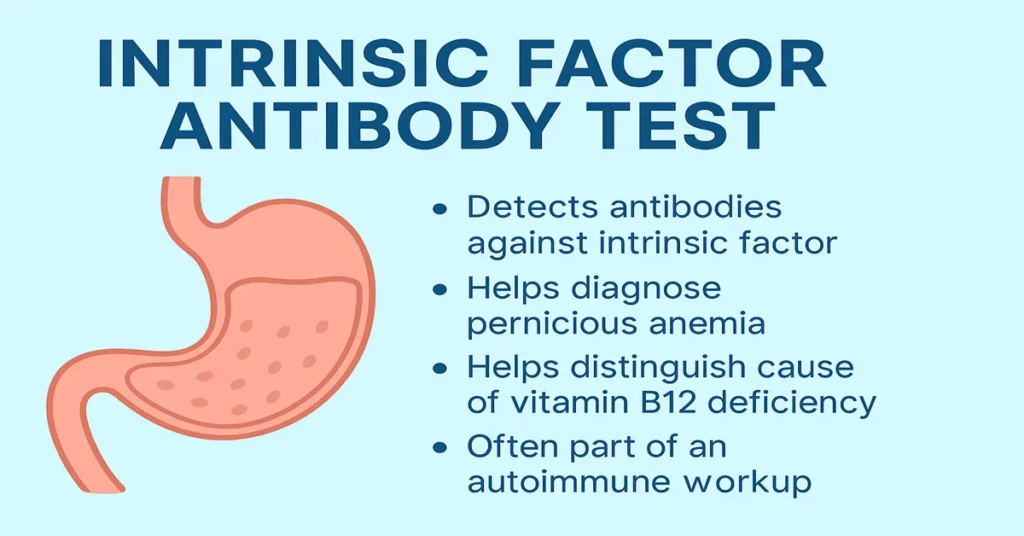
Intrinsic Factor Antibody Test: Purpose, Results, High/Low Levels & B12 Deficiency Diagnosis
What Is the Intrinsic Factor Antibody Test?
The Intrinsic Factor Antibody (IF Antibody) Test is a blood test used to detect antibodies directed against intrinsic factor, a protein produced in the stomach that is essential for vitamin B12 absorption. When these antibodies are present, intrinsic factor cannot bind vitamin B12 effectively, and absorption in the small intestine becomes impaired. Over time, this process leads to pernicious anemia, a specific autoimmune cause of vitamin B12 deficiency.
From a clinical standpoint, this test is considered highly specific. A positive result strongly supports an autoimmune mechanism behind B12 deficiency rather than dietary or surgical causes. Because vitamin B12 is essential for red blood cell production, nerve function, and DNA synthesis, identifying the underlying cause of deficiency is important for preventing long-term complications.
The test is typically ordered as part of a broader evaluation when vitamin B12 deficiency is suspected or confirmed.
Where Is Intrinsic Factor Produced in the Body?
Intrinsic factor is produced in the stomach by specialized cells.
1. Parietal Cells
Parietal cells are located mainly in the body and fundus of the stomach. These cells are responsible for producing both stomach acid and intrinsic factor. After vitamin B12 is released from food in the stomach, intrinsic factor binds to it and carries it through the digestive tract to the small intestine, where absorption occurs.
When parietal cell function is impaired, intrinsic factor production decreases, directly affecting vitamin B12 absorption.
Where Are Intrinsic Factor Antibodies Produced?
Intrinsic factor antibodies are produced by the immune system.
They are generated by B lymphocytes, which normally produce antibodies to fight infections. In autoimmune conditions, these cells mistakenly identify intrinsic factor as a foreign substance. The resulting antibodies either block intrinsic factor or interfere with its ability to bind vitamin B12.
This immune response is most commonly associated with autoimmune gastritis and pernicious anemia.
Main Functions and Importance of the Intrinsic Factor Antibody Test
1. Confirms Pernicious Anemia
A positive intrinsic factor antibody test is one of the most reliable indicators of pernicious anemia. It shows that vitamin B12 malabsorption is occurring due to an autoimmune process rather than poor intake or digestive loss.
2. Identifies the Cause of Vitamin B12 Deficiency
Vitamin B12 deficiency can occur for several reasons, including reduced intake, prior gastric surgery, intestinal disease, medication effects, or chronic alcohol use. The intrinsic factor antibody test helps distinguish autoimmune B12 deficiency from these non-autoimmune causes, which is essential for accurate diagnosis.
3. Helps Diagnose Autoimmune Gastritis
Many individuals with intrinsic factor antibodies also have autoimmune or atrophic gastritis. These conditions damage the stomach lining, reduce acid and intrinsic factor production, and gradually impair nutrient absorption.
4. Supports Early Clinical Decision-Making
Long-standing vitamin B12 deficiency can affect the nervous system, blood formation, and cognitive function. Identifying intrinsic factor antibodies early allows doctors to recognize an autoimmune process and plan appropriate long-term management rather than treating the deficiency as temporary or dietary.
Causes of Low or Negative Intrinsic Factor Antibody Levels
A negative intrinsic factor antibody result is generally considered normal.
1. No Autoimmune Activity
Healthy individuals do not produce intrinsic factor antibodies, and a negative test suggests the immune system is not targeting intrinsic factor.
2. Non-Autoimmune Vitamin B12 Deficiency
When the test is negative, vitamin B12 deficiency—if present—is more likely due to other factors such as reduced intake, post-surgical changes, intestinal disease, alcohol-related malabsorption, or medication effects.
3. Early Autoimmune Disease
In a small number of cases, intrinsic factor antibodies may not be detectable in early disease. In such situations, doctors may rely on additional tests to clarify the cause of deficiency.
Symptoms of Low/Negative Result
The test result itself does not cause symptoms. If vitamin B12 deficiency is present from another cause, symptoms may include fatigue, weakness, numbness or tingling, and difficulty with concentration or memory. These features reflect the deficiency rather than the antibody result.
Causes of High or Positive Intrinsic Factor Antibody Levels
A positive result indicates autoimmune interference with vitamin B12 absorption.
1. Pernicious Anemia
This is the most common cause of a positive intrinsic factor antibody test. The antibodies block or destroy intrinsic factor, leading to impaired vitamin B12 absorption.
2. Autoimmune Gastritis
Chronic immune-mediated damage to the stomach lining can reduce intrinsic factor production and promote antibody formation.
3. Other Autoimmune Disorders
Intrinsic factor antibodies may be seen alongside other autoimmune conditions. Autoimmune diseases often coexist, and their presence increases the likelihood of immune-mediated gastric involvement.
Symptoms of High/Positive Levels (Signs of B12 Deficiency)
When intrinsic factor function is impaired, vitamin B12 absorption decreases, and deficiency symptoms may gradually develop.
Neurological features may include tingling or numbness in the hands and feet, balance difficulties, or changes in memory and concentration. Blood-related effects can include fatigue, weakness, pale skin, or shortness of breath with exertion. Some individuals also notice changes in mood, irritability, or cognitive slowing.
Digestive findings such as a smooth or sore tongue and reduced appetite may occur. The severity of symptoms depends on how long the deficiency has been present rather than the antibody level itself.
Reference Ranges
Intrinsic factor antibody results are generally reported as:
- Negative: No intrinsic factor antibodies detected
- Positive: Intrinsic factor antibodies present
A positive result is considered highly specific for autoimmune vitamin B12 deficiency, particularly pernicious anemia.
Sample Type
The test is performed using a blood (serum) sample.
It is minimally invasive and commonly included in vitamin B12 deficiency evaluations.
Test Preparation
Fasting is usually not required. Doctors may consider current vitamin B12 supplementation, autoimmune history, prior gastric or intestinal surgery, and long-term medication use when interpreting results. The test is often reviewed alongside vitamin B12, methylmalonic acid, and homocysteine levels.
When to Consult a Doctor
Medical evaluation is recommended if symptoms suggest vitamin B12 deficiency, especially neurological signs such as numbness, balance difficulty, or memory changes. Persistent fatigue, pale skin, rapid heartbeat, or unexplained digestive symptoms also warrant assessment.
Individuals with a family history of autoimmune disease, prior gastric surgery, or long-term use of acid-reducing medications may require closer monitoring. Early recognition of autoimmune B12 deficiency helps prevent irreversible nerve damage.
Important Word Explanations
- Intrinsic Factor: A stomach-produced protein required for vitamin B12 absorption
- Pernicious Anemia: An autoimmune condition causing vitamin B12 deficiency
- Parietal Cells: Stomach cells that produce intrinsic factor and stomach acid
- Autoimmune Gastritis: Immune-mediated inflammation of the stomach lining
- Neuropathy: Nerve damage causing numbness or tingling
- B Lymphocytes: Immune cells that produce antibodies
~END~
Related Posts
None found
Great info.
I like your blog.
I like your blog.
Cool blog.