
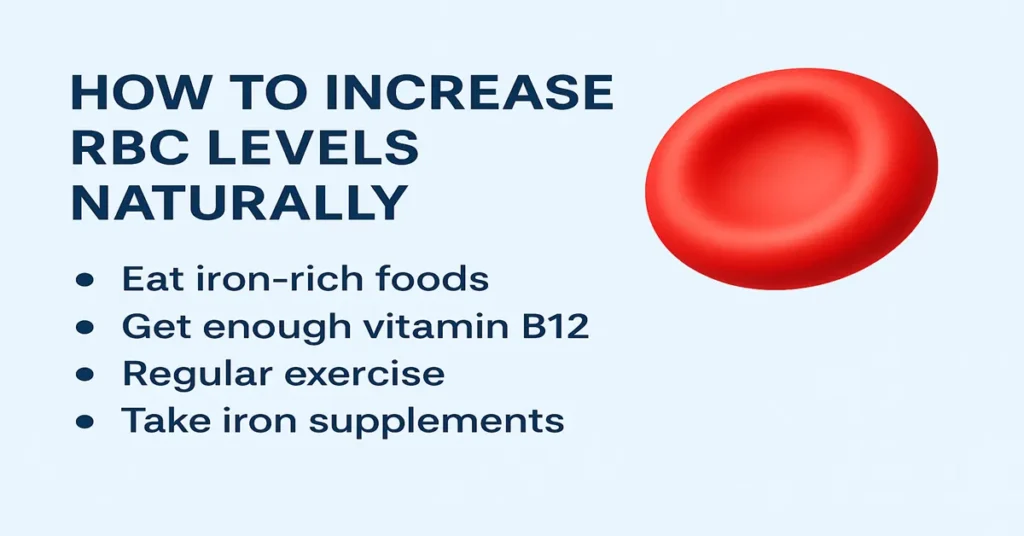
How to Increase RBC Levels Naturally at Home
A healthy red blood cell (RBC) count is important for keeping your body active, energetic, and healthy. RBCs carry oxygen from your lungs to every part of your body, so when their levels drop, you start feeling weak, tired, or breathless even after small activities. The good news is that in many cases, RBC levels can be improved naturally at home with the right food, supplements, and lifestyle changes. This article explains all the practical and easy steps you can follow to increase RBC count naturally.
Short Overview
RBCs (Red Blood Cells) are blood cells that carry oxygen throughout the body. Low RBC levels happen due to nutritional deficiencies, blood loss, or underlying medical conditions. With proper diet, iron-rich foods, vitamins, and healthy lifestyle changes, many people can improve their RBC levels naturally. However, very low levels may need medical attention.
Causes of Low RBC Levels
Low RBC levels, also called anemia, can develop slowly or suddenly depending on the underlying cause. Knowing the reason helps you choose the right treatment. Common causes include:
1. Iron Deficiency
This is the most common cause of low RBC count. Iron is needed to make hemoglobin, the protein that carries oxygen. Without enough iron, your body cannot produce healthy RBCs.
2. Vitamin B12 Deficiency
B12 is essential for RBC production. Low levels can cause large, unhealthy RBCs that do not function well. Vegetarians and older adults are at higher risk.
3. Folate (Vitamin B9) Deficiency
Folate helps the bone marrow make new red blood cells. Lack of green leafy vegetables is a common cause of folate deficiency.
4. Blood Loss
Heavy periods, injury, internal bleeding, or long-term digestive issues can reduce RBC levels.
5. Chronic Kidney Disease
Kidneys produce erythropoietin (EPO), a hormone that signals bone marrow to make RBCs. Weak kidneys = reduced RBC production.
6. Bone Marrow Disorders
Conditions like aplastic anemia and leukemia can affect the bone marrow’s ability to produce enough red blood cells.
7. Poor Diet & Malnutrition
Eating too little or unbalanced diets lacking iron, B12, or folate leads to low RBC levels.
8. Chronic Infections or Inflammation
Long-term infections can interfere with the body’s ability to use nutrients and produce RBCs.
Symptoms of Low RBC Levels
Low RBC levels reduce the oxygen supply to organs, leading to noticeable symptoms such as:
- Constant fatigue
- Weakness
- Pale or yellowish skin
- Shortness of breath
- Fast heartbeat
- Chest discomfort
- Headaches
- Dizziness
- Cold hands and feet
- Poor concentration
These symptoms can worsen over time if RBC levels drop further.
Diet to Increase RBC Levels + Food List
Food plays the biggest role in boosting RBC levels naturally. Three nutrients—Iron, Vitamin B12, and Folate—are the most important for producing red blood cells.
1. Iron-Rich Foods
Iron helps your body produce hemoglobin. Add these foods to your daily meals:
- Spinach, kale, methi
- Lentils, beans, chickpeas
- Beetroot
- Red meat, chicken, turkey
- Fish (tuna, salmon, sardines)
- Eggs
- Pumpkin seeds, sunflower seeds
- Soybeans and tofu
- Jaggery (gur)
Tip: Always combine iron-rich foods with vitamin C-rich foods like lemon, oranges, tomatoes, or amla for better absorption.
2. Vitamin B12-Rich Foods
B12 deficiency is common in vegetarians. Important sources include:
- Eggs
- Milk, paneer, curd
- Fish and chicken
- Fortified cereals and plant-based milk
- Nutritional yeast
3. Folate (Vitamin B9) Foods
Folate is needed for making new RBCs. Include:
- Green leafy vegetables
- Broccoli
- Avocado
- Peanuts
- Lentils and beans
- Oranges
- Banana
4. Vitamin C Foods
Vitamin C improves iron absorption and boosts immunity.
- Lemon
- Orange
- Amla
- Tomatoes
- Guava
- Kiwi
- Strawberry
5. Copper-Rich Foods
Copper supports iron absorption and RBC production.
- Nuts
- Seeds
- Whole grains
- Shellfish
- Dark leafy vegetables
Healthy Meal Combo Examples
- Spinach sabzi + lemon juice
- Egg + fruit bowl
- Dal + leafy vegetable curry
- Chicken + orange/lemon salad
- Beetroot + carrot juice
Lifestyle Changes to Boost RBC Naturally
Diet is important, but lifestyle changes play a big role too.
1. Regular Exercise
Moderate exercise such as walking, cycling, or yoga increases oxygen demand, encouraging your body to produce more RBCs.
2. Hydration
Drink enough water to support proper blood volume and healthy circulation.
3. Avoid Alcohol
Alcohol slows down RBC production and can lead to nutritional deficiencies.
4. Quit Smoking
Smoking reduces oxygen levels and affects RBC function, leading to long-term anemia.
5. Sleep 7–8 Hours Daily
Good sleep supports hormone balance and improves bone marrow function.
6. Reduce Stress
Stress hormones affect blood production. Meditation, yoga, or deep breathing can help.
7. Balanced Meals Daily
Do not skip meals—your body needs steady nutrients for RBC production.
Supplements (Safe Note)
Sometimes food alone is not enough, especially if levels are very low. Supplements may help but should be taken safely:
Common Supplements
- Iron tablets
- Vitamin B12 supplements
- Folic acid tablets
- Multivitamins
Important Safety Notes
- Never take iron supplements without checking levels—excess iron can be harmful.
- Pregnant women should take supplements only after doctor advice.
- People with kidney disease, infections, or chronic illnesses must consult a doctor before starting any supplement.
- If you feel side effects like stomach pain or nausea, talk to a doctor.
When to See a Doctor
You should contact a doctor if:
- Your RBC test report shows very low levels
- Symptoms worsen despite diet changes
- You feel breathless even at rest
- You have chest pain, fainting, or severe dizziness
- You have chronic disease (kidney/liver/heart)
- You are pregnant and feel tired or weak
- Your periods are very heavy
- You are losing weight unexpectedly
A medical evaluation is necessary to rule out internal bleeding, infections, or bone marrow problems.
Test Preparation (For RBC Test)
- No fasting required for RBC test.
- Drink normal water.
- Tell your doctor if you take iron, B12, or folic acid supplements.
- Inform if you are pregnant or have any chronic illness.
- Wear loose clothing for easy blood sample collection.
Important Word Explanations
- RBC: Red blood cells that carry oxygen in the body.
- Hemoglobin: A protein inside RBCs that transports oxygen.
- Anemia: A condition where RBC or hemoglobin levels become low.
- Folate: Vitamin B9, needed for cell growth and RBC formation.
- Polycythemia: A condition where RBC count becomes too high.
~END~
Great info.