
How to Increase Monocytes Naturally at Home
Monocytes are an important type of white blood cell that support your body’s defense system in a steady, long-term way. In routine OPD and diagnostic lab practice, monocytes are often discussed when someone has repeated infections, slow healing, or chronic inflammation. These cells help remove germs, clean up dead or damaged tissue, and guide other immune cells to the right place.
When monocyte levels fall below normal, a condition called monocytopenia, the immune system may not respond as efficiently. In many cases, low monocytes are temporary and related to stress, recent infection, nutritional gaps, or medicines rather than a serious disease. This article explains why monocytes may be low, how doctors think about this finding, and what natural, supportive steps can help when the cause is mild and reversible.
Short Overview
Monocytes are produced in the bone marrow and circulate in the blood before turning into macrophages and dendritic cells inside tissues. These cells act like cleaners and coordinators of the immune system. Low monocyte levels can reduce immune efficiency, but in everyday practice they often improve with proper nutrition, rest, stress control, and recovery from illness.
Causes of Low Monocytes
Infections
During infections, especially viral illnesses, monocytes may temporarily drop as immune cells shift toward active infection control. Viral fever, influenza, dengue (early phase), measles, COVID-19, and typhoid commonly show this pattern. Levels usually normalize once recovery begins.
Nutritional deficiencies
Bone marrow needs specific nutrients to produce white blood cells. Deficiency of vitamin B12, folate, iron, zinc, or overall protein intake can reduce monocyte production. In routine follow-ups, correcting these deficiencies often leads to gradual improvement.
Stress and hormonal imbalance
Physical or emotional stress raises cortisol levels, which can suppress monocytes. Poor sleep, long working hours, sudden shock, and chronic stress are common, often overlooked causes seen in OPD settings.
Medications
Certain medicines suppress bone marrow activity or immune cell production. Steroids, chemotherapy drugs, immunosuppressants, and some antibiotics are well-known examples. In such cases, low monocytes reflect medication effect rather than immune failure.
Chronic diseases
Long-term conditions such as autoimmune disorders, tuberculosis, liver disease, chronic inflammatory illnesses, or some blood-related conditions may gradually lower monocyte levels and usually need medical supervision.
Bone marrow disorders
Rarely, low monocytes are linked to bone marrow failure or severe systemic illness. These cases are usually accompanied by other abnormal blood parameters.
Symptoms of Low Monocytes
Low monocyte levels do not usually cause symptoms on their own. Symptoms arise from reduced immunity or the underlying cause. Common complaints include frequent infections, slow wound healing, mouth ulcers, fatigue, low energy, repeated fever, body aches, or joint discomfort. If these persist, a CBC test helps clarify the cause.
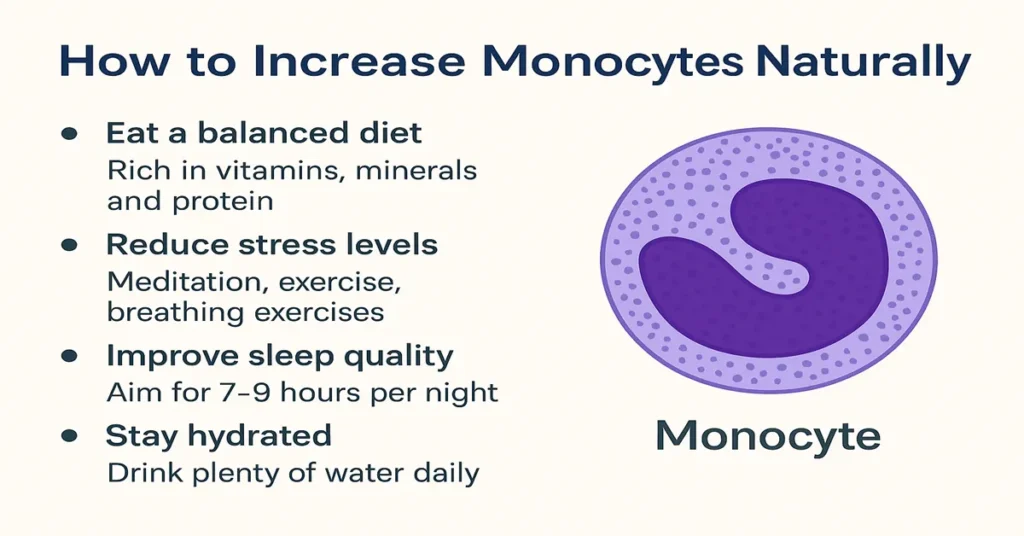
How to Increase Monocytes Naturally at Home
When monocytopenia is mild and reversible, doctors usually recommend supportive measures rather than aggressive treatment.
A balanced, nutrient-rich diet is central. Foods such as eggs, fish, chicken, dal, beans, lentils, nuts, seeds, leafy vegetables, broccoli, whole grains, milk, curd, and paneer provide the proteins, vitamins, and minerals needed for immune cell production.
Vitamin B12 and folate are especially important for white blood cell growth. Dairy products, eggs, fish, fortified cereals, leafy greens, beans, lentils, and beetroot support these needs.
Zinc and iron help immune cells mature and function properly. Pumpkin seeds, almonds, cashews, chickpeas, whole grains, spinach, beans, dates, and legumes are commonly advised sources.
Antioxidant-rich foods protect monocytes from damage during inflammation. Fruits, berries, citrus fruits, green tea, turmeric, ginger, and garlic are often included in routine dietary advice.
Stress reduction plays a major role. Simple daily habits such as deep breathing, meditation, light exercise, yoga, or a short walk outdoors can reduce cortisol levels and support immune recovery.
Good sleep allows immune cells to repair and regenerate. Most adults benefit from 7–9 hours of consistent, good-quality sleep.
Adequate hydration supports circulation and immune function. Regular water intake throughout the day is usually sufficient.
Healthy fats, especially omega-3 sources like walnuts, flaxseeds, olive oil, and fatty fish, help maintain balanced immune activity.
Steroids should be avoided unless medically necessary, as they commonly suppress monocytes. Any medication changes should always be guided by a doctor.
Supplements (Safe Note)
If diet and lifestyle measures are not enough, doctors may recommend supplements such as vitamin B12, folate, iron, zinc, or omega-3 based on blood test results. Self-medication or high-dose supplements without guidance is discouraged.
How Long Does It Take to Improve Monocytes?
If low monocytes are due to stress, mild infection, or nutritional deficiency, improvement is often seen within 2–6 weeks with proper support. When chronic illness or medications are involved, recovery may take longer and requires medical follow-up.
Test Preparation for Monocyte Test
Monocytes are measured as part of a CBC test. Fasting is not required. Normal hydration is advised. Avoid smoking and alcohol before testing, and inform the doctor or lab about medications and recent illness, as these can affect results.
When to Consult a Doctor
Medical advice is important if monocyte levels remain low for 4–6 weeks, infections keep recurring, fatigue persists, lymph nodes are swollen, unexplained fever occurs, or you are on long-term steroids or immunosuppressive therapy. Further tests may be advised to identify the cause.
Important Word Explanations
Monocytes – White blood cells that help fight infection and clean damaged tissues
Monocytopenia – Low monocyte levels in the blood
Immunity – The body’s defense system against infections
Macrophages – Cells formed from monocytes that protect tissues
Inflammation – The body’s response to injury or infection
People Also Ask
Is a low monocyte count always serious?
No. Mild reductions are common and often temporary.
Can monocyte levels drop during infection?
Yes. Acute infections frequently cause a short-term drop.
Does low monocytes always mean weak immunity?
Not necessarily. Many people recover without problems.
When do doctors usually worry about monocytes?
When levels are persistently low or linked with frequent infections.
Is repeat testing common for low monocytes?
Yes. Doctors often repeat CBC tests to observe trends.
Can someone feel normal with low monocytes?
Yes. Many people have no symptoms, especially when the drop is mild or temporary.
~END~
I like your blog.