
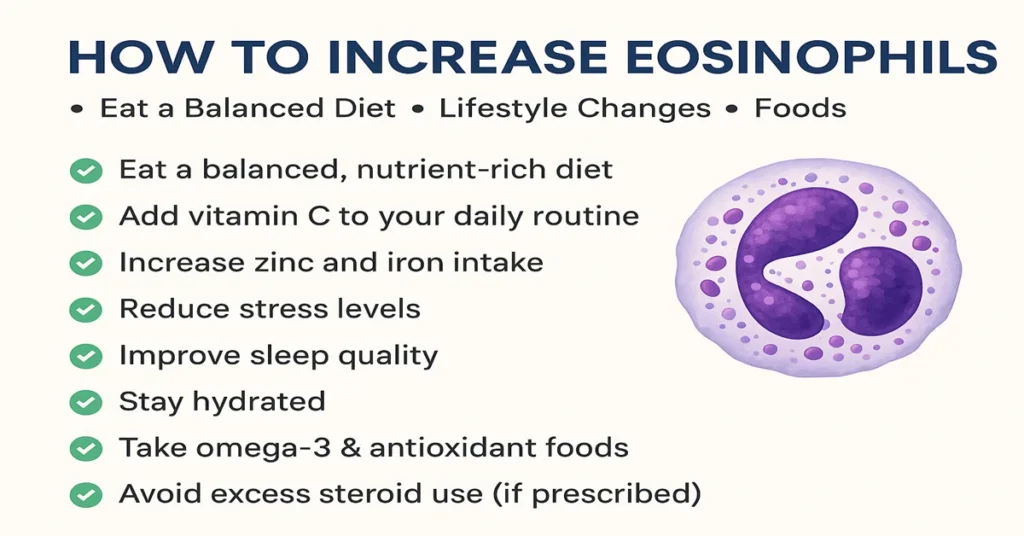
How to Increase Eosinophils Naturally at Home
Eosinophils are a specific type of white blood cell that play an important role in immune balance. In routine OPD and laboratory practice, eosinophils are most often discussed in relation to allergies, parasitic infections, and certain inflammatory conditions. They also take part in tissue repair and immune regulation.
When eosinophil levels fall below normal, a condition called eosinopenia, it usually does not cause immediate symptoms. Many people discover it only through a routine CBC report. Clinically, low eosinophils are often temporary and related to stress, infections, or hormonal changes rather than a serious disease. This article explains why eosinophils may be low, how doctors interpret this finding, and how natural, supportive measures can help the body return to balance when the cause is mild and reversible.
Short Overview
Eosinophils are white blood cells involved in allergic responses, parasite defense, and immune regulation. Low eosinophil levels are commonly seen during stress, acute illness, or steroid use and are usually temporary. Supporting overall immunity, reducing stress, and allowing the body to recover often helps normalize levels.
Causes of Low Eosinophil Levels
In clinical practice, low eosinophils are far more commonly linked to body stress than to bone marrow failure. Understanding the context is important.
Infections
During acute infections, especially bacterial or viral illnesses, the body prioritizes other white blood cells like neutrophils. As a result, eosinophil levels may temporarily fall. Viral fevers, influenza, COVID-19, typhoid, and severe bacterial infections commonly show this pattern. Levels usually return to normal after recovery.
High stress and cortisol levels
Cortisol, the body’s main stress hormone, directly suppresses eosinophils. Emotional stress, lack of sleep, sudden shock, illness, or physical overexertion can all cause a temporary drop. In OPD settings, this is one of the most frequent explanations for low eosinophils.
Hormonal influence
Stress hormones such as cortisol and adrenaline naturally reduce eosinophil counts. This is why low values are often seen during acute illness, trauma, or hospitalization.
Medications
Steroids are the most common medical cause of low eosinophils. Adrenaline, anti-inflammatory drugs, and some antibiotics can also suppress eosinophil levels. In such cases, the lab value reflects medication effect rather than immune weakness.
Chronic health conditions
Long-standing conditions such as Cushing’s syndrome, thyroid imbalance, nutritional deficiencies, or certain autoimmune disorders may gradually lower eosinophils. These cases usually require medical evaluation rather than self-correction alone.
Symptoms of Low Eosinophils
Low eosinophils rarely cause direct symptoms. Most complaints arise from the underlying cause rather than the eosinophil count itself. Some people may notice frequent infections, slow recovery from illness, fatigue, stress-related symptoms, or worsening allergic issues. If such symptoms persist, a CBC test helps clarify the picture.
How to Increase Eosinophils Naturally at Home
When eosinophil levels are low due to stress, recovery from infection, or mild nutritional imbalance, supportive lifestyle measures are usually sufficient.
A balanced, nutrient-rich diet supports bone marrow function, where all blood cells are produced. Regular intake of protein-rich foods such as eggs, fish, chicken, lentils, beans, dairy products, nuts, seeds, leafy vegetables, and fresh fruits helps maintain healthy white blood cell production.
Vitamin C supports immune balance and white blood cell function. Citrus fruits, amla, kiwi, strawberries, tomatoes, bell peppers, and similar foods are commonly included in routine dietary advice.
Zinc and iron are important for immune cell development. Foods such as pumpkin seeds, almonds, cashews, whole grains, chickpeas, spinach, beetroot, beans, dates, and legumes help maintain adequate levels.
Stress reduction is particularly important for eosinophils. Simple practices like deep breathing, meditation, light yoga, grounding exercises, or short outdoor walks can reduce cortisol levels. Even a few minutes daily can make a difference.
Adequate sleep allows the immune system to reset. Most adults benefit from 7–9 hours of regular, good-quality sleep. Reducing screen time before bed and keeping a consistent sleep schedule supports recovery.
Hydration supports circulation and immune cell movement. Regular water intake throughout the day is usually sufficient unless otherwise advised.
Omega-3 fats and antioxidant-rich foods help maintain immune balance. Walnuts, flaxseeds, fish, olive oil, berries, and green tea are commonly suggested as part of a balanced diet.
Avoiding unnecessary or prolonged steroid use is important. If steroids are medically required, eosinophil suppression is expected and usually monitored by the doctor.
Supplements (Safe Note)
If dietary measures are not enough, doctors may recommend supplements such as vitamin C, zinc, vitamin B12, iron, or omega-3 based on blood test results. Self-medication or high-dose supplementation without guidance is discouraged.
How Long Does It Take to Improve Eosinophil Levels?
When low eosinophils are related to stress, recent infection, or mild deficiency, levels often improve within 2–6 weeks as the body recovers. If hormones, chronic illness, or medications are involved, improvement may take longer and requires medical supervision.
Test Preparation for Eosinophil Test
Eosinophils are measured as part of a CBC test. No fasting is usually required. Normal water intake is advised. Avoid smoking and alcohol before testing. Always inform the doctor or lab about medications and recent illness, as these can affect results.
When to Consult a Doctor
Medical advice is important if eosinophil levels remain low on repeated tests, if infections are frequent, if weakness or fatigue persists, or if you are on long-term steroids or other medications. Symptoms suggesting hormonal imbalance or unexplained fever should also be evaluated.
Important Word Explanations
| Term | Simple Explanation |
|---|---|
| Eosinophils | White blood cells involved in allergy response, parasite defense, and immune regulation. |
| Eosinopenia | A condition where eosinophil levels are lower than normal. |
| Immunity | The body’s defense system against infections. |
| Inflammation | The body’s natural response to injury or infection. |
| Deficiency | A low level of an essential nutrient. |
People Also Ask
Is a low eosinophil count always a problem?
No. It is often temporary and related to stress or recent illness.
Can eosinophils be low during infection?
Yes. Acute infections commonly suppress eosinophil levels for a short time.
Does low eosinophils always mean weak immunity?
Not necessarily. Many people have low values without frequent infections.
When do doctors usually worry about low eosinophils?
Concern increases when levels are persistently low or linked with ongoing symptoms.
Is repeat testing common for low eosinophils?
Yes. Doctors often repeat CBC tests to see if levels recover on their own.
Can someone feel normal with low eosinophils?
Yes. Many people have no symptoms, especially when the drop is mild or temporary.
~END~
I like your blog.