
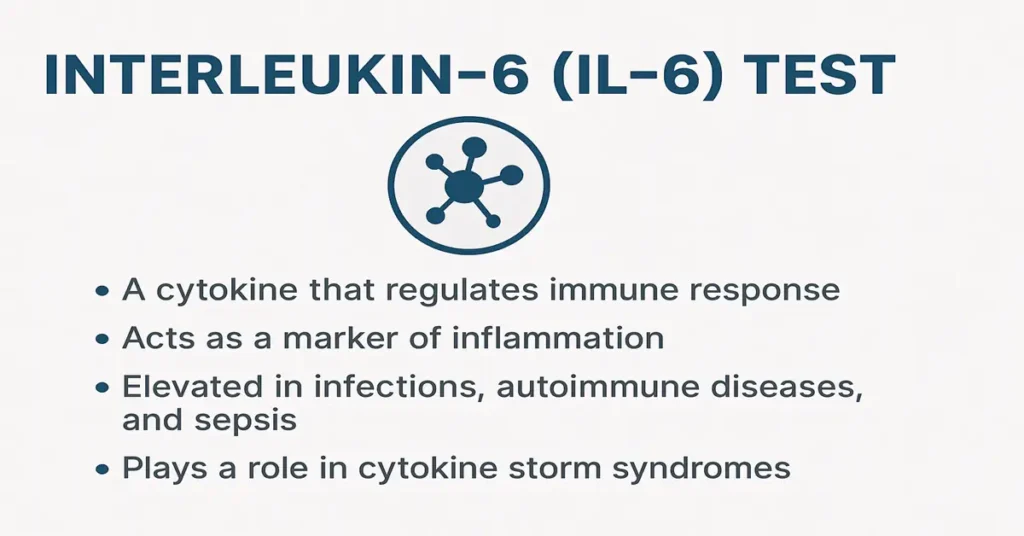
Interleukin-6 (IL-6) Test: Role, High/Low Levels, Functions & Medical Interpretation
What Is Interleukin-6 (IL-6)?
Interleukin-6 (IL-6) is a cytokine, meaning a small signaling protein that allows immune cells to communicate with one another during infection, injury, or inflammation. Unlike many immune mediators that act in a single direction, IL-6 has a more flexible role. Depending on the situation and the tissues involved, it can support both inflammatory and regulatory immune responses.
In acute infections, IL-6 rises early and helps the body respond quickly. It signals immune cells to activate, supports fever generation, and instructs the liver to produce inflammation-related proteins. In longer-standing conditions such as autoimmune disease, metabolic disorders, or obesity, IL-6 may remain persistently elevated, reflecting ongoing low-grade inflammation rather than an acute threat.
Very high IL-6 levels are usually seen in severe systemic illness. In clinical settings, this raises concern for conditions such as sepsis, severe viral infection, or cytokine-mediated immune overactivation. Because IL-6 often increases early in these processes, doctors use the IL-6 test to help assess disease severity, monitor inflammatory activity, and understand immune system behavior rather than to make a diagnosis on its own.
Where Is IL-6 Produced in the Body?
IL-6 is produced by many different cell types, which explains why it can rise in such a wide range of conditions. Whenever the body senses tissue damage, infection, or immune stress, several tissues contribute to IL-6 release.
Key sources include immune cells such as macrophages and monocytes, which produce IL-6 rapidly during bacterial or viral infections. T cells and B cells release IL-6 during immune activation and autoimmune responses. Fibroblasts produce IL-6 in response to tissue injury, while endothelial cells release it from the lining of blood vessels during inflammatory states.
IL-6 is also produced outside the classic immune system. Skeletal muscle releases IL-6 during physical stress or muscle injury, and adipose tissue is a significant chronic source in obesity and metabolic syndrome. Because of these multiple origins, elevated IL-6 does not point to a single disease and must always be interpreted in clinical context.
Main Functions and Importance of IL-6
1. Helps Fight Infections
IL-6 is among the earliest cytokines to rise during infection. It supports rapid immune activation and helps the body recognize and respond to invading microorganisms.
2. Converts B Cells Into Antibody-Producing Cells
IL-6 assists B cells in maturing into plasma cells. These plasma cells produce antibodies, which are essential for longer-term immune protection.
3. Activates T Cells
T cells coordinate immune responses. IL-6 influences how these cells are activated and helps shape immune balance, particularly during viral infections and inflammatory states.
4. Stimulates the Liver to Produce Acute-Phase Proteins
One of IL-6’s most clinically important actions is signaling the liver to produce acute-phase proteins. These include markers such as C-reactive protein, fibrinogen, and serum amyloid A, which doctors frequently use to assess inflammation and infection severity.
5. Controls Fever and Inflammatory Responses
IL-6 interacts with temperature-regulating centers in the brain, contributing to fever during infection. Fever is a controlled physiological response that supports immune defense rather than a harmful process on its own.
6. Regulates Blood Cell Formation and Bone Metabolism
IL-6 plays a role in blood cell production and bone remodeling. In chronic inflammatory states, persistent elevation may influence anemia development or bone health over time.
7. Major Player in Cytokine Storms
Extremely high IL-6 levels are a defining feature of cytokine storms, which are severe immune overreactions. These have been observed in critical viral illnesses, severe inflammatory states, and certain immune-based cancer therapies. In such settings, IL-6 serves as a marker of immune intensity rather than the sole cause of illness.
Causes of Low IL-6 Levels
1. Normal Healthy State
In healthy individuals, IL-6 levels are usually very low or undetectable. This reflects a calm, well-regulated immune system.
2. Immune Suppression
Low IL-6 levels may be seen in people with suppressed immune activity, such as those receiving immunosuppressive medications or those with certain immune deficiencies. In these cases, the value reflects reduced immune signaling rather than a disease of IL-6 itself.
Symptoms of Low IL-6 Levels
Low IL-6 does not typically cause symptoms on its own. Any clinical features are usually related to underlying immune suppression. These may include frequent infections, slower wound healing, reduced fever response during illness, or prolonged recovery times.
Causes of High IL-6 Levels
1. Infections
IL-6 commonly rises in response to infections, including bacterial, viral, fungal, or parasitic illnesses. The degree of elevation often parallels the intensity of the immune response.
2. Sepsis and Septic Shock
In severe systemic infections, IL-6 levels can increase markedly. Such elevations signal a high inflammatory burden and help doctors assess illness severity.
3. Autoimmune Diseases
Chronic autoimmune conditions are associated with persistent IL-6 activation. This reflects ongoing immune stimulation rather than acute infection.
4. Severe Viral Illness
Aggressive viral infections can trigger excessive cytokine release, with IL-6 being one of the key markers of immune escalation.
5. Cancers
Certain malignancies, particularly blood-related cancers, may elevate IL-6 due to tumor-associated inflammation or immune activation.
6. Obesity and Metabolic Syndrome
Adipose tissue releases IL-6 continuously, contributing to low-grade chronic inflammation seen in metabolic disorders.
7. Cytokine Release Syndrome
IL-6 elevation is also observed after specific cancer treatments that activate the immune system, reflecting treatment-related immune signaling.
Symptoms of High IL-6 Levels
Symptoms associated with high IL-6 levels vary depending on the underlying condition. Common features include fever, fatigue, muscle or joint discomfort, and general inflammatory symptoms. In autoimmune disease, joint swelling or stiffness may be prominent. In malignancy or chronic inflammation, unintended weight loss or weakness may occur.
In severe systemic illness, very high IL-6 levels may be associated with breathing difficulty, confusion, low blood pressure, or organ dysfunction. These features reflect critical illness rather than IL-6 elevation alone and require urgent medical attention.
Reference Ranges
Reference values vary between laboratories, but general patterns are observed:
Healthy individuals typically have very low IL-6 levels. Mild to moderate elevations suggest inflammation or infection, while very high values are often seen in severe systemic inflammatory states. Doctors always interpret IL-6 results alongside other markers and the patient’s clinical condition.
Sample Type
IL-6 is measured using a blood sample, collected as serum or plasma.
Test Preparation
Fasting is usually not required. Doctors may consider ongoing steroid use, immunosuppressive therapy, or known inflammatory conditions when interpreting results. Adequate hydration can help with blood collection but does not affect IL-6 levels directly.
When to Consult a Doctor
Medical evaluation is important if symptoms suggest significant infection or inflammation. These include persistent or high fever, severe fatigue, breathing difficulty, painful or swollen joints, or rapidly worsening health. People with known autoimmune disease or immune-related conditions should seek medical advice if symptoms change or flare.
When IL-6 levels are elevated, doctors often review other laboratory markers and clinical findings to understand the cause and severity of inflammation rather than relying on IL-6 alone.
Important Word Explanations
- Cytokine: A protein that allows immune cells to communicate
- Pro-inflammatory: Promoting inflammation as part of immune defense
- Acute-phase proteins: Proteins produced by the liver during inflammation
- Sepsis: A severe, body-wide response to infection
- Cytokine storm: An excessive immune response causing tissue damage
- CRS: Cytokine release syndrome related to immune-activating therapies
- Hematopoiesis: The process of forming new blood cells
~END~
Related Posts
None found