
Overview
Immunoglobulin M (IgM) is one of the key antibodies produced by the immune system and is especially important during the early phase of infection. It is usually the first antibody to appear when the body encounters bacteria, viruses, or other foreign organisms. Because of this early response, IgM is often described as the immune system’s initial alert signal.
IgM is the largest antibody in structure and is found mainly in the blood and lymphatic fluid. Its levels tend to rise quickly at the start of an infection and then fall as other antibodies, such as IgG, take over long-term protection. For this reason, doctors frequently use the IgM blood test to assess recent or ongoing infections and to get a clearer picture of immune function. It is commonly ordered together with IgG and IgA as part of a complete immunoglobulin profile.
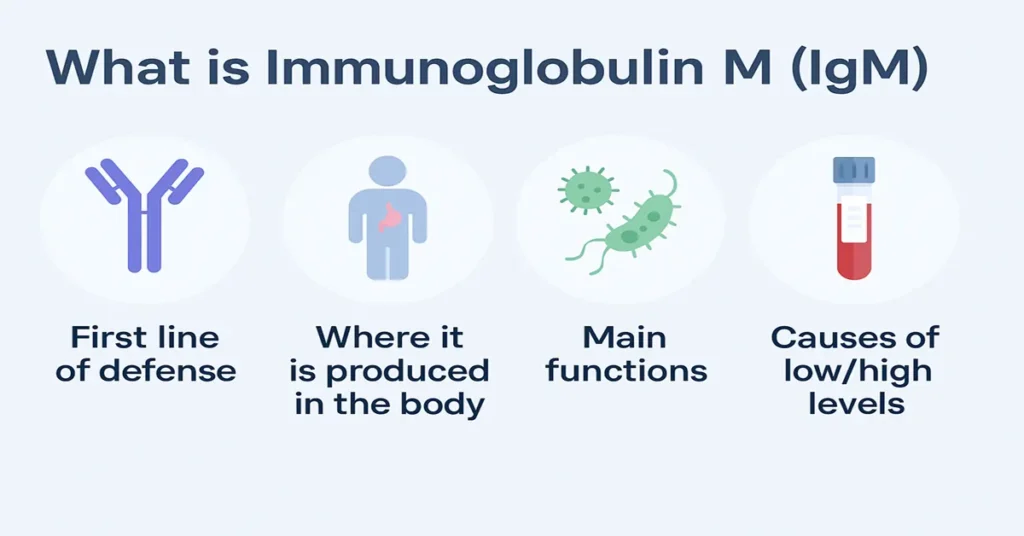
Where Is IgM Produced in the Body?
IgM is produced by plasma cells, which develop from B lymphocytes in the bone marrow. Once formed, IgM is released primarily into the bloodstream and the lymphatic system, where it can circulate rapidly and respond to new infections.
Because of its large pentamer structure, IgM does not easily move into body tissues and therefore remains mostly within the blood. This structural feature makes it particularly effective at capturing and neutralizing pathogens circulating in the bloodstream during the early stages of disease.
Main Functions and Importance of IgM
1. First line of defense
IgM is the earliest antibody produced after a new infection begins. Its rapid appearance allows the immune system to respond quickly, even before more specialized antibodies are formed.
2. Strong pathogen binding
IgM exists as a pentamer, meaning five antibody units are joined together. This structure gives IgM a strong ability to bind bacteria and viruses efficiently.
3. Activates the complement system
IgM is especially effective at activating the complement cascade, a series of immune reactions that help damage and destroy invading microorganisms.
4. Helps in agglutination
By binding multiple pathogens at once, IgM causes them to clump together. This agglutination makes it easier for immune cells to identify and remove the organisms.
5. Indicates recent or current infection
Because IgM rises early and declines relatively quickly, its presence often signals a recent or active infection. This is why IgM testing is widely used in infectious disease diagnostics.
Causes of Low IgM Levels
Low IgM levels usually suggest reduced early immune response or impaired antibody production. This may be seen in certain primary immunodeficiency conditions, including selective IgM deficiency, where the body produces insufficient amounts of IgM.
Inherited problems affecting B-cell development can also reduce IgM production. In addition, some blood-related cancers, such as chronic lymphocytic leukemia or lymphoma, interfere with normal antibody formation. Medical treatments like chemotherapy, radiation therapy, or long-term immunosuppressive drugs may suppress IgM production as well.
In some situations, IgM is produced but lost from the body, such as in kidney disorders, severe burns, or gastrointestinal protein-losing conditions.
Symptoms of Low IgM Levels
Low IgM levels can weaken the body’s initial defense against infections. People may experience frequent or recurrent bacterial infections, particularly involving the sinuses, ears, lungs, or respiratory tract. Recovery from common infections may be slower than expected.
In children, low IgM may present as repeated infections during early life. When low IgM is part of a broader immune deficiency, infections may be more severe or persistent.
Causes of High IgM Levels
High IgM levels are often linked to immune activation rather than a single disease. Acute infections are a common reason, as IgM rises rapidly during the early phase of many viral or bacterial illnesses.
IgM may also be elevated in certain autoimmune conditions, where the immune system remains chronically stimulated. Long-standing infections can keep IgM levels persistently raised. In rare cases, markedly high IgM levels are seen in specific blood disorders involving abnormal IgM-producing cells.
Liver disease can also influence immunoglobulin metabolism and may be associated with elevated IgM levels.
Symptoms of High IgM Levels
Elevated IgM itself does not cause symptoms. Any symptoms present are related to the underlying condition responsible for the increase.
In acute infections, symptoms may include fever, body aches, gastrointestinal upset, or general weakness. Autoimmune conditions may present with joint pain, rashes, or fatigue. Blood-related disorders can cause anemia, enlarged lymph nodes, or excessive tiredness. Liver-related causes may be associated with jaundice or abdominal discomfort.
Reference Ranges
Reference ranges for IgM can vary slightly depending on the laboratory and age group.
In adults, typical values fall between 40 and 230 mg/dL.
In newborns and children, IgM levels may differ as the immune system develops.
Results outside the reference range should always be interpreted by a doctor in the context of symptoms, medical history, and other test results.
Sample Type
IgM is measured using a blood sample, usually serum or plasma, collected from a vein. In many cases, doctors request IgM testing along with IgG, IgA, or IgE to obtain a comprehensive assessment of immune function.
Test Preparation
IgM testing usually requires no special preparation. Fasting is not necessary, and regular medications are generally continued unless otherwise advised.
It is important to inform the doctor about recent infections, vaccinations, repeated illnesses, or use of immunosuppressive medications, as these factors can influence results.
When to Consult a Doctor
Medical consultation is advised if there are frequent infections, slow recovery from common illnesses, persistent fever, chronic cough, or signs of autoimmune disease. Enlarged lymph nodes, jaundice, or repeated infections in children also warrant further evaluation.
In such cases, IgM testing is often interpreted alongside other immunoglobulin tests to provide a clearer picture of immune health.
Important Word Explanations
- Antibody – A protein produced by the immune system to recognize and defend against infections.
- Antigen – A foreign substance, such as a virus or bacterium, that triggers an immune response.
- Pentamer – A structure made of five antibody units, characteristic of IgM.
- Complement system – A group of immune proteins that assist in destroying pathogens.
- Agglutination – Clumping of microbes to aid immune clearance.
- Immunodeficiency – A condition in which the immune system does not function properly.
~END~
Related Posts
None found