
Overview
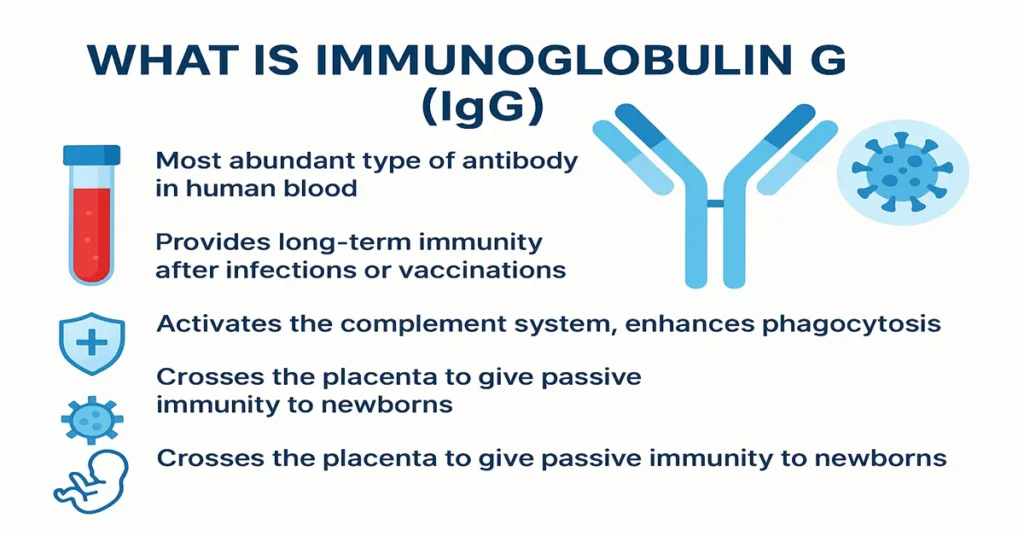
Immunoglobulin G (IgG) is the most abundant antibody in the human body, accounting for nearly three-quarters of all antibodies found in the bloodstream. Because of both its quantity and long lifespan, IgG plays a central role in protecting the body against infections and in maintaining long-term immunity.
IgG is produced after exposure to bacteria, viruses, fungi, or other foreign substances known as antigens. Once formed, it circulates through the blood, tissues, and lymphatic system, where it helps neutralize harmful organisms. IgG is also the antibody responsible for lasting protection after recovery from infections or following vaccination.
Doctors commonly request an IgG blood test when assessing immune system strength, investigating repeated infections, evaluating antibody deficiencies, or monitoring autoimmune and chronic inflammatory conditions.
Where Is IgG Produced in the Body?
IgG is produced by plasma cells, which develop from B lymphocytes after immune stimulation. These plasma cells are primarily located in the bone marrow, lymph nodes, spleen, and certain mucosal tissues of the respiratory and gastrointestinal tract.
Once produced, IgG is released into the bloodstream and distributed widely into body tissues and the lymphatic system. One important characteristic of IgG is its ability to cross the placenta during pregnancy, allowing maternal antibodies to provide temporary immune protection to newborns during early life.
Main Functions and Importance of IgG
1. Provides long-term immunity
IgG remains in the body long after an infection or vaccination has resolved. This persistence helps protect against reinfection, sometimes for many years or even lifelong.
2. Neutralizes harmful microbes
IgG binds directly to bacteria, viruses, and toxins, reducing their ability to damage cells or spread within the body.
3. Activates the complement system
Once attached to a pathogen, IgG can trigger the complement cascade, a series of immune reactions that assist in destroying invading organisms.
4. Enhances phagocytosis
IgG marks harmful microbes so that immune cells can recognize, engulf, and eliminate them more efficiently, a process known as opsonization.
5. Protects unborn babies
Through placental transfer, IgG provides passive immunity to the fetus, offering protection against infections during the first months after birth.
Because of these essential roles, IgG testing is a core component of immune system evaluation.
Causes of Low IgG Levels
Low IgG levels usually indicate reduced antibody production or increased loss of antibodies. Common clinical situations include primary immunodeficiency disorders, such as common variable immunodeficiency, where the body does not produce sufficient antibodies.
Inherited genetic conditions may also interfere with normal IgG formation. Certain blood-related cancers, including chronic lymphocytic leukemia or lymphoma, can suppress antibody-producing cells. Medical treatments such as chemotherapy, radiation therapy, or long-term immunosuppressive drugs may also lower IgG levels.
In some conditions, IgG is produced normally but lost from the body, as seen in kidney disorders like nephrotic syndrome, severe burns, or gastrointestinal protein-losing states.
Symptoms of Low IgG Levels
People with low IgG levels often experience frequent or recurrent infections. These may involve the sinuses, ears, lungs, urinary tract, or other organs. Infections may be more severe, last longer than usual, or recur soon after treatment.
Some individuals also show a reduced response to vaccinations, delayed recovery from infections, or persistent fevers. These patterns often prompt doctors to evaluate immunoglobulin levels.
Causes of High IgG Levels
Elevated IgG levels usually reflect ongoing immune stimulation rather than a short-term illness. Chronic infections, such as long-standing bacterial infections or certain viral diseases, can increase IgG production over time.
Autoimmune diseases commonly raise IgG levels, as the immune system remains persistently active. Conditions such as systemic lupus erythematosus, rheumatoid arthritis, and autoimmune hepatitis frequently show elevated IgG.
Chronic liver disease may also be associated with increased IgG. In rare cases, very high IgG levels occur in plasma cell disorders such as multiple myeloma or monoclonal gammopathies, where a single type of IgG is produced in excess.
Symptoms of High IgG Levels
High IgG itself does not cause symptoms. Clinical features depend on the underlying condition responsible for the elevation.
Autoimmune disorders may cause joint pain, fatigue, skin changes, or muscle discomfort. Liver disease may present with jaundice, abdominal swelling, weakness, or loss of appetite. Plasma cell disorders may lead to bone pain, anemia, kidney problems, or recurrent infections.
Reference Ranges
Reference ranges for IgG vary slightly depending on laboratory method and age.
In adults, typical values range from 700 to 1600 mg/dL.
In children, levels are naturally lower in infancy and gradually rise as the immune system matures.
Results should always be interpreted alongside clinical symptoms, medical history, and other laboratory findings.
Sample Type
IgG testing is performed using a blood sample, usually serum or plasma, collected from a vein. In certain cases, doctors may request additional testing for IgG subclasses (IgG1, IgG2, IgG3, and IgG4) to obtain more detailed immune information.
Test Preparation
No special preparation is usually required for IgG testing. Fasting is not necessary, and regular medications are typically continued unless advised otherwise.
It is helpful to inform the doctor about frequent infections, autoimmune conditions, or use of immunosuppressive medications, as these factors assist with interpretation.
When to Consult a Doctor
Medical evaluation is advised if there are repeated infections, chronic sinus or chest problems, unexplained fatigue, autoimmune symptoms, signs of liver disease, or poor response to vaccines. Children with frequent infections or delayed growth also warrant immune assessment.
Doctors often request IgG testing together with IgA and IgM to obtain a complete picture of immune function.
Important Word Explanations
- Antibody – A protein made by the immune system to recognize and defend against infections.
- Antigen – A foreign substance, such as a virus or bacterium, that triggers an immune response.
- Plasma cells – Specialized white blood cells that produce antibodies.
- Complement system – A group of immune proteins that assist in destroying microbes.
- Immunodeficiency – A condition in which the immune system does not function adequately.
- Opsonization – The process of marking germs so immune cells can identify and eliminate them.
~END~
Related Posts
None found