
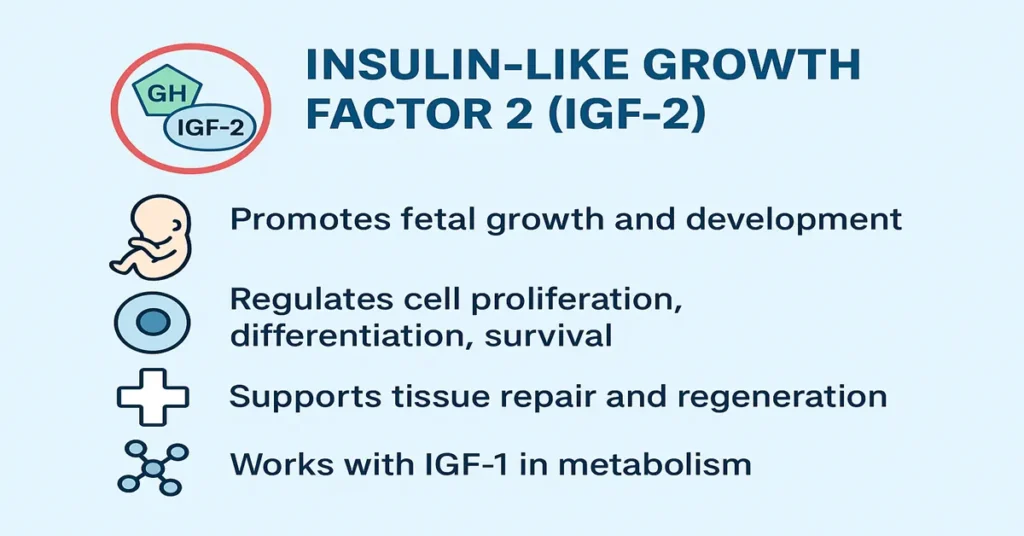
IGF-2 Test: Role, High/Low Levels, Functions & Complete Medical Guide
What Is Insulin-Like Growth Factor 2 (IGF-2)?
Insulin-Like Growth Factor 2 (IGF-2) is a naturally occurring protein hormone that shares structural similarities with both insulin and IGF-1. It plays a particularly important role during fetal and early childhood development, where it supports normal formation of organs, bones, and tissues.
Unlike IGF-1, which is more closely linked to growth hormone activity after birth, IGF-2 is most active before birth. During this stage, it helps regulate cell growth, tissue differentiation, and nutrient utilization in the developing fetus. Its activity contributes to normal birth weight and overall fetal health.
Although its influence is strongest in early life, IGF-2 continues to have physiological relevance in adulthood. It supports tissue maintenance, cellular repair, and normal metabolic balance. When IGF-2 levels are abnormal, doctors consider a range of possibilities, including endocrine disorders, liver disease, abnormal growth patterns, or rare tumor-related conditions.
Clinically, IGF-2 testing is not routine for general growth assessment. It is usually requested in specific situations such as unexplained hypoglycemia, suspected tumor-related hormone secretion, unusual growth patterns, or as part of a broader growth hormone evaluation together with IGF-1 and IGFBP-3.
Where Is IGF-2 Produced in the Body?
1. Liver (Primary Source)
In postnatal life, the liver is the main source of circulating IGF-2. Its production is influenced by growth-related hormonal signals and overall metabolic status.
2. Placenta
During pregnancy, the placenta produces substantial amounts of IGF-2. This placental IGF-2 plays a central role in supporting fetal nutrition, placental growth, and organ development.
3. Fetal Tissues
IGF-2 is highly active in developing fetal tissues, including muscles, kidneys, brain, bones, and other organs. This widespread activity helps guide normal organ formation and overall fetal growth.
4. Other Tissues in Adults
Smaller quantities of IGF-2 are produced in adult tissues such as the adrenal glands, gastrointestinal tract, bone, cartilage, and immune cells. In these locations, IGF-2 often acts locally through paracrine or autocrine signaling, supporting tissue repair and cellular maintenance rather than systemic growth.
Main Functions and Importance of IGF-2
1. Promotes Fetal Growth and Development
IGF-2 is one of the dominant growth regulators during fetal life. It supports organ formation, cell multiplication, placental development, and nutrient transfer from mother to fetus. Variations in IGF-2 activity during pregnancy are associated with differences in fetal growth patterns rather than isolated disease states.
2. Helps Regulate Cell Growth and Survival
At a cellular level, IGF-2 supports controlled cell division, maturation, and survival. These actions are essential during early development and remain relevant later in life for maintaining tissue integrity.
3. Supports Wound Healing and Tissue Repair
In adults, IGF-2 contributes to tissue repair processes such as muscle recovery and skin healing. These effects are gradual and supportive rather than dramatic, reflecting its role in maintenance rather than rapid growth.
4. Works With IGF-1 to Regulate Metabolism
IGF-2 works alongside IGF-1 in regulating protein synthesis, glucose movement into cells, fat metabolism, and overall cellular energy use. Changes in IGF-2 levels may subtly influence metabolic balance, especially when interpreted with other growth-related hormones.
5. Binds to IGF Receptors
IGF-2 interacts with both the IGF-1 receptor, which mediates growth and metabolic effects, and the IGF-2 receptor, which helps regulate IGF-2 clearance and cellular exposure. Proper balance between these pathways is important for normal tissue regulation.
6. Acts as a Tumor Marker in Certain Cancers
In specific and relatively rare situations, elevated IGF-2 levels may be associated with certain tumors, particularly those that produce IGF-2 or related peptides. In these contexts, IGF-2 testing helps clarify the biochemical cause of associated clinical findings rather than serving as a screening test.
Causes of Low IGF-2 Levels
Low IGF-2 levels are usually interpreted in relation to developmental stage, nutritional status, and underlying medical conditions.
1. Genetic Disorders Affecting IGF-2 Expression
Alterations in IGF-2 gene regulation or imprinting can reduce hormone production, particularly during fetal development.
2. Growth Hormone Deficiency
Reduced growth hormone activity can lower both IGF-1 and IGF-2 levels, although the clinical focus is often on overall growth patterns rather than IGF-2 alone.
3. Intrauterine Growth Restriction (IUGR)
Low IGF-2 activity during pregnancy has been associated with poor fetal growth and lower birth weight.
4. Malnutrition and Chronic Illness
Inadequate nutrition or long-standing illness can suppress IGF synthesis as the body prioritizes essential metabolic functions.
5. Liver Disease
Because the liver is a major source of circulating IGF-2, chronic liver conditions can significantly reduce measured levels.
Symptoms of Low IGF-2 Levels
Symptoms related to low IGF-2 are generally indirect and depend on the life stage and underlying cause.
In fetuses or newborns, reduced IGF-2 activity may be associated with poor intrauterine growth or low birth weight.
In children, low levels may accompany slower growth or delayed developmental milestones.
In adults, low IGF-2 rarely causes specific symptoms on its own. Any observed effects, such as slower wound healing or reduced muscle recovery, are usually linked to the underlying condition rather than the hormone level itself.
Causes of High IGF-2 Levels
Elevated IGF-2 levels are uncommon and typically prompt further investigation.
1. IGF-2–Producing Tumors
Some tumors produce excess IGF-2 or abnormal IGF-2 variants, leading to elevated circulating levels.
2. Non-Islet Cell Tumor Hypoglycemia (NICTH)
In certain tumors, excess IGF-2 can mimic insulin action and lower blood glucose, resulting in hypoglycemia.
3. Overgrowth Syndromes
Specific genetic conditions involving altered IGF-2 regulation can lead to increased growth before or after birth.
4. Genetic Imprinting Disorders
Disruptions in normal gene expression may increase IGF-2 production and influence growth or tumor risk.
Symptoms of High IGF-2 Levels
Symptoms related to high IGF-2 depend largely on the underlying cause.
In children, increased IGF-2 activity may be associated with larger birth size or accelerated early growth.
In adults, elevated IGF-2 is most often identified in the context of tumor evaluation rather than isolated symptoms.
Hypoglycemia-related symptoms, when present, may include sweating, dizziness, tremors, confusion, weakness, or fainting episodes. These features typically reflect excessive insulin-like activity rather than growth effects.
Tumor-related symptoms vary depending on location and extent, such as abdominal discomfort, swelling, or unintended weight loss.
Reference Ranges
There is no single universal reference range for IGF-2. Levels vary according to age, sex, pregnancy status, and laboratory methodology.
General patterns include:
- Very high levels during fetal life
- Elevated levels during pregnancy
- Moderate levels in childhood
- More stable and lower levels in adulthood
Doctors always interpret IGF-2 results in relation to IGF-1, IGFBP-3, growth hormone levels, and clinical findings.
Sample Type
IGF-2 is measured using a blood sample, collected as serum or plasma.
Test Preparation
Fasting is usually not required. Doctors may advise avoiding unusually heavy protein intake before testing. Information about ongoing hormone therapy or relevant medical conditions helps ensure accurate interpretation. Additional related tests are often reviewed alongside IGF-2.
When to Consult a Doctor
Medical evaluation may be advised in specific situations.
During pregnancy, concerns include poor fetal growth or abnormal ultrasound findings.
In children, unusually rapid or slow growth, large birth size, or developmental delays may prompt assessment.
In adults, recurrent unexplained hypoglycemia, fainting episodes, abdominal symptoms, or suspicion of liver or adrenal tumors warrant further evaluation.
Any abnormal IGF-2 result should be discussed with a qualified specialist to determine its clinical relevance.
Important Word Explanations
- IGF-1 / IGF-2: Hormones involved in growth, metabolism, and cell maintenance
- Paracrine: Hormone action on nearby cells
- Autocrine: Hormone action on the same cell that releases it
- IUGR: Reduced fetal growth within the uterus
- NICTH: Tumor-related low blood sugar due to IGF-2 activity
- Differentiation: Process by which cells become specialized
~END~
Related Posts
None found