
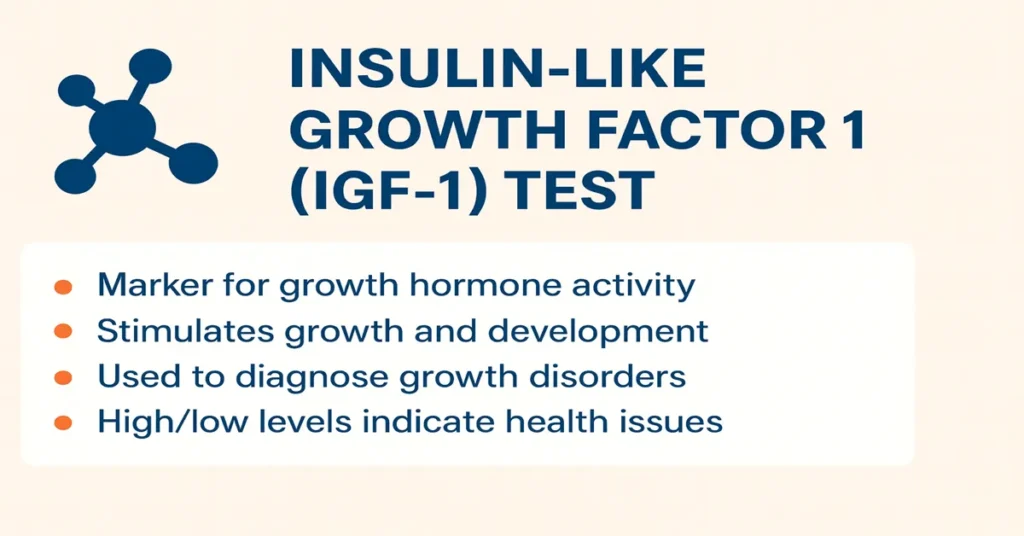
IGF-1 Test: Role, High/Low Levels, Growth Disorders & Complete Medical Guide
What Is Insulin-Like Growth Factor 1 (IGF-1)?
Insulin-Like Growth Factor 1 (IGF-1), also called Somatomedin C, is a naturally occurring protein hormone that plays a key role in human growth and tissue maintenance. Although its structure is similar to insulin, its function is closely linked to Growth Hormone (GH).
In clinical practice, IGF-1 is especially valuable because it reflects average growth hormone activity over time. Growth hormone itself is released in short pulses during the day and night, which makes a single GH blood test difficult to interpret. IGF-1, on the other hand, remains relatively stable in the bloodstream, giving doctors a clearer picture of long-term GH function.
Because of this stability, the IGF-1 test is commonly used when doctors need to assess growth patterns in children or investigate suspected growth hormone imbalance in adults.
IGF-1 testing is often considered in situations such as:
- Slower-than-expected growth or short stature in children
- Excessive or abnormal growth patterns
- Suspected pituitary gland disorders
- Delayed or abnormal pubertal development
- Ongoing metabolic or nutritional concerns
- Certain chronic medical conditions, including liver disease
Overall, IGF-1 serves as a reliable indicator in endocrine evaluations rather than a standalone diagnostic answer.
Where Is IGF-1 Produced in the Body?
IGF-1 is produced in multiple tissues, but the liver is the primary source of circulating IGF-1 measured in blood tests.
The main contributors include:
- Liver – stimulated directly by growth hormone and responsible for most blood IGF-1
- Muscles and bones – produce IGF-1 locally for repair and maintenance
- Cartilage and fat tissue – support localized growth processes
- Other organs – contribute small amounts for tissue-specific functions
While many tissues use IGF-1 for local healing and regeneration, laboratory testing primarily reflects liver-derived IGF-1 responding to growth hormone signals.
Main Functions and Importance of IGF-1
1. Supports Bone Growth
IGF-1 plays a central role in skeletal growth, particularly during childhood and adolescence. It supports bone lengthening, mineralization, and overall strength. When levels are persistently low during growth years, doctors may observe slower growth velocity rather than immediate symptoms.
In adults, IGF-1 continues to support bone maintenance rather than height increase.
2. Helps Build and Repair Muscle
IGF-1 supports muscle tissue by promoting protein synthesis and assisting with repair after physical stress or injury. Clinically, this function is important for maintaining strength, mobility, and recovery capacity across all age groups.
Changes in muscle mass linked to IGF-1 levels are usually gradual and reflect underlying hormonal balance rather than sudden changes.
3. Controls Metabolism
IGF-1 interacts with several metabolic pathways involved in energy use. It contributes to how the body manages glucose, fat utilization, and overall energy balance. When IGF-1 levels are outside the expected range, metabolic efficiency may be affected, which doctors interpret in the context of the patient’s overall health.
4. Supports Cell Growth and Survival
At a cellular level, IGF-1 supports normal cell turnover and tissue integrity. It plays a role in regeneration, healing, and maintaining organ structure. These effects are tightly regulated and are part of normal physiology rather than excessive growth.
5. Stable Marker for GH Activity
From a diagnostic standpoint, IGF-1 is one of the most dependable markers for evaluating growth hormone status. Because GH secretion fluctuates, IGF-1 offers a more consistent signal when doctors are assessing:
- Possible growth hormone deficiency
- Suspected growth hormone excess
- Response to ongoing GH-related treatment
This makes IGF-1 testing a routine part of endocrine workups rather than an isolated test.
Causes of Low IGF-1 Levels
Low IGF-1 levels usually signal an underlying physiological or hormonal issue rather than being a problem on their own.
1. Growth Hormone Deficiency
Reduced GH production is the most common clinical reason for low IGF-1. This may be related to pituitary gland dysfunction, prior brain surgery, radiation exposure, or structural abnormalities.
2. Genetic Growth Disorders
Some inherited conditions affect how growth hormone signals are processed in the body, leading to reduced IGF-1 production despite normal or near-normal GH levels.
3. Malnutrition or Chronic Illness
Long-standing illness or inadequate nutritional intake can lower IGF-1 levels. In such cases, the body prioritizes essential survival processes over growth and tissue repair.
4. Hypothyroidism
Low thyroid hormone activity can indirectly reduce IGF-1 levels by slowing metabolic and growth-related processes.
5. Liver Disease
Because the liver produces most circulating IGF-1, chronic liver conditions can significantly affect test results.
6. Normal Aging
IGF-1 levels naturally decline with age. This gradual change is expected and interpreted differently from pathological deficiency.
Symptoms of Low IGF-1 Levels
Symptoms associated with low IGF-1 are usually due to the underlying condition, not the hormone level itself.
In children, doctors may notice slower growth patterns, delayed puberty, or reduced muscle and bone development over time.
In adults, low levels may be associated with reduced muscle mass, increased body fat, lower energy levels, or decreased physical endurance.
In older adults, reduced IGF-1 may contribute to frailty and slower recovery, though this is often part of normal aging rather than disease.
Clinically, symptoms are always evaluated alongside medical history and other hormone tests.
Causes of High IGF-1 Levels
Elevated IGF-1 typically reflects prolonged exposure to excess growth hormone.
1. Growth Hormone Excess
Persistent GH overproduction leads to increased IGF-1 synthesis, which is why IGF-1 testing is central in suspected GH excess disorders.
2. Pituitary Tumors
Benign pituitary adenomas that secrete growth hormone are the most common cause. Depending on age, this may result in abnormal growth patterns.
3. High Protein Intake or Supplements
Temporary, mild elevations may occur but are usually not sustained or clinically significant on their own.
4. Rare Cancers
In uncommon cases, tumors outside the pituitary may influence GH or IGF-1 pathways.
Symptoms of High IGF-1 Levels
In children, elevated IGF-1 may be associated with unusually rapid height gain and skeletal overgrowth.
In adults, chronically high levels are linked with gradual enlargement of bones and soft tissues, particularly in the hands, feet, and face. These changes develop slowly and are often noticed over years rather than months.
Pituitary tumor-related symptoms may include headaches or vision changes due to pressure effects rather than hormone levels alone.
Long-Term Risks
Sustained elevation of IGF-1 has been associated, in clinical studies, with increased long-term health risks. These associations are interpreted cautiously and always in context, as risk does not equal certainty.
Reference Ranges
IGF-1 reference ranges vary significantly depending on age, sex, and pubertal stage.
Approximate examples include:
- Children (10–12 years): 100–600 ng/mL
- Adults (20–40 years): 150–350 ng/mL
- Older adults (>60 years): 50–200 ng/mL
Final interpretation should always rely on the reference values provided by the testing laboratory.
Sample Type
The IGF-1 test is performed on a blood (serum) sample.
Test Preparation
In most cases, no special preparation is required. Doctors may still consider overall nutritional status, liver function, thyroid health, and any ongoing hormone therapy when interpreting results.
In specific evaluations, additional testing may be recommended to better understand growth hormone dynamics.
When to Consult a Doctor
Children should be evaluated if growth patterns are significantly slower or faster than expected, or if puberty timing appears abnormal.
Adults may require assessment if there are noticeable physical changes, unexplained fatigue, joint stiffness, or persistent headaches.
Anyone with known pituitary disease, chronic liver conditions, or unexpected hormone test results should seek medical guidance for proper interpretation.
Early evaluation helps clarify causes and prevents unnecessary concern.
Important Word Explanations
- Growth Hormone (GH): Hormone that regulates growth and metabolism
- Acromegaly: Condition caused by excess GH in adults
- Gigantism: Excess GH before growth plate closure in children
- Adenoma: A non-cancerous hormone-producing tumor
- Somatomedin C: Another name for IGF-1
- Protein Synthesis: The body’s process of building tissues
~END~
Related Posts
None found
Nice blog.
I have learn some just right stuff here.
Definitely worth bookmarking for revisiting. I surprise how so much effort you set to make one
of these wonderful informative site.
Howdy would you mind letting me know which hosting company you’re working with?
I’ve loaded your blog in 3 completely different browsers and I
must say this blog loads a lot quicker then most.
Can you suggest a good internet hosting provider at a
honest price? Cheers, I appreciate it!
Awesome! Its really remarkable piece of writing, I
have got much clear idea concerning from this
piece of writing.
I finally understand why my doctor ordered this test. Your breakdown of symptoms, preparation, and meaning of the values was incredibly helpful.
Hi mates, pleasant piece of writing and fastidious urging commented at this place, I
am genuinely enjoying by these.