
Overview
Immunoglobulin E (IgE) is a type of antibody produced by the immune system. Antibodies are protective proteins that help the body recognize and respond to substances it considers foreign. IgE has a very specific role: it is mainly involved in allergic reactions and in the body’s defense against certain parasitic infections.
In people with allergies, the immune system becomes unusually sensitive to substances that are otherwise harmless, such as pollen, dust, specific foods, or animal dander. When exposure occurs, the immune system produces higher amounts of IgE. This IgE then triggers the release of chemicals that lead to symptoms like sneezing, itching, skin rashes, or breathing difficulty.
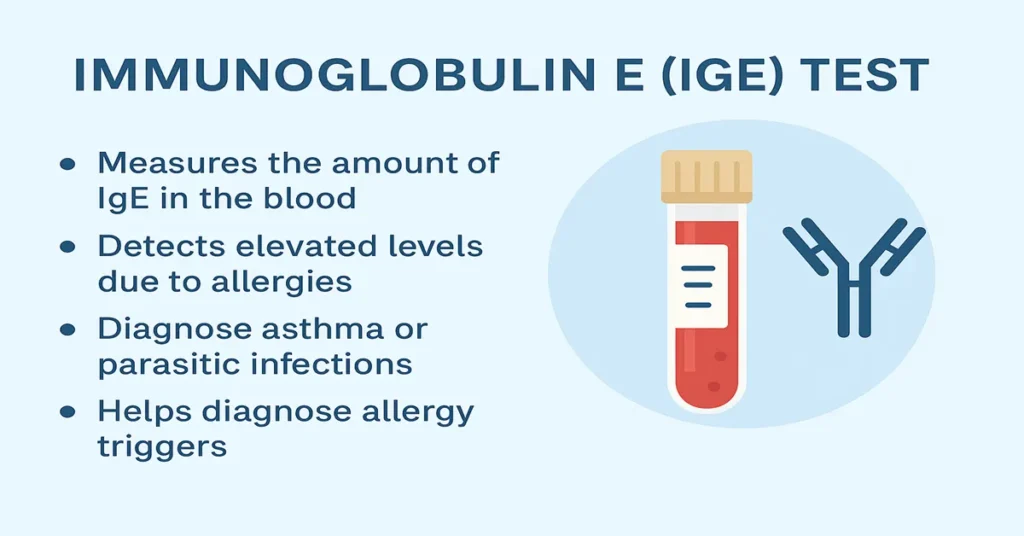
The IgE blood test measures the level of this antibody in the bloodstream. It is commonly used when evaluating allergies, asthma, long-standing skin conditions, and in selected cases, parasitic infections or immune-related disorders.
What Is IgE? – A Simple Explanation
IgE is one member of the immunoglobulin family, which also includes IgA, IgG, IgM, and IgD. Among these, IgE is normally present in the smallest quantity in the blood. Despite its low concentration, it has a strong biological effect because it is closely linked to allergic inflammation.
Even modest increases in IgE can produce noticeable symptoms. This sensitivity is why IgE measurement is useful when allergy-related conditions are suspected.
Where Is IgE Produced in the Body?
IgE is produced by plasma cells, which develop from B-lymphocytes, a type of white blood cell. These plasma cells are located in several immune-active tissues, including lymph nodes, the spleen, bone marrow, and areas exposed to the environment such as the lining of the nose, lungs, intestines, and skin.
When the body encounters an allergen, plasma cells produce IgE antibodies specific to that substance. These IgE molecules attach themselves to mast cells and basophils. When re-exposure occurs, these cells release histamine and other mediators, leading to typical allergy symptoms.
Main Functions and Importance of IgE
1. Triggers Allergic Reactions
IgE binds to allergens such as pollen, dust mites, food proteins, insect venom, or animal dander. This binding activates mast cells and basophils, causing the release of histamine and related chemicals. These substances are responsible for symptoms like nasal irritation, eye redness, skin itching, swelling, and breathing difficulty.
2. Defense Against Parasitic Infections
IgE also plays a role in immune defense against certain parasites, particularly intestinal worms. In these situations, IgE levels may rise significantly as part of the body’s protective response.
3. Helps Diagnose Allergies and Immune Disorders
Clinically, IgE measurement helps doctors assess allergic diseases, understand asthma activity, support the diagnosis of parasitic infections, and evaluate rare immune conditions such as Hyper-IgE syndrome. It is also useful in chronic skin disorders like eczema, where allergic mechanisms are often involved.
Causes of Low or Negative IgE Levels
Low IgE levels are common and are generally considered normal. Most healthy individuals naturally have low circulating IgE.
Common Causes
Low levels may reflect normal immune balance. Rarely, they may be seen in individuals with certain genetic or primary immune deficiencies.
Is low IgE dangerous?
In most cases, low IgE is not harmful and does not cause symptoms. Only in uncommon immune disorders might low IgE be associated with recurrent infections.
Symptoms of Low IgE Levels
Most people with low IgE levels experience no symptoms at all. In rare immune-related conditions, individuals may have repeated respiratory or sinus infections, which would prompt further immune evaluation.
Causes of High or Positive IgE Levels
Elevated IgE levels usually indicate an overactive immune response rather than a disease by themselves.
1. Allergic Conditions
These include allergic rhinitis, asthma, eczema, food allergies, drug reactions, insect venom allergy, and sensitivity to animal dander.
2. Parasitic Infections
Certain parasitic infections are known to raise IgE levels, sometimes markedly.
3. Immune Disorders
Rare immune conditions, such as Hyper-IgE syndrome, can cause persistently high IgE levels.
4. Certain Cancers
In uncommon situations, conditions like Hodgkin’s lymphoma or IgE-producing plasma cell disorders may be associated with elevated IgE.
Symptoms of High IgE Levels
IgE itself does not cause symptoms. Symptoms depend on the underlying condition driving the elevation.
In allergic conditions, individuals may experience nasal congestion, sneezing, itchy or watery eyes, skin rashes, hives, or breathing difficulty. In asthma, symptoms may include wheezing, chest tightness, or shortness of breath. Parasitic infections may present with digestive symptoms, weight loss, anemia, or general weakness.
In rare cases, severe allergic reactions can occur, leading to sudden swelling, breathing difficulty, or circulatory collapse. These situations require urgent medical care.
Reference Ranges for IgE
IgE reference ranges vary by age and laboratory method.
Adults
Normal levels are generally below 100–150 IU/mL. Mild to moderate elevations suggest allergic activity, while very high levels often point toward strong allergic responses or parasitic infections.
Children
Children naturally tend to have higher IgE levels as their immune systems develop, and results are interpreted with age-specific reference ranges.
Sample Type and Testing Method
IgE testing is performed on a blood sample collected from a vein in the arm.
Two main types of tests are used. Total IgE testing measures the overall IgE level in the body. Specific IgE testing identifies antibodies directed against individual allergens using laboratory methods such as ImmunoCAP or ELISA. These tests help pinpoint specific triggers like foods, dust mites, pollen, or latex.
Test Preparation
No fasting is required for IgE testing. Most medications do not interfere with blood IgE levels, although it is still important to inform the doctor about ongoing treatments. Providing a clear history of symptoms and possible exposures helps in accurate interpretation.
When to Consult a Doctor
Medical advice should be sought if there are persistent allergy-related symptoms, suspected food reactions, chronic skin itching, asthma-like breathing problems, unexplained rashes, or signs of parasitic infection. Immediate medical attention is essential after any severe allergic reaction. In children, repeated respiratory symptoms or eczema often warrant evaluation.
Important Word Explanations
- Antibody – A protein produced by the immune system to recognize foreign substances.
- Allergen – A substance that triggers an allergic response.
- Histamine – A chemical released during allergic reactions that causes symptoms.
- Mast Cells – Immune cells that release histamine and inflammatory mediators.
- ImmunoCAP – A laboratory method used to measure allergen-specific IgE.
- Anaphylaxis – A severe, life-threatening allergic reaction.
~END~
Related Posts
None found