
HTLV Test: Meaning, Positive/Negative Results, Symptoms, Transmission & Complete Medical Guide
Overview
The HTLV test is a blood test used to identify infection with Human T-Cell Lymphotropic Virus type 1 (HTLV-1) or type 2 (HTLV-2). These viruses belong to the retrovirus family, meaning that once they enter the body, they integrate their genetic material into human cells and remain there permanently.
HTLV primarily affects T-lymphocytes, which are white blood cells involved in immune regulation. HTLV-1 has well-established associations with certain long-term conditions, including Adult T-Cell Leukemia/Lymphoma (ATL) and a chronic neurological condition known as HTLV-1–Associated Myelopathy or Tropical Spastic Paraparesis (HAM/TSP). HTLV-2 is generally less aggressive and less clearly linked to severe disease, although neurological symptoms have been reported in some individuals.
Testing is commonly done during blood donation screening, organ donation workups, prenatal evaluations, and in people who develop unexplained neurological symptoms, immune disturbances, or blood-related disorders.
Where HTLV Comes From and How It Behaves in the Body
HTLV is not produced within the human body. Infection occurs only through transmission from another infected person. Once the virus enters the bloodstream, it targets specific immune cells, mainly:
- CD4-positive T-cells in HTLV-1
- CD8-positive T-cells more commonly in HTLV-2
After entering these cells, the virus inserts its genetic material into the host cell’s DNA. From that point onward, the virus becomes a permanent part of the infected cell. The immune system does not eliminate it completely. Many individuals remain clinically well for life, while a smaller proportion may develop HTLV-related conditions years or even decades later.
Main Functions and Importance of the HTLV Test
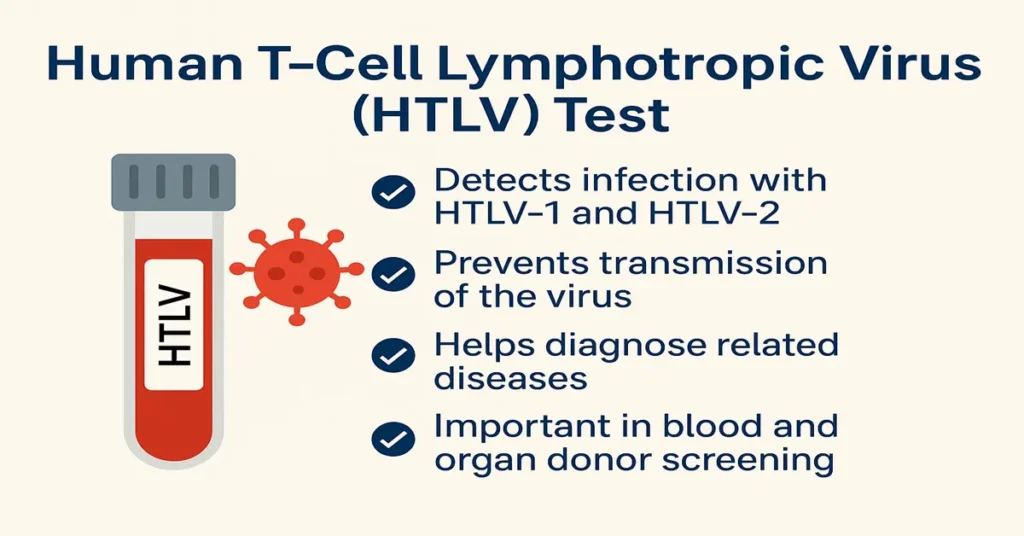
1. Detects HTLV Infection
The primary role of the HTLV test is to confirm whether exposure and infection have occurred. This is done by detecting antibodies against HTLV-1 or HTLV-2, and in some cases, viral genetic material. Because infection may remain silent for long periods, testing provides clarity even in the absence of symptoms.
2. Helps Prevent Transmission
Identifying infected individuals plays a key role in public health. Screening helps reduce unintended transmission through blood transfusions, organ transplantation, sexual contact, and breastfeeding. In regions where routine screening is practiced, the spread of HTLV has been significantly reduced.
3. Helps Diagnose Associated Diseases
When patients present with unexplained neurological changes, chronic infections, or certain blood abnormalities, HTLV testing can help determine whether the virus is contributing to the clinical picture. This is particularly relevant in suspected cases of ATL or HAM/TSP, where early recognition supports appropriate specialist evaluation.
Causes of Low / Negative HTLV Levels
A negative HTLV test result indicates that no antibodies to HTLV-1 or HTLV-2 were detected at the time of testing. This usually means there is no evidence of infection.
In rare situations, testing performed very soon after exposure may fall within the window period, before antibodies have developed. In such cases, repeat testing may be advised based on exposure risk and clinical judgment.
Symptoms of Low / Negative Levels
A negative test result itself does not cause symptoms. It simply indicates that HTLV infection is not detected and that HTLV-related complications are not expected.
Causes of High / Positive HTLV Levels
A positive HTLV result confirms infection with HTLV-1 or HTLV-2. Transmission typically occurs through well-recognized routes, including exposure to infected blood, sharing needles, unprotected sexual contact, or transmission from mother to child, most commonly through breastfeeding.
Once infection occurs, the virus remains integrated in immune cells for life. A positive result does not predict disease severity or outcome but indicates lifelong viral carriage.
Symptoms of High / Positive Levels
Most individuals with HTLV infection never develop symptoms. However, a small proportion may develop specific conditions over time.
1. Adult T-Cell Leukemia/Lymphoma (ATL)
In rare cases, HTLV-1 infection can lead to ATL, a cancer of T-lymphocytes. When it occurs, patients may present with persistent fatigue, recurrent infections, enlarged lymph nodes, liver or spleen enlargement, skin changes, or unintended weight loss. This condition requires specialist care.
2. HTLV-1–Associated Myelopathy / Tropical Spastic Paraparesis (HAM/TSP)
HAM/TSP is a slowly progressive neurological disorder affecting the spinal cord. Patients may notice increasing stiffness or weakness in the legs, difficulty walking, bladder or bowel changes, and chronic back discomfort. Progression is usually gradual.
3. Neurological Features in HTLV-2
HTLV-2 is less frequently associated with serious disease. When symptoms occur, they are often milder and may include sensory changes, weakness, or gait difficulties.
Reference Ranges
HTLV test results are typically reported qualitatively:
- Negative – No HTLV antibodies detected
- Positive – HTLV-1 or HTLV-2 infection detected
- Indeterminate – Unclear result requiring confirmation
Indeterminate or positive screening results are followed by confirmatory tests such as Western blot or PCR for accurate classification.
Sample Type
HTLV testing requires a blood sample, usually collected from a vein. Serum or plasma is used. Initial screening is commonly performed using ELISA-based methods, with confirmatory testing done using Western blot or PCR when needed.
Test Preparation
No special preparation is required for HTLV testing.
Patients are advised to inform their doctor about any neurological symptoms, prior blood transfusions, pregnancy or breastfeeding history, or known exposure risks. These details help guide interpretation and follow-up.
When to Consult a Doctor
Medical evaluation is recommended if you experience persistent neurological symptoms such as leg stiffness, weakness, walking difficulty, or sensory changes. Consultation is also advised for unexplained lymph node swelling, recurrent infections, unexplained weight loss, or known exposure risks.
Individuals who test positive should be evaluated by appropriate specialists based on their clinical findings, even if they are currently symptom-free.
Important Word Explanations
- PCR – A laboratory method used to detect viral genetic material
- Retrovirus – A virus that inserts its genetic material into human DNA
- T-lymphocyte – A white blood cell involved in immune regulation
- Myelopathy – A disorder affecting the spinal cord
- ELISA – A screening blood test used to detect antibodies
~END~
Related Posts
None found