
Overview
The HSV (Herpes Simplex Virus) Test is used to detect infection caused by the Herpes Simplex Virus, one of the most common viral infections worldwide. HSV exists in two main forms. HSV-1 is most often associated with oral herpes, typically causing cold sores around the lips or mouth, while HSV-2 is more commonly linked to genital herpes, affecting the genital or anal area.
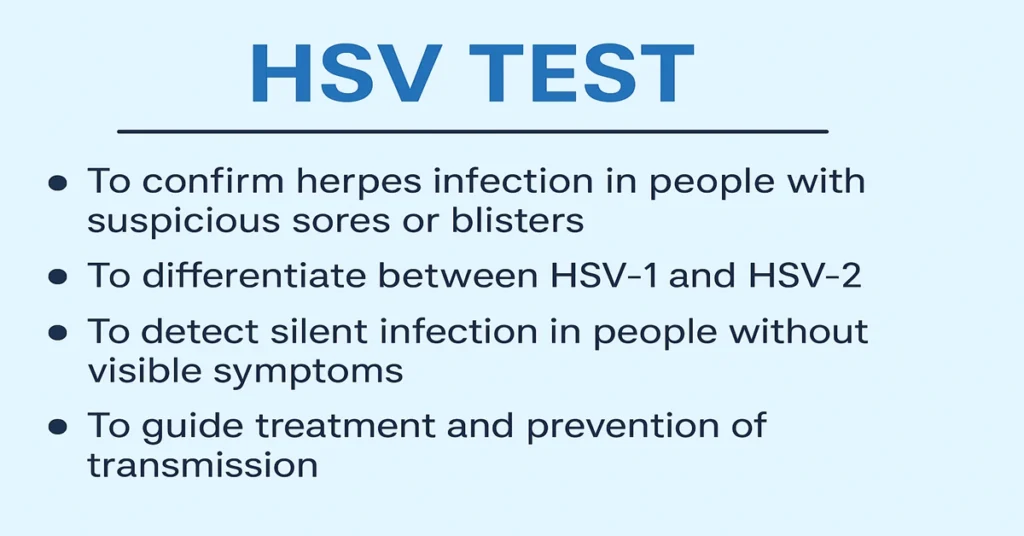
In many individuals, HSV infection causes very mild symptoms or none at all. Because of this, a person may carry the virus without being aware of it. Testing becomes important when symptoms are unclear, recurrent, or when confirmation is needed for clinical decision-making. HSV testing also helps determine which type of virus is present, which has implications for recurrence patterns and transmission risk.
HSV can be detected in two main ways: a blood test that looks for antibodies indicating past exposure, and a swab or PCR test taken from sores or blisters to identify active infection.
Where HSV Is Found in the Body
After the initial infection, HSV enters nearby nerve cells and remains there in an inactive, or dormant, state. The virus can stay silent for long periods—sometimes for years—without causing visible symptoms.
Under certain conditions, the virus may reactivate and travel back along the nerves to the skin or mucosal surface, leading to new sores. The typical locations depend on the virus type.
HSV-1 is most commonly found around the lips, mouth, and face, and in rare cases may involve the eyes.
HSV-2 usually affects the genital region, anal area, and sometimes the inner thighs.
Even in the absence of visible sores, the virus can still be present on the skin surface and may be transmitted to others, a process known as viral shedding.
Importance and Main Functions of the HSV Test
HSV is not a normal component of the human body. The test is used to clarify whether symptoms or concerns are related to herpes infection.
One important role of the test is confirming whether blisters, ulcers, or sores are caused by HSV or by another condition. It also helps distinguish between HSV-1 and HSV-2, which differ in recurrence frequency and transmission patterns.
Testing is particularly valuable in identifying silent infections, where a person carries the virus without noticeable symptoms. In such cases, results help explain unexplained symptoms, guide clinical discussions, and support preventive counseling.
For clinicians, HSV test results assist in deciding how closely a patient should be monitored, whether antiviral therapy is appropriate, and how to reduce the risk of transmission—especially in pregnancy, where careful planning is needed to protect the newborn.
When HSV Test Shows Negative Results (Low or Absent Levels)
A negative HSV test means that neither the virus nor detectable antibodies were found at the time of testing. This can occur when a person has not been exposed to HSV or when testing is done very early, before antibodies have had time to form or before viral material can be detected.
In individuals with weakened immune responses, antibody levels may be too low to register clearly, which can occasionally affect results. A negative test reflects the current testing window and does not rule out future infection if exposure occurs later.
Symptoms When Results Are Negative
When HSV testing is negative, there are usually no symptoms related to herpes infection. The result indicates that there is no laboratory evidence of HSV at that time. If symptoms are present despite a negative test, they may be due to other causes, and further evaluation may be needed based on clinical findings.
When HSV Test Shows Positive Results (High or Present Levels)
A positive HSV test indicates that the virus or antibodies have been detected. This may reflect an active infection with visible sores, a past infection with no current symptoms, or reactivation of a virus that has remained dormant in the body.
Because HSV antibodies remain in the bloodstream for life, a positive blood test does not always mean there is an active outbreak. Instead, it confirms exposure at some point in time. Swab or PCR testing is used when active lesions are present and provides direct evidence of current viral activity.
Symptoms When Results Are Positive
Symptoms vary depending on the type of HSV infection and whether it is a first episode or a recurrence. Some individuals experience painful blisters or open sores around the mouth, lips, genitals, or anus. Others notice early warning sensations such as tingling, itching, or burning before sores appear.
During a first episode, some people may develop flu-like symptoms, including fever, body aches, or swollen lymph nodes. Recurrent episodes are often milder and may be triggered by factors such as stress, illness, poor sleep, or reduced immunity.
It is also possible to have no symptoms at all. Even without visible signs, the virus may still be present and transmissible.
Reference Ranges
HSV test results are generally reported in qualitative terms rather than numeric ranges.
A negative result means no HSV antibodies or viral DNA were detected, suggesting no evidence of infection at the time of testing.
A positive result indicates detection of HSV-1 or HSV-2 antibodies in blood, or viral DNA by PCR, pointing to past or current infection. Interpretation depends on the test type and clinical context.
Sample Type Used for Testing
The choice of sample depends on symptoms and clinical suspicion. Blood samples are used to detect HSV antibodies. Swab samples taken directly from fresh blisters or sores are used for PCR testing, which is the most accurate method for identifying active infection.
In rare and serious situations, such as suspected infection of the brain, cerebrospinal fluid may be tested.
How the HSV Test Helps Patients
HSV testing helps clarify the cause of recurrent or unexplained sores, supports discussions about transmission risk, and assists in pregnancy-related planning to reduce the chance of neonatal infection. For many patients, confirming the diagnosis also provides reassurance and reduces uncertainty about symptoms.
Test Preparation
No fasting is required for HSV testing. If sores are present, it is best not to apply topical creams before sample collection. Patients should inform their doctor about recent outbreaks, antiviral medication use, and pregnancy status.
For antibody testing, waiting at least 10–14 days after suspected exposure improves accuracy. For PCR testing, samples are most reliable when taken from fresh lesions.
When to Consult a Doctor
Medical advice should be sought for painful or recurrent blisters in the mouth or genital area, symptoms during pregnancy, frequent outbreaks, or concerns after known exposure. Urgent evaluation is needed for severe symptoms such as intense headache, confusion, fever, or signs suggesting possible nervous system involvement.
Early consultation supports accurate diagnosis, reduces complications, and helps limit transmission.
Important Word Explanations
- Antibodies: Proteins produced by the immune system in response to infection
- PCR (Polymerase Chain Reaction): A test that detects viral genetic material
- Dormant: Inactive state of a virus within the body
- Outbreak: Appearance of sores or blisters due to viral reactivation
- Viral Shedding: Release of virus from the skin even without symptoms
- Encephalitis: Serious inflammation of the brain caused by infection
~END~
Related Posts
None found