
hs-CRP Test: Low/High Levels, Meaning, Symptoms, Risks & Complete Guide
Overview
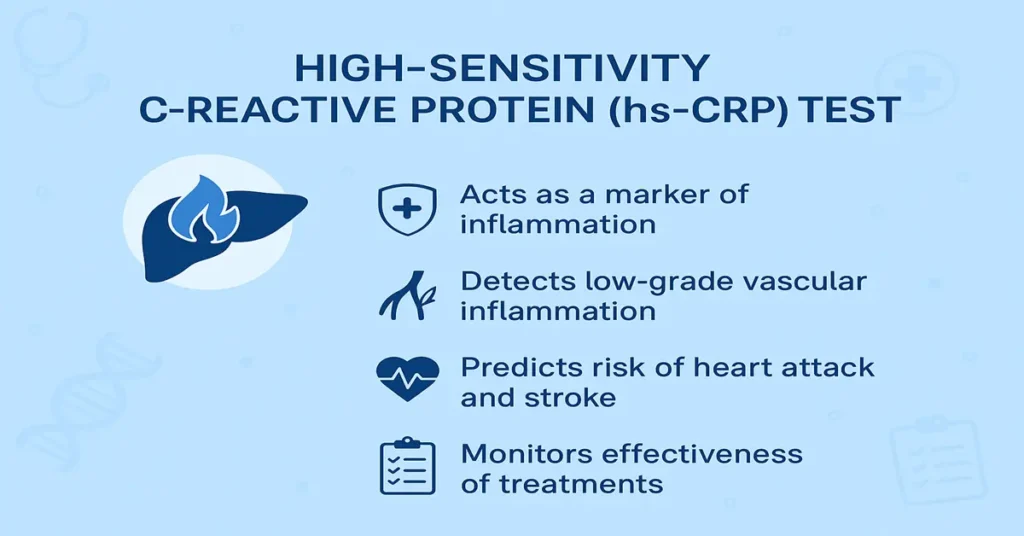
The high-sensitivity C-reactive protein (hs-CRP) test is a refined blood test designed to measure very small amounts of C-reactive protein in the blood. CRP is a protein produced by the liver in response to inflammation anywhere in the body. What makes the hs-CRP test different from the routine CRP test is its ability to detect low-grade, long-standing inflammation that would otherwise go unnoticed.
This subtle inflammation is medically important because it plays a role in the slow development of cardiovascular disease. Many heart-related conditions progress quietly over years, without clear symptoms. The hs-CRP test helps clinicians identify hidden inflammatory activity in the blood vessels, offering an early signal of increased cardiovascular risk even in people who otherwise appear healthy.
Where hs-CRP Is Produced in the Body
CRP, including the fraction measured by hs-CRP testing, is produced exclusively by the liver. Its production is triggered when the immune system detects inflammation. In response, immune cells release signaling molecules—most notably interleukin-6 (IL-6)—which stimulate the liver to release CRP into the bloodstream.
Once released, CRP circulates in the blood, and its concentration reflects the overall inflammatory burden in the body. Even mild and persistent inflammation, particularly within blood vessels, can raise hs-CRP levels slightly. These small increases are often clinically meaningful.
Main Functions and Importance of the hs-CRP Test
1. Detects Low-Grade Inflammation
The primary value of the hs-CRP test lies in its sensitivity. It can identify very small elevations in CRP that are not detected by standard CRP testing. These elevations usually do not cause noticeable symptoms but may indicate early inflammatory processes affecting the cardiovascular system.
2. Early Marker of Vascular Inflammation
Inflammation within the blood vessel walls contributes to plaque formation and instability. Over time, this process increases the likelihood of plaque rupture and clot formation. By detecting early vascular inflammation, hs-CRP serves as a quiet warning signal long before serious cardiovascular events occur.
3. Helps Predict Cardiovascular Risk
hs-CRP is widely used as part of cardiovascular risk assessment. Elevated levels are associated with a higher probability of future events such as heart attack, stroke, and peripheral artery disease. Clinicians often interpret hs-CRP alongside cholesterol levels and other risk factors to better estimate an individual’s overall heart-disease risk.
4. Helps Monitor Improvement
hs-CRP can also be used to observe trends over time. A reduction in hs-CRP may reflect improved control of inflammation and a lower cardiovascular risk profile. For clinicians, this trend provides useful context when reviewing long-term heart health.
Causes of Low / Negative hs-CRP Levels
Low hs-CRP levels are generally reassuring and reflect minimal inflammatory activity in the body.
1. Healthy Body State
When inflammation is absent or well controlled, the liver produces very little CRP, resulting in low hs-CRP values.
2. Stable Metabolic and Cardiovascular Health
Individuals with balanced metabolic function and low vascular inflammation commonly show low hs-CRP readings.
Symptoms of Low Levels
Low hs-CRP levels do not produce symptoms. They simply indicate a low level of systemic inflammation and a comparatively lower cardiovascular risk at that point in time.
Causes of High / Positive hs-CRP Levels
Elevated hs-CRP levels indicate the presence of inflammation. The source may vary and is not always obvious.
1. Chronic Low-Grade Inflammation
This is the most clinically relevant cause and is frequently linked to underlying cardiovascular and metabolic conditions.
2. Obesity and Metabolic Stress
Adipose tissue releases inflammatory mediators that can stimulate CRP production, even in the absence of overt disease.
3. Smoking and Physical Inactivity
These factors contribute to oxidative stress and vascular irritation, leading to higher hs-CRP levels.
4. Autoimmune Conditions
Chronic inflammatory diseases such as rheumatoid arthritis or lupus often raise CRP levels, including hs-CRP.
5. Chronic Medical Conditions
Long-standing illnesses, including kidney disease or certain malignancies, may be associated with elevated inflammatory markers.
6. Temporary or Transient Factors
Short-term increases may occur during infections, after injury, or following surgery. In such cases, hs-CRP elevation may not reflect long-term cardiovascular risk.
Symptoms of High hs-CRP Levels
hs-CRP itself does not cause symptoms. Any symptoms present are due to the underlying condition causing inflammation.
When inflammation is cardiovascular in origin, individuals may experience reduced exercise tolerance, fatigue, or chest discomfort. When inflammation is related to autoimmune disease or infection, symptoms may include fever, joint pain, swelling, or generalized weakness. Many people with elevated hs-CRP feel entirely normal.
Reference Ranges
Typical interpretation of hs-CRP values:
- < 1.0 mg/L – Low cardiovascular risk
- 1.0 – 3.0 mg/L – Average risk
- > 3.0 mg/L – High cardiovascular risk
- > 10 mg/L – Suggests acute inflammation; standard CRP evaluation is recommended
Values above 10 mg/L are often rechecked after a few weeks to confirm whether the elevation was temporary.
Sample Type
The hs-CRP test uses a blood sample, usually collected from a vein in the arm. Serum or plasma is analyzed. The test may be performed alone or alongside lipid and cholesterol testing.
Test Preparation
hs-CRP testing generally does not require fasting.
Preparation guidance:
- Avoid strenuous exercise for 24 hours before testing
- Avoid alcohol and smoking the day before the test
- Inform your doctor about recent infections, injuries, surgeries, or vaccinations
Medication disclosure is important, especially for statins, anti-inflammatory drugs, or hormonal therapies, as these may influence results.
When to Consult a Doctor
Medical consultation is advised if:
- You have a personal or family history of heart disease
- You experience unexplained chest discomfort, breathlessness, or fatigue with activity
- You have diabetes, metabolic syndrome, or chronic inflammatory conditions
- hs-CRP levels remain persistently elevated on repeat testing
- You are undergoing preventive cardiovascular risk assessment
hs-CRP is most useful when interpreted alongside cholesterol levels and overall clinical context.
Important Word Explanations
- Malaise – A general feeling of discomfort or unwellness
- Inflammation – The body’s immune response to injury or irritation
- Atherosclerosis – Narrowing and hardening of arteries due to plaque buildup
- IL-6 – An immune signaling molecule that stimulates CRP production
- Peripheral Artery Disease – Reduced blood flow to limbs due to narrowed arteries
~END~
Related Posts
None found
my value is 0.85 and they say it is bad high value and can i lower it
Your hs-CRP value of 0.85 mg/L is in the normal low-risk range, and you can keep it even lower with good sleep, regular exercise, and a healthy diet.