
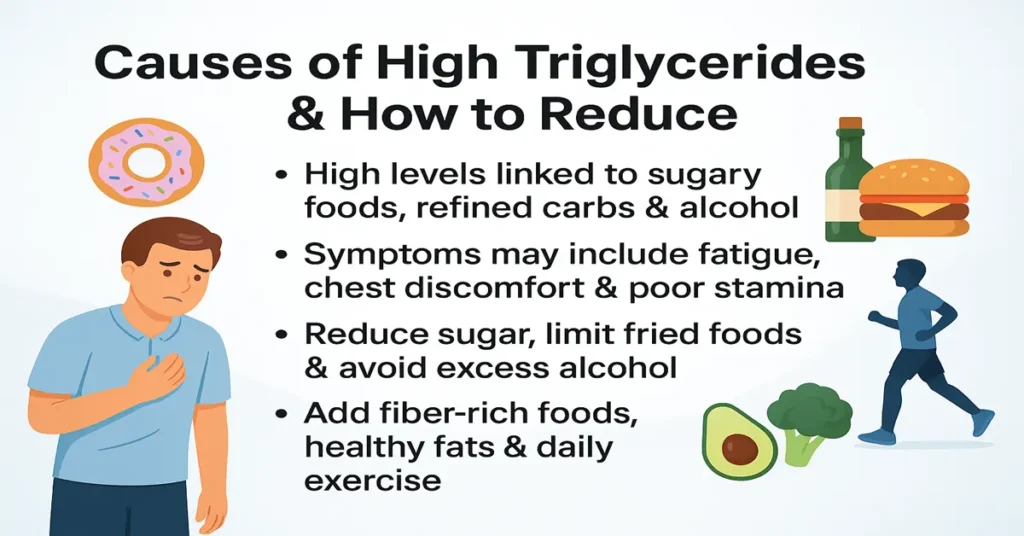
Causes of High Triglyceride Levels & How to Reduce Them Naturally
Overview
Triglycerides are a type of fat circulating in the bloodstream and form an important part of the routine lipid profile. After you eat, the body converts excess calories—especially from sugars and refined carbohydrates—into triglycerides, which are stored and later used for energy. In normal amounts, this process is healthy and necessary.
Problems arise when triglyceride levels stay persistently high. In routine lab practice, high triglycerides are commonly seen in people with sedentary lifestyles, high sugar intake, weight gain, diabetes, or excess alcohol consumption. Over time, elevated levels increase the risk of heart disease, fatty liver, metabolic syndrome, and in severe cases, pancreatitis.
This article explains the common causes of high triglycerides, symptoms that may appear, practical lifestyle-based ways to reduce them naturally, and situations where high levels become medically concerning.
What Causes High Triglyceride Levels?
High triglycerides usually develop due to a combination of diet, lifestyle, metabolism, and medical conditions rather than a single factor.
High sugar intake
Sugary foods and drinks such as soft drinks, sweets, desserts, and packaged juices raise blood glucose. The liver converts this excess sugar into triglycerides.
Excess refined carbohydrates
White rice, white bread, pasta, noodles, pizza, and bakery items digest quickly and promote triglyceride production.
Overeating or excess calories
Consuming more calories than the body burns leads to fat storage, raising triglyceride levels.
Lack of physical activity
A sedentary routine slows fat metabolism, allowing triglycerides to accumulate in the blood.
Obesity and abdominal fat
Central (belly) fat is closely linked with insulin resistance, a major driver of high triglycerides.
Excess alcohol intake
Alcohol is calorie-dense and directly stimulates triglyceride production in the liver. Even moderate intake can raise levels in some people.
Smoking
Smoking affects lipid metabolism, lowers HDL (good cholesterol), and indirectly increases triglycerides.
Genetic tendency
Some individuals inherit conditions such as familial hypertriglyceridemia, where levels remain high despite reasonable lifestyle habits.
Medical conditions
High triglycerides are often associated with:
- Diabetes (especially poorly controlled)
- Hypothyroidism
- Fatty liver disease
- Kidney disease
- PCOS
- Metabolic syndrome
Medications
Certain medicines can raise triglycerides, including steroids, oral contraceptives, beta blockers, and some immunosuppressants.
Clinically, doctors usually assess triglycerides along with sugar levels, cholesterol, liver enzymes, and body weight to understand the full picture.
Symptoms of High Triglycerides
Most people with high triglycerides have no early symptoms, which is why the condition often goes unnoticed until routine testing.
When levels are significantly elevated, symptoms may include:
Persistent fatigue
Low exercise tolerance
Chest discomfort
Shortness of breath on exertion
Headaches or dizziness
Unexplained weight gain
Fatty deposits under the skin (xanthomas)
Enlarged liver in advanced cases
Very high triglycerides can cause severe upper abdominal pain, often signaling pancreatitis, which requires urgent medical care.
Health Risks of High Triglycerides
If untreated, high triglycerides increase long-term health risks.
Heart disease
They contribute to plaque formation in blood vessels, especially when combined with low HDL or high LDL.
Stroke
Narrowed or blocked arteries supplying the brain increase stroke risk.
Fatty liver disease
Excess triglycerides are stored in the liver, leading to inflammation and liver dysfunction.
Pancreatitis
Triglyceride levels above 500–1000 mg/dL can inflame the pancreas, a potentially life-threatening condition.
Insulin resistance
High triglycerides commonly coexist with diabetes and metabolic syndrome.
Circulation problems
Thicker blood flow may lead to leg pain, cramps, or swelling.
How to Reduce High Triglycerides Naturally
In routine clinical practice, triglycerides often respond well to consistent lifestyle correction.
Improve dietary habits
Reducing sugar and refined carbohydrates is the single most effective step.
Limit:
- Sweets, cakes, pastries
- Sugary drinks and juices
- White rice and refined flour products
- Packaged snacks and fried foods
Increase fiber intake
Fiber slows sugar absorption and improves fat metabolism.
Include oats, whole grains, beans, lentils, fruits, and vegetables.
Choose healthy fats
Replace unhealthy fats with olive oil, nuts, seeds, avocado, and fatty fish. These improve overall lipid balance.
Limit saturated fats
Reduce deep-fried foods, red meat, and excessive butter or cheese.
Reduce or stop alcohol
Even small amounts can significantly raise triglycerides in susceptible individuals.
Exercise regularly
Brisk walking, cycling, swimming, yoga, or strength training for about 30 minutes most days improves fat utilization.
Lose excess weight
A 5–10% reduction in body weight often leads to a meaningful drop in triglycerides.
Quit smoking
Stopping smoking improves HDL and overall cardiovascular health.
Manage stress and sleep
Chronic stress and poor sleep disturb metabolic hormones and worsen lipid levels.
Supplements, if advised by a doctor, may include omega-3 fatty acids, fiber supplements, probiotics, or vitamin D if deficient.
When High Triglycerides Become Dangerous
High triglycerides need urgent attention when:
Levels are persistently above 500 mg/dL
There is severe abdominal pain, nausea, or vomiting
Triglycerides are rising rapidly
There is uncontrolled diabetes
Liver tests are abnormal
High triglycerides coexist with low HDL and high LDL
In such situations, doctors usually act quickly to prevent complications like pancreatitis or heart events.
Test Preparation
For accurate triglyceride results:
Fast for 9–12 hours unless advised otherwise
Drink water normally
Avoid alcohol for at least 24 hours
Avoid heavy or fatty meals the night before
Do not exercise intensely just before the test
Inform your doctor about medications
When to See a Doctor
Medical consultation is recommended if:
Triglycerides remain high on repeated testing
You have diabetes, thyroid disease, or fatty liver
You experience chest discomfort or breathlessness
There is sudden abdominal pain
There is rapid weight gain or obesity
You have a strong family history of heart disease
Early evaluation helps prevent long-term complications.
Important Word Explanations
Triglycerides: Fats stored in the body and used for energy
Hypertriglyceridemia: Abnormally high triglyceride levels
Pancreatitis: Inflammation of the pancreas
Insulin resistance: Reduced response of cells to insulin
Xanthomas: Fatty deposits under the skin
People Also Ask
Is high triglyceride level serious?
Mild elevation is common, but very high or persistent levels increase heart and pancreas risk.
Can high triglycerides be temporary?
Yes. Recent overeating, alcohol intake, illness, or poor sugar control can temporarily raise levels.
Does high triglyceride always mean heart disease?
No. It is a risk marker, not a diagnosis. Doctors assess it along with other lipid and clinical findings.
When do doctors usually worry about triglycerides?
When levels stay above normal despite lifestyle changes or cross 500 mg/dL.
Is repeat testing common?
Yes. Repeat testing helps confirm whether the elevation is persistent or reversible.
Can triglycerides be controlled without medicines?
In many cases, yes—especially when detected early and managed with diet and lifestyle changes.
~END~