
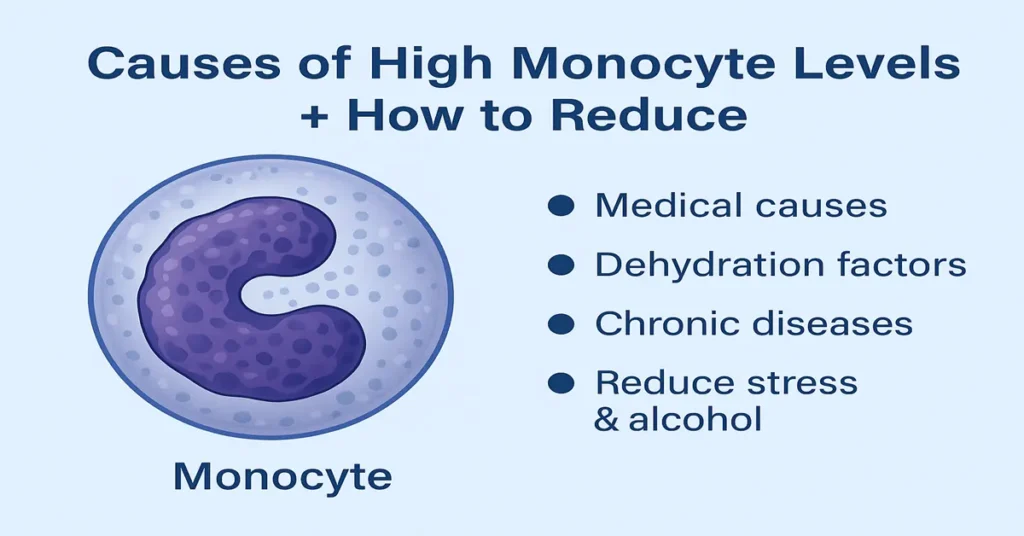
Causes of High Monocyte Levels and How to Reduce Them Naturally
Monocytes are a type of white blood cell that quietly do a lot of background work for your immune system. In routine lab practice, we often notice raised monocytes when the body is dealing with long-standing inflammation, infection, or recovery after illness. This condition is called monocytosis.
A mildly raised monocyte count is quite common and, in many cases, temporary. However, when monocytes remain high over time, it usually means the immune system is being continuously stimulated and the cause needs to be understood. This article explains what high monocytes mean, why they rise, how doctors interpret this finding, and how natural supportive measures help when the cause is non-serious.
What High Monocyte Levels Mean
Monocytes normally make up a small portion of your total white blood cells.
Typical reference range
2–8% of total WBCs
Approximately 200–800 cells/µL (ranges vary slightly by lab)
When monocytes rise above this range, it usually reflects ongoing immune activity. Clinically, this is where doctors pause and look at the full picture rather than reacting to the number alone.
Medical Causes of High Monocytes
Chronic infections
Monocytes increase when the body is fighting infections that last longer or recover slowly. Tuberculosis, chronic bacterial infections, certain viral infections like hepatitis or HIV, and fungal infections are common examples. The immune system keeps monocytes active to clean infected tissue and control damage.
Autoimmune diseases
In autoimmune conditions, the immune system attacks the body’s own tissues. This constant inflammation leads to increased monocyte production. Rheumatoid arthritis, lupus, inflammatory bowel disease, and autoimmune thyroid disorders often show this pattern on blood reports.
Chronic inflammatory disorders
Long-standing inflammation anywhere in the body can raise monocytes. Chronic sinusitis, persistent skin inflammation, long-term lung irritation, and untreated inflammatory conditions are frequently associated with monocytosis.
Stress and hormonal imbalance
Physical or emotional stress alters cortisol balance. In real-world OPD settings, we often see mildly raised monocytes in people under prolonged stress, poor sleep, or hormonal imbalance.
Medication effects
Some medicines can alter white blood cell patterns. Certain steroids, immune-modulating drugs, and a few antibiotics may cause a temporary rise in monocytes. Doctors usually correlate this with medication history.
Recovery phase after infection
After viral fever, dengue, flu, or similar illnesses, monocytes often rise during the healing phase. This is a normal immune response and usually settles on its own.
Rare but serious causes
Uncommon conditions such as leukemia, other blood cancers, or bone marrow disorders can also raise monocytes. These are usually suspected only when counts are very high or rising continuously with other abnormal findings.
Role of Dehydration in High Monocytes
Dehydration does not increase monocyte production. Instead, it concentrates the blood, making cell counts appear higher than they truly are.
Common reasons include low water intake, fever, excessive sweating, hot climate, diarrhea, vomiting, or high salt intake. Proper hydration often normalizes mildly elevated counts on repeat testing.
Chronic Diseases Linked to High Monocytes
Chronic lung diseases like COPD or long-standing asthma keep the immune system activated. Liver disorders, intestinal inflammation such as Crohn’s disease or ulcerative colitis, and endocrine problems involving thyroid or adrenal glands may also contribute to persistent monocytosis. These cases usually need long-term medical follow-up.
Smoking and Alcohol Effects
Smoking causes constant airway irritation and inflammation. In lab reports, smokers frequently show raised monocytes along with higher total WBC counts. Quitting smoking often leads to gradual improvement.
Excess alcohol stresses the liver and immune system, sometimes increasing monocyte activity. Reducing alcohol intake helps restore immune balance.
Symptoms of High Monocytes
High monocytes themselves do not cause symptoms. Symptoms come from the underlying condition.
Commonly reported complaints include fatigue, fever, chronic cough, breathing difficulty, joint or body pain, skin rashes, abdominal discomfort, unexplained weight loss, or night sweats. Persistent symptoms always deserve evaluation.
How to Reduce High Monocytes Naturally
When high monocytes are related to lifestyle, stress, or mild inflammation, supportive measures play an important role.
A balanced, anti-inflammatory diet helps calm immune overactivity. Fresh fruits, vegetables, whole grains, omega-3 rich foods, turmeric, ginger, garlic, and green tea are commonly advised. Excess sugar, processed foods, deep-fried items, and heavy red-meat intake can worsen inflammation.
Adequate hydration prevents false elevations and supports circulation.
Stress management is essential. Simple practices like deep breathing, meditation, light yoga, or a daily walk often make a noticeable difference in repeat blood tests.
Good sleep allows immune hormones to reset. Most adults benefit from 7–9 hours of regular sleep.
Quitting smoking and limiting alcohol significantly reduce chronic inflammation.
Light to moderate physical activity improves immune regulation. Over-exercising should be avoided, as it can temporarily increase inflammation.
Underlying infections, allergies, or chronic illnesses should be properly treated. Once the root cause improves, monocyte levels usually normalize without special intervention.
When High Monocyte Levels Become Concerning
Doctors become more cautious when monocytes remain high for more than 4–8 weeks, rise steadily on repeated tests, or are associated with fever, unexplained weight loss, night sweats, swollen lymph nodes, breathing difficulty, or worsening inflammation. Further investigations may then be advised.
Test Preparation for Monocyte Test
Monocytes are measured as part of a CBC test. Fasting is not required. Drink water normally, avoid smoking and alcohol before testing, inform the lab or doctor about medications, and mention recent infections or fever.
When to Consult a Doctor
Medical advice is important if monocyte levels stay high on repeat tests, symptoms persist, fatigue is constant, weight loss occurs, or chronic cough, rashes, or inflammation do not improve. Early evaluation helps prevent missed diagnoses.
Important Word Explanations
Monocytes – White blood cells involved in infection control and tissue repair
Monocytosis – High monocyte levels in the blood
Inflammation – The body’s response to injury or infection
Chronic disease – A condition lasting months or years
Immune response – The body’s defensive reaction to harmful agents
People Also Ask
Is a high monocyte count serious?
Not always. Mild elevation is common and often temporary.
Can monocyte levels rise after an infection?
Yes. This is frequently seen during recovery and usually settles.
Does high monocytes always mean cancer?
No. Most cases are related to inflammation or infection.
When do doctors usually worry about monocytes?
When levels stay high for weeks or rise along with other abnormal findings.
Is repeat testing common?
Yes. Doctors often repeat CBC tests to track trends.
Can stress alone raise monocytes?
Yes. Chronic stress can mildly increase monocyte levels.
~END~