
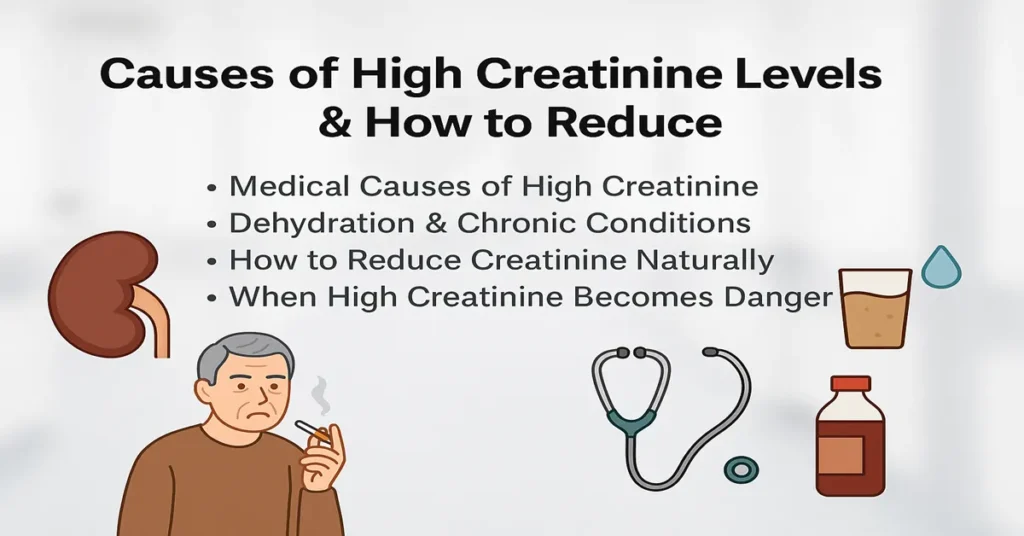
Causes of High Creatinine Levels + How to Reduce Naturally
Creatinine is a waste product formed when muscles use energy during normal daily activity. Once released into the bloodstream, it is filtered by the kidneys and excreted through urine. Because creatinine depends on both muscle activity and kidney filtration, its level in the blood gives doctors a practical idea of how well the kidneys are working.
High creatinine is not a disease by itself. In routine OPD and lab practice, it is treated as a warning signal. Sometimes the rise is temporary, related to dehydration, medicines, or recent physical strain. When it stays elevated, it usually means the kidneys are under stress or their filtering capacity has reduced. Understanding why creatinine rises and how doctors interpret it helps patients act early and protect kidney health.
Medical Causes of High Creatinine Levels
High creatinine most commonly reflects reduced kidney filtration, but the reason behind that reduction can vary.
Kidney dysfunction
This is the most frequent cause. Chronic kidney disease, acute kidney injury, long-standing diabetes, and uncontrolled high blood pressure slowly damage kidney filters. When filtration weakens, creatinine starts accumulating in the blood.
Urinary tract obstruction
Conditions such as kidney stones, enlarged prostate, or urinary tract blockages prevent normal urine flow. Clinically, this back pressure affects kidney function and raises creatinine levels.
High protein intake
Very high-protein diets, often seen in bodybuilding or crash fitness programs, increase waste production. In routine lab practice, mildly raised creatinine is commonly seen in people consuming excessive protein powders or meat-heavy diets.
Certain medications
Painkillers like NSAIDs, some antibiotics, diuretics, blood pressure medicines, and chemotherapy drugs can temporarily or permanently affect kidney filtration, leading to elevated creatinine.
Muscle injury or breakdown
Severe exercise, trauma, burns, or muscle breakdown conditions release large amounts of creatinine into the blood, sometimes faster than the kidneys can clear it.
Dehydration and Creatinine Rise
Dehydration is one of the most common and reversible causes of high creatinine.
When the body lacks enough fluids, blood becomes concentrated and kidney blood flow reduces. Filtration slows down, and creatinine rises. This is frequently seen during hot weather, fever, vomiting, diarrhea, fasting, or intense physical activity without adequate fluid intake. In many such cases, creatinine improves once hydration is corrected.
Chronic Diseases Linked to High Creatinine
Several long-term conditions gradually affect kidney health and creatinine levels.
Diabetes
Poor sugar control damages kidney blood vessels over time, reducing their filtering ability.
Hypertension
Persistently high blood pressure strains kidney filters and accelerates kidney damage.
Heart failure
Reduced blood pumping leads to poor kidney perfusion, which slows waste removal.
Thyroid disorders
Both overactive and underactive thyroid conditions can influence muscle metabolism and kidney function, indirectly affecting creatinine.
Autoimmune diseases
Conditions such as lupus or vasculitis may directly damage kidney tissue, leading to chronic elevation.
Smoking and Alcohol Effects on Creatinine
Smoking
Smoking reduces blood flow to kidneys and causes chronic inflammation. Over time, this weakens kidney filtration and keeps creatinine elevated.
Alcohol
Alcohol causes dehydration, stresses the liver, and disturbs electrolytes. Heavy or regular drinking can trigger acute kidney stress and worsen long-term kidney function.
Symptoms of High Creatinine Levels
High creatinine itself does not cause symptoms, but the underlying kidney stress does.
Common signs include persistent fatigue, swelling of legs or face due to fluid retention, reduced or dark urine, nausea, muscle cramps, and difficulty concentrating. In more severe cases, shortness of breath may occur due to fluid buildup. Clinically, these symptoms prompt doctors to correlate creatinine with other kidney markers before deciding next steps.
How to Reduce High Creatinine Levels Naturally
When creatinine is mildly to moderately elevated and not due to advanced kidney disease, supportive lifestyle measures can help.
Improve hydration
Adequate water intake helps kidneys filter waste more efficiently. Most people benefit from steady fluid intake spread through the day, unless fluid restriction is advised.
Moderate protein intake
Temporarily reducing heavy protein sources like red meat and protein supplements lowers waste load on kidneys. Balanced, moderate protein is usually preferred.
Stop creatine supplements
Creatine directly converts to creatinine. In lab practice, stopping these supplements often leads to noticeable improvement.
Reduce salt intake
Lower salt helps control blood pressure and prevents dehydration-related kidney stress.
Choose kidney-supportive foods
Fruits and vegetables with high water content support hydration and metabolic balance.
Gentle physical activity
Avoid intense workouts during high creatinine phases. Light movement supports circulation without excess muscle breakdown.
Control sugar and blood pressure
Stable glucose and BP are key to long-term creatinine control.
Avoid smoking and alcohol
Reducing these significantly improves kidney circulation and filtration over time.
When High Creatinine Levels Become Concerning
Doctors become more cautious when creatinine rises rapidly, remains high for weeks, or is associated with very low urine output, swelling, breathlessness, confusion, or severe fatigue. These patterns suggest significant kidney stress or injury and require medical evaluation. Additional tests like eGFR, BUN, electrolytes, urine examination, or imaging are often advised to understand the cause clearly.
Test Preparation
Creatinine testing usually does not require fasting. Avoid heavy exercise and creatine supplements before the test. Maintain normal hydration and inform your doctor about all medications you are taking.
Important Word Explanations
Creatinine: A waste product released from muscle activity
Kidney filtration: The process by which kidneys remove waste from blood
Dehydration: Reduced body fluids that slow kidney filtration
eGFR: An estimate of kidney function derived from creatinine
Rhabdomyolysis: Rapid muscle breakdown causing sudden creatinine rise
People Also Ask
Is high creatinine always serious?
Not always. Mild elevation can be temporary due to dehydration, diet, or medicines.
Can creatinine levels go back to normal?
Yes. If the cause is reversible, creatinine often improves with proper care.
Does high creatinine always mean kidney failure?
No. It indicates kidney stress, not necessarily permanent damage.
When do doctors worry about high creatinine?
When it rises quickly, stays high, or comes with symptoms like swelling or low urine output.
Is repeat testing common for creatinine?
Yes. Repeat tests help confirm trends and rule out temporary causes.
Can lifestyle changes really help lower creatinine?
In early or mild cases, lifestyle correction often makes a noticeable difference.
~END~
I appreciate that you keep everything medically accurate without making it scary. Balanced writing!
This was exactly what I was searching for. Quick, simple, and medically correct information. Thank you!
This is the first website where I actually understood the meaning of normal and abnormal ranges. Very helpful content.
Hello, this weekend is pleasant in support of me, because this moment i am reading
this wonderful educational post here at my residence.