
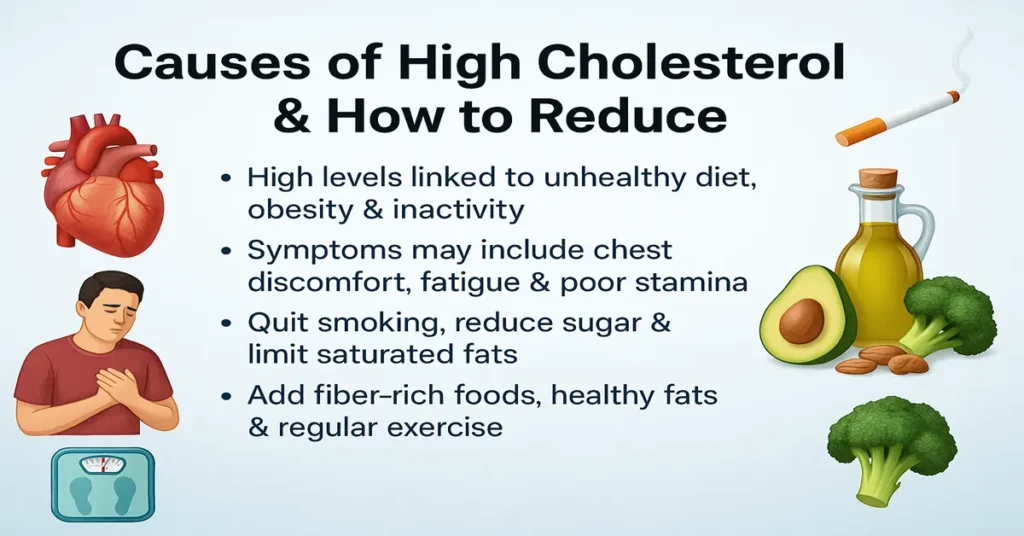
Causes of High Cholesterol Levels & How to Reduce Them Naturally
Overview
Cholesterol is a fatty substance produced by the liver and also obtained from food. It is essential for hormone production, vitamin D formation, cell structure, and digestion. Problems arise when cholesterol—especially LDL (low-density lipoprotein)—rises above a healthy range. This increases the risk of heart disease, stroke, and damage to blood vessels.
In routine OPD and lab practice, high cholesterol is one of the most common abnormal findings, often discovered incidentally because it usually develops silently. Many patients feel completely fine until complications begin. That is why regular testing and early correction matter.
This article explains the medical and lifestyle causes of high cholesterol, possible warning signs, safe natural ways to reduce levels, and when high cholesterol becomes dangerous and needs urgent attention.
What Causes High Cholesterol Levels?
High cholesterol usually develops due to a combination of lifestyle habits, genetics, and underlying medical conditions. Rarely is there a single cause.
Diet high in saturated or trans fats
Foods such as red meat, butter, cheese, fried snacks, bakery items, and processed foods raise LDL cholesterol over time.
Excess sugar and refined carbohydrates
Sugary drinks, sweets, white bread, and packaged foods raise triglycerides and indirectly worsen cholesterol balance.
Lack of physical activity
A sedentary lifestyle lowers HDL (good cholesterol) and allows LDL to rise more easily.
Overweight and obesity
Excess body fat alters fat metabolism, increasing LDL and reducing HDL.
Genetic tendency
Conditions like familial hypercholesterolemia cause very high cholesterol even with a healthy diet. Clinically, this is suspected when cholesterol is high from a young age or runs strongly in families.
Hypothyroidism
An underactive thyroid slows metabolism and commonly raises cholesterol levels.
Liver or kidney disorders
Diseases affecting fat processing or waste removal can disturb cholesterol regulation.
Smoking
Smoking damages blood vessel walls, making cholesterol deposits form more easily.
Alcohol consumption
Regular or excessive alcohol intake raises triglycerides and disrupts lipid balance.
Medication effects
Some medicines, including steroids, certain diuretics, and hormonal drugs, may increase cholesterol.
In most patients, high cholesterol reflects a mix of these factors rather than just one issue.
Symptoms of High Cholesterol Levels
High cholesterol is often called a “silent condition.” Most people have no symptoms until artery damage has already begun.
In more advanced cases, signs may include:
Chest pain or tightness
Shortness of breath
Leg pain or cramps while walking
Yellowish fatty deposits around the eyes (xanthelasma)
Firm nodules on tendons (xanthomas)
Reduced stamina or unexplained fatigue
Clinically, when such signs appear, cholesterol has usually been high for years.
Health Risks of High Cholesterol
If cholesterol remains high and untreated, it can gradually lead to serious complications.
Heart disease
LDL builds up inside arteries, narrowing them and reducing blood flow.
Heart attack
A plaque rupture or complete blockage can suddenly stop blood flow to the heart.
Stroke
Blocked or damaged brain arteries increase stroke risk.
Peripheral artery disease
Reduced blood flow to the legs causes pain, numbness, and walking difficulty.
High blood pressure
Narrowed arteries force the heart to work harder.
These problems develop slowly, which is why early lifestyle correction is so important.
How to Reduce High Cholesterol Naturally
For many people, consistent lifestyle changes are enough to improve cholesterol levels safely.
Improve your diet
Eat more fiber
Fiber helps remove cholesterol from the bloodstream. Include oats, lentils, beans, fruits, vegetables, and whole grains.
Choose healthy fats
Unsaturated fats help lower LDL and support HDL. Olive oil, nuts, seeds, avocado, and fatty fish are good choices.
Limit saturated and trans fats
Reduce red meat, butter, cheese, fried foods, and packaged snacks.
Cut back on sugar
High sugar intake raises triglycerides and worsens cholesterol imbalance.
Exercise regularly
Regular physical activity raises HDL and improves heart health. Brisk walking, cycling, swimming, yoga, or light strength training for about 30 minutes most days is usually sufficient.
Reduce excess weight
Even a modest weight loss of 5–10% can significantly improve cholesterol and triglyceride levels.
Quit smoking
Stopping smoking improves HDL levels and reduces artery damage almost immediately.
Limit alcohol
Alcohol raises triglycerides and strains the liver. Reducing intake helps normalize lipid levels.
Manage stress and sleep
Chronic stress and poor sleep affect hormone balance and fat metabolism. Simple stress-control practices and regular sleep improve long-term results.
Supplements (safe note)
Some people use omega-3 fatty acids, fiber supplements, or plant sterols. These should be taken only after medical advice, especially if other conditions are present.
When High Cholesterol Becomes Dangerous
High cholesterol needs urgent attention when it is associated with:
Chest pain or pressure
Sudden breathlessness
Pain spreading to the arm, jaw, or back
Dizziness or fainting
Sudden weakness, speech difficulty, or facial drooping
Very high LDL or triglyceride levels
Combination with diabetes, high blood pressure, or strong family history
In such cases, immediate medical evaluation is essential.
Test Preparation
For accurate cholesterol results:
Fast for 9–12 hours if advised
Drink water normally
Avoid alcohol for at least 24 hours
Avoid heavy or fatty meals the night before
Inform the doctor about medications or supplements
Rest briefly before blood collection
Proper preparation avoids misleading values.
When to Consult a Doctor
You should seek medical advice if:
Cholesterol remains high despite lifestyle changes
There is a family history of early heart disease
You have diabetes, thyroid disease, or kidney problems
Triglycerides are very high
You notice yellow skin deposits or chest discomfort
Early guidance helps prevent long-term complications.
Important Word Explanations
LDL: “Bad” cholesterol that builds up in arteries
HDL: “Good” cholesterol that helps remove LDL
Triglycerides: Blood fats linked to sugar and alcohol intake
Plaque: Fatty deposits inside arteries
Atherosclerosis: Hardening and narrowing of arteries
People Also Ask
Is high cholesterol always dangerous?
Not always. Mild elevations without other risk factors may be managed with lifestyle changes, but persistent high levels need monitoring.
Can high cholesterol be temporary?
Yes. Illness, stress, diet changes, or medications can temporarily raise cholesterol.
Does high cholesterol always cause symptoms?
No. Most people have no symptoms until complications develop.
When do doctors usually worry about cholesterol?
When levels stay high over time, rise rapidly, or occur with diabetes, smoking, or family history.
Is repeat testing common?
Yes. Doctors often repeat lipid tests to confirm trends and response to lifestyle changes.
Can cholesterol levels improve naturally?
In many cases, yes. Diet, exercise, weight control, and quitting smoking can significantly improve levels.
~END~