
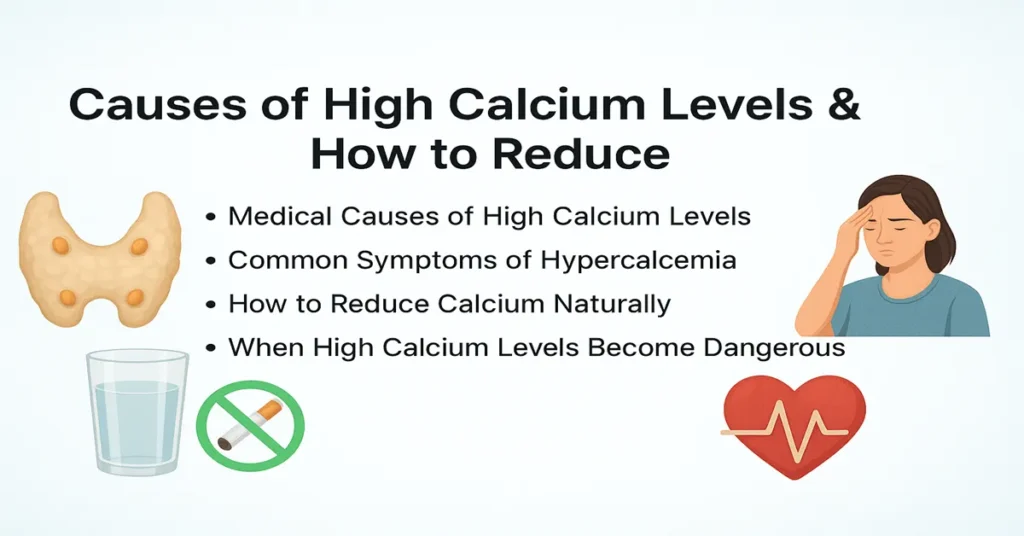
Causes of High Calcium Levels and How to Reduce Them
High calcium levels in the blood, medically called hypercalcemia, occur when the body has more calcium than it can safely regulate or eliminate. Calcium is essential for bones, muscles, nerves, and heart rhythm, but when it rises beyond the normal range, it begins to interfere with these same systems. In routine OPD and lab practice, hypercalcemia is often picked up incidentally during blood tests, even before clear symptoms appear.
What matters clinically is not just that calcium is high, but why it is high and whether it is persistent. Some causes are temporary and reversible, while others need closer medical attention. Understanding the underlying reason helps guide safe and appropriate correction.
What Causes High Calcium Levels?
High calcium develops when calcium absorption, release from bones, or reduced excretion through kidneys goes out of balance. This usually happens due to medical conditions, dehydration, or excessive intake from supplements.
Medical Causes of High Calcium
One of the most common causes seen in clinical practice is overactive parathyroid glands (primary hyperparathyroidism). These small glands control calcium balance. When they release excess parathyroid hormone (PTH), calcium is pulled from bones into the blood and kidney excretion is reduced. This condition often causes mild but persistent hypercalcemia.
Certain cancers can also raise calcium levels. Blood cancers such as multiple myeloma or lymphomas, and solid tumors like lung or breast cancer, may release substances that increase calcium or cause bone breakdown. In these cases, calcium elevation is often more significant and progresses faster.
Excess vitamin D or calcium supplements are another frequent and avoidable cause. High-dose vitamin D increases intestinal calcium absorption, and combined with calcium supplements, levels may slowly rise without obvious early symptoms.
Thyroid and adrenal disorders can influence calcium balance. Hyperthyroidism increases bone turnover, releasing calcium into the bloodstream. Adrenal insufficiency can alter mineral regulation, contributing to elevated levels.
Kidney problems play an important role as well. Healthy kidneys remove excess calcium through urine. When kidney function is reduced, calcium clearance drops, allowing levels to rise.
How Dehydration Raises Calcium Levels
Dehydration is an often underestimated factor. When fluid intake is low or fluid loss is high:
Blood volume decreases
Calcium becomes more concentrated
Kidneys cannot flush out excess calcium efficiently
Even mild dehydration can temporarily raise calcium levels, especially in people with kidney disease or parathyroid problems. In hot weather, during illness, or with poor fluid intake, this effect becomes more noticeable. Clinically, hydration alone sometimes normalizes mildly high calcium.
Chronic Diseases Linked to High Calcium Levels
Some long-standing conditions raise calcium gradually over time.
Diseases like sarcoidosis or tuberculosis can increase activation of vitamin D inside the body, leading to increased calcium absorption from food.
In chronic kidney disease, calcium and phosphorus balance becomes disturbed, and compensatory mechanisms may push calcium higher.
Paget’s disease of bone causes abnormal bone remodeling, releasing calcium into the bloodstream.
Prolonged immobility or bed rest reduces bone loading. Bones release calcium when not used, which can increase blood calcium levels, particularly in elderly or bedridden patients.
Role of Smoking and Alcohol
Smoking affects calcium balance indirectly. It weakens bone structure and disrupts hormone signaling, making calcium more likely to move from bones into blood over time.
Alcohol, especially heavy or regular intake, contributes by causing dehydration, altering vitamin D metabolism, stressing kidneys, and increasing bone breakdown. In lab practice, people with chronic alcohol use often show disturbed calcium and mineral profiles.
Common Symptoms of High Calcium Levels
Symptoms depend on how high calcium is and how quickly it rises.
Mild elevations may cause increased thirst, frequent urination, fatigue, or reduced appetite and are often overlooked.
As levels rise further, constipation, muscle weakness, abdominal discomfort, and mood changes may appear.
Severe hypercalcemia can cause confusion, vomiting, irregular heartbeat, kidney stones, and marked dehydration. These are medical red flags and need urgent evaluation.
How to Reduce High Calcium Levels Naturally
For mild or borderline high calcium, supportive measures often help stabilize levels while the underlying cause is addressed.
Adequate hydration is the most important step. Drinking sufficient water helps kidneys excrete excess calcium more effectively.
Reviewing and reducing unnecessary calcium or vitamin D supplements is essential. Many patients improve simply by stopping excess supplementation under medical guidance.
In selected cases, temporarily limiting very high-calcium foods may be advised, though this is not required for everyone and should be individualized.
Lowering salt intake supports kidney function and reduces calcium-related kidney stress.
Avoiding smoking and limiting alcohol intake helps restore hormonal and kidney balance over time.
Maintaining gentle physical activity, such as daily walking, prevents calcium loss from bones and supports overall mineral regulation.
When High Calcium Levels Become Dangerous
High calcium becomes concerning when levels remain elevated on repeat testing or when symptoms appear. Warning signs include kidney stone pain, persistent vomiting, confusion, muscle twitching, severe thirst, or irregular heartbeat.
Very high calcium can damage kidneys and disturb heart rhythm. In such cases, medical treatment is necessary rather than home-based correction.
Test Preparation
For accurate calcium testing, supplements are usually stopped 24 hours before the test unless advised otherwise. Normal hydration is important, and doctors should be informed about medications such as diuretics, lithium, or vitamin D. Fasting is only needed if combined with other tests.
When to Consult a Doctor
Medical advice is needed if calcium remains high, symptoms develop, kidney stones occur, or there is a history of thyroid, parathyroid, kidney, or cancer-related conditions. Sudden worsening of symptoms requires immediate care.
Important Word Explanations
Hypercalcemia means high calcium levels in the blood.
Parathyroid hormone (PTH) regulates calcium balance.
Dehydration refers to low body water leading to concentrated minerals.
Kidney stones are hard mineral deposits formed in kidneys.
Vitamin D toxicity occurs when excess vitamin D raises calcium excessively.
People Also Ask
Is high calcium always serious?
Not always. Mild elevations can be temporary, but persistent high calcium needs evaluation.
Can dehydration alone raise calcium levels?
Yes. Dehydration can temporarily increase calcium, especially in susceptible individuals.
Does high calcium always mean cancer?
No. The most common cause is parathyroid gland overactivity, not cancer.
When do doctors usually worry about high calcium?
When levels stay high on repeat tests or symptoms like confusion, stones, or heart issues appear.
Is repeat calcium testing common?
Yes. Repeat testing helps confirm whether the elevation is temporary or ongoing.
Can lifestyle changes alone reduce high calcium?
In mild cases, yes. Persistent or severe cases usually need medical evaluation.
~END~
amazing, this content helped me alot, this site is very clean and genuine for health and wellness.