
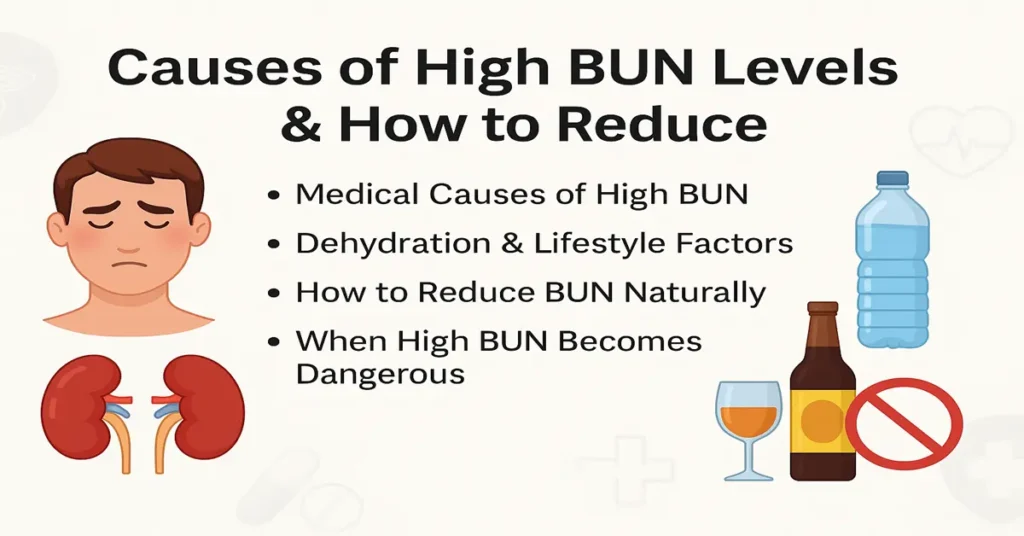
Causes of High BUN Levels + How to Reduce Naturally
Overview
High BUN (Blood Urea Nitrogen) means there is more urea-related nitrogen in the blood than expected. Urea is produced in the liver when protein breaks down, and it is removed from the body by the kidneys. When either urea production increases or kidney filtration slows, BUN levels rise.
In everyday lab practice, high BUN is not a diagnosis by itself. It is a signal. Clinically, doctors pause here and ask simple questions first: Is the patient dehydrated? Is protein intake very high? Are the kidneys under stress from blood pressure, diabetes, or medications? Many times, the cause is reversible once identified early.
This article explains the common medical and lifestyle causes of high BUN, the symptoms that may appear, and safe, natural ways to bring BUN down without aggressive treatment.
Medical Causes of High BUN Levels
High BUN usually reflects either reduced kidney clearance of urea or increased urea production in the body.
Kidney dysfunction
Any condition that reduces kidney filtration can raise BUN. This includes chronic kidney disease, sudden kidney injury, long-standing high blood pressure, or infections affecting the kidneys. In such cases, urea stays longer in the blood instead of being excreted in urine.
Heart failure or poor circulation
When the heart cannot pump blood effectively, kidney blood flow decreases. Reduced perfusion means waste removal slows down, leading to elevated BUN.
Gastrointestinal bleeding
Bleeding in the stomach or intestines increases protein breakdown. The liver converts this extra protein load into urea, pushing BUN higher.
Very high protein intake
Diets heavy in red meat, protein powders, or bodybuilding supplements increase urea formation. The kidneys may struggle to clear this excess efficiently.
Certain medications
Steroids, diuretics, and some antibiotics can raise BUN by altering kidney filtration, fluid balance, or protein metabolism.
Dehydration Factors
Dehydration is one of the most common and easily overlooked causes of high BUN.
When the body lacks adequate water:
- Blood becomes concentrated
- Urea clearance slows
- Kidneys conserve fluid, retaining waste
Clinically, this pattern is often seen during hot weather, fever, vomiting, diarrhea, prolonged fasting, excessive sweating, or simply low daily water intake. Even mild dehydration can raise BUN noticeably, especially in older adults.
Chronic Diseases Linked to High BUN
Several long-term conditions gradually affect kidney function and urea handling.
Diabetes
Poor blood sugar control damages small kidney blood vessels over time, reducing filtration efficiency.
Hypertension
Sustained high blood pressure slowly injures kidney tissue, making urea removal less effective.
Liver disorders
Although the liver produces urea, metabolic imbalance in liver disease can disturb normal urea handling, sometimes raising BUN alongside other abnormal markers.
Thyroid disorders
Low thyroid activity slows metabolism and may indirectly alter protein breakdown and kidney filtration.
Urinary obstruction
Kidney stones, prostate enlargement, or urinary tract blockages prevent proper urine flow, causing waste products to back up into the bloodstream.
Smoking and Alcohol Effects on BUN
Smoking
Smoking reduces oxygen delivery to kidney tissue, increases vascular inflammation, and accelerates protein breakdown. Over time, these effects raise BUN and worsen kidney stress.
Alcohol
Alcohol contributes in multiple ways:
- Causes dehydration
- Increases protein catabolism
- Strains the liver
- Impairs kidney filtration
Regular heavy alcohol intake often raises BUN along with creatinine and electrolyte abnormalities.
Symptoms of High BUN Levels
Mild elevations may cause no symptoms. As BUN continues to rise, patients may notice:
- Persistent fatigue or weakness
- Nausea or poor appetite
- Reduced urine output or dark urine
- Swelling of legs, ankles, or face
- Difficulty concentrating or confusion
- Muscle cramps or restlessness
These symptoms reflect waste accumulation and fluid–electrolyte imbalance. Worsening symptoms should not be ignored.
How to Reduce High BUN Levels Naturally
In many cases, BUN can be lowered safely with simple corrections.
Improve hydration
Adequate water intake is often the most effective step. Most adults benefit from about 2–2.5 liters per day unless fluid restriction is advised.
Moderate protein intake
Temporarily reducing very high protein intake helps lower urea production. Heavy red meat, protein powders, and oversized portions can be limited while maintaining balanced nutrition.
Reduce salt intake
Excess salt worsens dehydration and increases kidney workload, indirectly raising BUN.
Choose kidney-supportive foods
Foods with high water content and gentle fiber support waste removal, such as cucumber, watermelon, apples, cauliflower, cabbage, oats, and rice.
Avoid alcohol and smoking
Reducing these significantly improves kidney efficiency over time.
Exercise sensibly
Very intense workouts increase protein breakdown. During high BUN phases, light to moderate activity such as walking or yoga is more suitable.
Control underlying conditions
Good control of diabetes and blood pressure is essential for long-term BUN stability.
When High BUN Levels Become Dangerous
Medical evaluation is important if BUN:
- Remains high for more than 1–2 weeks
- Rises rapidly
- Is accompanied by confusion, swelling, breathlessness, or very low urine output
Doctors may correlate BUN with creatinine, electrolytes, urine tests, and imaging to identify the exact cause.
Test Preparation
For a BUN test:
- Fasting is usually not required
- Avoid very high-protein meals before testing
- Drink normal amounts of water
- Avoid alcohol for 24 hours
- Inform your doctor about medications
- Avoid heavy exercise before the test
Important Word Explanations
BUN: Blood Urea Nitrogen, a marker related to protein metabolism and kidney function
Urea: Waste product formed when protein breaks down
Dehydration: Reduced body water leading to concentrated blood values
Creatinine: Another waste marker used to assess kidney filtration
Kidney perfusion: Blood flow to the kidneys needed for waste removal
People Also Ask
Is high BUN serious?
It can be, depending on the cause. Many cases are due to dehydration or diet and improve with simple measures.
Can high BUN be temporary?
Yes. Dehydration, fever, or short-term illness often cause temporary increases.
Does high BUN always mean kidney disease?
No. Diet, hydration, medications, or bleeding can raise BUN even when kidneys are normal.
When do doctors usually worry about high BUN?
When it stays elevated, rises quickly, or is accompanied by symptoms or abnormal creatinine.
Is repeat testing common?
Yes. Repeat testing helps confirm whether the elevation is persistent or reversible.
Can BUN come down naturally?
In many people, yes. Correcting hydration, diet, and lifestyle often normalizes BUN.
~END~
I am sure this article has touched all the internet viewers, its really really pleasant paragraph on building up new blog.
I finally understand why my doctor ordered this test.