
How to Increase WBC (White Blood Cells) Naturally at Home
White Blood Cells (WBCs), also called leukocytes, are the body’s frontline defenders. In everyday OPD and laboratory practice, the WBC count is often one of the first values doctors look at—especially when a patient reports repeated infections, fever that keeps coming back, or slow recovery after illness. These cells are essential for fighting bacteria, viruses, and other harmful organisms, and they also help maintain immune balance during healing.
When WBC levels fall below the normal range, the body’s ability to protect itself can reduce. Some people start noticing frequent infections or delayed recovery, while others feel completely fine and discover the issue only during a routine blood test. Clinically, both situations are common. A low WBC count does not always mean something serious. This article explains, in a practical and clear way, why WBC levels fall, how doctors usually think about low counts, and what natural measures support recovery when the cause is mild and reversible.
Short Overview: What Are White Blood Cells?
White Blood Cells are produced mainly in the bone marrow and circulate through the blood and body tissues. Their primary role is to identify infections, destroy harmful organisms, and coordinate immune responses.
In adults, the usual WBC range is roughly 4,000 to 11,000 cells per microliter of blood. When the count falls below this range, it is called leukopenia. In routine clinical practice, mild leukopenia is often temporary and corrects on its own. Very low counts or values that remain low over time usually need closer medical attention.
Causes of Low WBC Levels
Low WBC levels can occur either because the body is not producing enough cells or because existing cells are being used up or destroyed faster than they are replaced. In daily practice, certain causes are seen more frequently.
Viral infections are the most common reason. During illnesses such as flu, dengue, hepatitis, or other viral fevers, WBC counts often drop temporarily. In lab reports, this fall is frequently noticed during the active phase of illness and may start improving as recovery begins.
Nutritional deficiencies are another common cause. Low levels of vitamin B12, folate, zinc, copper, or overall protein intake can slow bone marrow activity. In routine lab follow-ups, correcting these deficiencies often leads to gradual improvement in WBC count.
Medications can also lower WBC levels. Certain antibiotics, anti-seizure drugs, thyroid medicines, chemotherapy agents, and immune-suppressing drugs are well-known examples. In such cases, doctors usually correlate the timing of medication use with the blood report and monitor trends rather than reacting to a single value.
Autoimmune conditions, such as lupus or rheumatoid arthritis, may cause the immune system to attack white blood cells. These situations require careful evaluation and regular follow-up.
Bone marrow–related disorders, including aplastic anemia, leukemia, or myelodysplastic syndromes, are less common but more serious. Here, low WBC is usually not an isolated finding and is often accompanied by abnormalities in other blood parameters.
Chronic illnesses like kidney disease, liver disease, or HIV can affect immunity and WBC production over time. In these cases, low WBC reflects long-standing immune stress rather than a short-term issue.
Severe physical or emotional stress can also temporarily reduce WBC count. In OPD practice, low counts are sometimes seen after surgery, major illness, or prolonged stress.
Poor diet and long-term malnutrition can quietly weaken immunity and reduce WBC production, even before obvious symptoms appear.
Symptoms of Low WBC Levels
Low WBC levels do not always cause immediate symptoms. Many patients feel normal until infections start recurring. Common complaints include repeated fever, frequent sore throat or cough, mouth ulcers, slow wound healing, general tiredness, and body aches. When infections become frequent or do not resolve easily, checking the WBC count becomes an important step.
Best Diet and Foods to Support WBC Naturally
From a clinical nutrition perspective, diet plays a major role in immune recovery, especially when low WBC is linked to nutritional causes.
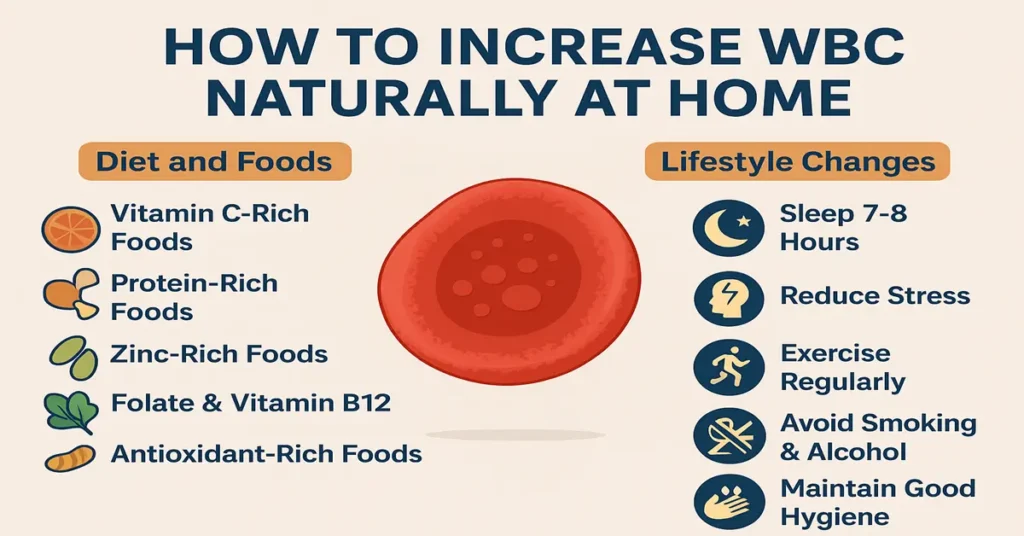
Vitamin C–rich foods support immune activity and normal WBC function. Common examples include citrus fruits, amla, papaya, strawberries, bell peppers, and broccoli.
Adequate protein intake is essential because bone marrow needs protein to produce new blood cells. Eggs, chicken, fish, lentils, beans, milk, and yogurt are practical sources often advised.
Zinc supports immune signaling and WBC development. Foods such as pumpkin seeds, cashews, almonds, and chickpeas are useful dietary sources.
Folate and vitamin B12 are critical for blood cell formation. Green leafy vegetables, beetroot, eggs, dairy products, and appropriate animal foods help maintain adequate levels.
Iron deficiency can indirectly weaken immunity, so iron-rich foods like spinach, legumes, red meat, jaggery, and kidney beans are often included when iron levels are low.
Antioxidant-rich foods such as turmeric, ginger, garlic, green tea, and berries help protect immune cells from everyday damage.
Lifestyle Changes That Support WBC Recovery
In real-world practice, lifestyle habits make a noticeable difference, especially in mild cases.
Adequate sleep is essential. Poor sleep directly suppresses immune function and slows WBC recovery.
Stress management is important because prolonged stress hormones can lower white blood cell counts. Simple practices like slow breathing, meditation, light stretching, or quiet walks are often suggested.
Regular moderate exercise supports circulation and immune balance. Very intense workouts are usually avoided when WBC count is very low.
Smoking and alcohol weaken immunity and interfere with blood cell production. Reducing or avoiding them supports recovery.
Good hygiene becomes especially important when WBC is low. Regular handwashing and avoiding crowded places during infections reduce risk.
A healthy gut supports immunity. Probiotic foods such as yogurt, buttermilk, and fermented foods are commonly advised.
Supplements to Increase WBC (Safe Note)
When diet alone is not enough, doctors may recommend supplements such as vitamin C, zinc, vitamin B12, folic acid, iron, or probiotics. In routine medical practice, supplements are chosen based on blood test results. Self-medication or high-dose supplementation without guidance is discouraged.
When to See a Doctor
Medical advice is important if the WBC count falls below about 3,000 per microliter, if fever keeps recurring, if infections are frequent or severe, if mouth ulcers or sore throat persist, or if extreme fatigue develops. WBC levels that remain low for more than a couple of weeks, or low counts in patients on chemotherapy or immune-suppressing drugs, always require close monitoring.
Test Preparation (WBC / CBC Test)
No fasting is required for a WBC or CBC test. Normal water intake is advised. Heavy exercise just before the test is best avoided. Always inform the doctor or laboratory about medications or recent illness, as these can temporarily affect results.
Important Word Explanations
| Term | Simple Explanation |
|---|---|
| White Blood Cells (WBC) | Blood cells that protect the body against infections and foreign organisms. |
| Leukocytes | Another medical name for white blood cells. |
| Leukopenia | A condition where the white blood cell count is lower than normal. |
| Bone Marrow | Soft tissue inside bones where blood cells, including WBCs, are produced. |
| Neutrophils | The most common type of WBC that plays a key role in fighting bacterial infections. |
| Immunity | The body’s natural defense system that helps prevent and fight infections. |
| Antioxidants | Substances that protect body cells from damage caused by stress and toxins. |
| CBC (Complete Blood Count) | A common blood test that measures WBCs, red blood cells, hemoglobin, and platelets. |
People Also Ask
Is a low WBC count always serious?
Not always. Mild reductions are commonly seen during viral infections and often recover on their own.
Can WBC count be temporarily low?
Yes. Recent illness, fever, stress, or certain medicines can cause temporary drops.
Does low WBC always mean weak immunity?
Not necessarily. Some people naturally have slightly lower counts but normal immune function.
When do doctors usually worry about WBC levels?
Concern increases when counts are very low, persistent, or linked with frequent infections.
Is repeat testing common for low WBC?
Yes. Doctors often repeat CBC tests to observe trends rather than rely on a single report.
Can diet alone improve WBC count?
If the cause is nutritional or mild, diet and lifestyle changes often help, but medical causes should always be ruled out first.
~END~
Nice Post.