
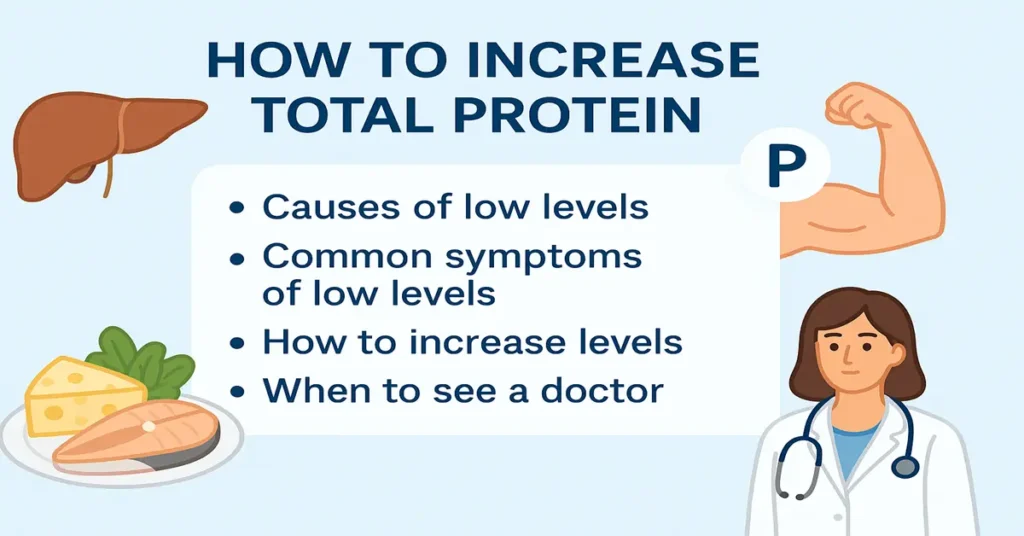
Causes of Low Total Protein and How to Increase Total Protein Levels (Simple Guide)
Overview
Total protein is a routine blood test that measures the combined amount of albumin and globulin in your blood. These proteins are essential for everyday body functions—maintaining fluid balance, building and repairing tissues, supporting immunity, transporting hormones and nutrients, and helping enzymes work properly.
When total protein falls below the normal range, the effect is not limited to one organ. Clinically, this is where doctors pause and look beyond the number itself, because low protein often reflects what is happening with nutrition, digestion, liver function, kidneys, or increased body demand during illness.
Low total protein (also called hypoproteinemia) is not a diagnosis by itself. It is a signal that something is reducing protein intake, production, or retention.
This guide explains low total protein in clear, practical language and helps you understand why it happens and how levels can improve naturally, depending on the cause.
Causes of Low Total Protein
Low total protein can be temporary or persistent. The reason matters, because management depends entirely on the underlying cause.
Poor dietary intake
One of the most common reasons seen in routine practice is inadequate protein intake. This is often seen in people following very restrictive diets, prolonged fasting, low-calorie diets, or those with poor appetite. Elderly individuals and people who skip meals frequently are especially vulnerable.
Digestive and absorption problems
Sometimes protein intake is adequate, but the body cannot absorb it properly. Conditions that interfere with digestion or absorption can lower total protein, such as celiac disease, Crohn’s disease, chronic diarrhea, or pancreatic enzyme deficiency.
In such cases, protein passes through the intestine without being fully absorbed.
Liver disorders
The liver produces most blood proteins, especially albumin. When liver function is compromised, protein production drops. Conditions such as hepatitis, fatty liver disease, or cirrhosis commonly lead to low total protein over time.
Kidney disorders
In certain kidney conditions, particularly nephrotic syndrome, protein leaks into the urine instead of staying in the bloodstream. Clinically, this often presents with swelling along with low protein levels.
Infections, inflammation, or major illness
During infections, burns, trauma, or prolonged illness, the body uses more protein for healing and immune defense. This increased demand can temporarily lower blood protein levels.
Alcohol-related malnutrition
Chronic alcohol use can reduce appetite, impair digestion, and damage the liver. All three together often result in low total protein.
Pregnancy and increased body demand
During pregnancy, protein requirements rise. If dietary intake does not increase accordingly, total protein may fall slightly.
Symptoms of Low Total Protein
Mild protein deficiency may not cause symptoms initially. As levels fall further, the body begins to show signs.
Swelling (edema)
Low albumin reduces the blood’s ability to retain fluid inside blood vessels, leading to swelling in the feet, ankles, legs, and sometimes the face.
Weakness and fatigue
Protein is essential for muscle strength and energy. Low levels often cause easy tiredness and reduced stamina.
Hair fall and brittle nails
Hair and nails are protein-based structures. Chronic deficiency may lead to hair thinning and fragile nails.
Slow wound healing
Protein is required for tissue repair. Cuts and injuries may take longer to heal.
Frequent infections
Globulins play a role in immunity. Low protein may weaken the body’s defense against infections.
Muscle loss
With prolonged deficiency, the body breaks down muscle tissue to meet protein needs.
Best Diet to Increase Total Protein Levels
When low total protein is due to poor intake, dietary improvement is usually very effective.
Protein-rich foods to include
Eggs are an excellent, easily digestible protein source.
Chicken, fish, and lean meats provide complete proteins.
Milk, yogurt, and paneer support albumin levels.
Dal, chana, rajma, soybeans, tofu, and tempeh are strong plant-based options.
Nuts and seeds such as almonds, peanuts, pumpkin seeds, and chia seeds add both protein and healthy fats.
Whole grains like quinoa, oats, and barley contribute additional protein.
Protein powders, such as whey or plant-based options, may help when intake is low, but are not mandatory.
Practical diet tips
Distribute protein across all meals rather than eating it once a day.
Combine grains and legumes to form complete proteins.
Increase protein gradually if digestion is sensitive.
Maintain adequate hydration, as protein metabolism depends on water balance.
Lifestyle Changes That Support Protein Levels
Diet works best when supported by healthy daily habits.
Improve digestion
Eating slowly, avoiding overeating, including fermented foods like curd, and reducing fried or processed foods help improve protein absorption.
Limit alcohol
Alcohol interferes with liver protein production and absorption. Reducing or stopping alcohol supports recovery.
Maintain healthy body weight
Being underweight reduces protein reserves, while excess weight increases inflammation. Balanced nutrition and regular movement help normalize protein use.
Add light strength activity
Gentle resistance exercises encourage muscle protein synthesis and reduce muscle loss.
Manage stress
Chronic stress increases protein breakdown. Simple relaxation practices support better metabolic balance.
Supplements That May Help
Supplements may be useful only when diet alone is insufficient.
Whey protein is fast-absorbing and useful in low appetite.
Plant-based proteins suit vegetarians and vegans.
Amino acid supplements may be advised in specific clinical situations.
Multivitamins can help correct deficiencies that reduce appetite or absorption.
Supplements should be used cautiously. In kidney or liver disease, excessive protein can be harmful. Medical guidance is important before starting them.
Test Preparation for Total Protein
Fasting is usually not required.
Drink normal amounts of water before testing.
Avoid heavy alcohol intake for 24–48 hours.
Inform the lab or doctor about medications such as steroids or hormonal pills.
When to See a Doctor
Medical advice is important if total protein remains low or symptoms appear.
Consult a doctor if you have persistent swelling, unexplained weight loss, prolonged fatigue, poor appetite, chronic diarrhea, or signs of liver or kidney disease.
Very low protein levels always require evaluation to identify the cause.
Doctors may suggest additional tests such as albumin–globulin ratio, liver function tests, urine protein testing, kidney profile, or nutritional assessment.
Important Word Explanations
Albumin is the main blood protein that maintains fluid balance.
Globulin refers to a group of proteins involved in immunity and transport.
Hypoproteinemia means low total protein in the blood.
Malabsorption is poor nutrient absorption from the intestine.
Edema is swelling caused by fluid buildup in tissues.
People Also Ask
Is low total protein dangerous?
It depends on the cause. Mild, temporary reductions are common, but persistent low levels need evaluation.
Can low total protein be temporary?
Yes. Illness, pregnancy, dehydration correction, or short-term poor intake can cause temporary changes.
Does low protein always mean liver or kidney disease?
No. Poor diet and digestion are common causes. Organ disease is considered when levels stay low.
When do doctors worry about low total protein?
When it is persistently low, associated with swelling, weight loss, or abnormal liver or kidney tests.
Is repeat testing common?
Yes. Doctors often repeat the test to see if levels recover after diet or illness improves.
Can total protein return to normal naturally?
In many cases, yes—once nutrition, digestion, or the underlying condition improves.
~END~