
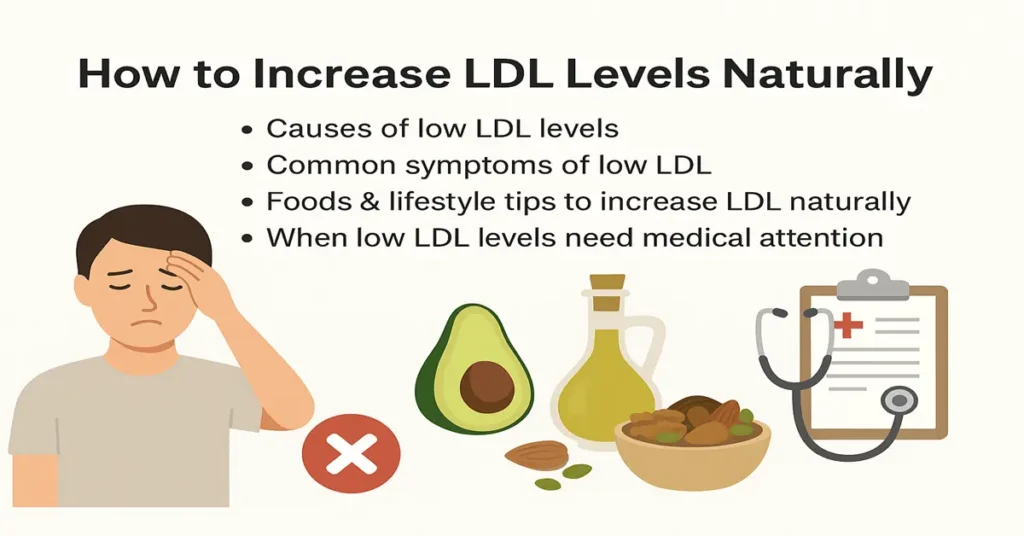
How to Increase LDL Levels Naturally at Home
Overview
LDL stands for Low-Density Lipoprotein. It is often labeled as “bad cholesterol,” but that description applies mainly when LDL is high. In routine lab practice, LDL has an important physiological role. It carries cholesterol from the liver to different tissues, where it is used to build cell membranes, produce hormones, support nerve function, and aid vitamin D synthesis.
When LDL levels become too low, these normal processes can slow down. Although low LDL is far less common than high LDL, it is something doctors do notice, especially when patients report fatigue, hormonal symptoms, or unexplained weakness. This article explains why LDL can drop below normal, what symptoms may be seen, and how LDL levels are usually supported naturally through diet and lifestyle, without turning this into a treatment guide.
Short Overview
LDL provides the body with cholesterol needed for structural and hormonal functions. A healthy balance matters. Clinically, LDL levels below about 50 mg/dL may raise concern in certain individuals, particularly if symptoms are present or if the drop is persistent. Low LDL is often linked to restrictive diets, absorption problems, thyroid imbalance, chronic illness, or medication effects.
Improving LDL naturally focuses on restoring nutritional balance, ensuring adequate fat intake, and correcting underlying metabolic stress rather than aggressively “raising numbers.”
Causes of Low LDL Levels
Low LDL usually does not occur randomly. In most cases, there is an identifiable reason that becomes clearer once diet, medical history, and lab trends are reviewed.
Genetic factors
Some people inherit conditions such as familial hypobetalipoproteinemia. In these cases, LDL remains low lifelong. Clinically, doctors look at symptoms and overall health rather than the number alone.
Hyperthyroidism
An overactive thyroid speeds up metabolism and increases cholesterol breakdown. In OPD settings, low LDL is often seen alongside weight loss, palpitations, and heat intolerance.
Malabsorption disorders
Conditions like celiac disease, inflammatory bowel disease, or chronic diarrhea reduce fat absorption. When fats are not absorbed properly, LDL production falls.
Very low-fat or restrictive diets
Long-term avoidance of fats, extreme calorie restriction, or crash dieting can reduce LDL below healthy levels.
Liver-related conditions
The liver produces LDL. Chronic liver disease, hepatitis, or impaired liver function may reduce cholesterol synthesis.
Chronic illness or inflammation
Severe infections, prolonged inflammation, or systemic illness can suppress cholesterol production as part of the body’s stress response.
Medication effects
High-dose statins or other lipid-lowering drugs may push LDL too low in some individuals, especially if monitoring is infrequent.
Symptoms of Low LDL Levels
Low LDL does not always cause symptoms. Many people discover it only through blood tests. When symptoms do appear, they usually reflect reduced hormone production or altered metabolism rather than LDL itself.
Fatigue and low stamina
Patients often describe feeling unusually tired or lacking energy, even with adequate rest.
Hormonal changes
Because cholesterol is needed to make cortisol, estrogen, and testosterone, very low LDL may be associated with mood changes, reduced stress tolerance, or menstrual irregularities.
Lower immunity
LDL plays a role in immune defense. Some individuals notice frequent infections or slower recovery.
Vitamin absorption issues
Low LDL can indirectly affect absorption of fat-soluble vitamins (A, D, E, K), leading to subtle deficiencies over time.
Neurological or mood symptoms
Difficulty concentrating, irritability, or low mood may be reported, especially when LDL is persistently very low.
Digestive discomfort
If low LDL is related to malabsorption, bloating, loose stools, or poor digestion may coexist.
Diet: Foods That Support Healthy LDL Levels
The goal is not to consume unhealthy fats, but to restore balanced nutrition so the liver can maintain normal cholesterol production.
Healthy fats
These support hormone production and cell structure:
- Avocados
- Nuts such as almonds, walnuts, and cashews
- Seeds like chia, flaxseed, and pumpkin seeds
- Olive oil and coconut oil
- Natural nut butters
Moderate saturated fats
In small, controlled amounts, these can support LDL without excess:
- Eggs
- Paneer or cheese
- Full-fat yogurt or milk
- Small portions of lean red meat
Fatty fish
Fish such as salmon and sardines help maintain overall lipid balance and support metabolic health.
Whole grains and legumes
Oats, brown rice, lentils, and chickpeas support liver function and steady cholesterol metabolism.
Adequate calorie intake
In routine practice, low LDL is often seen in people who eat too little overall. Regular, balanced meals are essential.
Lifestyle Changes That Support LDL Balance
Lifestyle factors influence LDL more than many people realize.
Avoid excessive calorie restriction
Gradually increasing intake with nutrient-rich foods helps normalize lipid production.
Review exercise intensity
Very intense or prolonged training without enough nutrition can suppress cholesterol levels.
Address thyroid imbalance
When hyperthyroidism is treated, LDL often returns to a healthier range.
Support gut health
Good digestion improves fat absorption. Fermented foods and regular meals help.
Manage chronic stress
Long-term stress alters hormone and lipid metabolism. Simple stress-reduction practices can make a difference.
Limit alcohol excess
Excess alcohol stresses the liver and disrupts cholesterol regulation.
Supplements (Safe Context)
Supplements are not meant to force LDL upward. They are considered only when deficiencies or absorption issues are identified.
- Vitamin D, if levels are low
- Probiotics, for digestive support
- General multivitamins in malnutrition
Any supplement should be discussed with a doctor, especially in people with thyroid, liver, or gastrointestinal conditions.
When to See a Doctor
Medical review is important if:
- LDL remains consistently below 50 mg/dL
- Fatigue, hormonal symptoms, or mood changes are present
- There is unexplained weight loss
- Thyroid or liver disease is suspected
- Digestive symptoms persist
- Infections occur frequently
Doctors usually look for causes rather than treating the LDL value alone.
Test Preparation
LDL testing usually requires no special preparation.
If included in a full lipid profile, fasting for 9–12 hours may be advised.
Avoid alcohol for 24 hours before testing.
Inform the doctor about cholesterol-lowering medications.
Maintain usual eating habits for accurate interpretation.
Important Word Explanations
Lipoprotein: A particle that carries fats and cholesterol in blood
Hypobetalipoproteinemia: A genetic condition causing very low LDL
Metabolism: The body’s process of producing and using energy
Hormones: Chemical messengers that regulate body functions
Malabsorption: Reduced ability to absorb nutrients from food
People Also Ask
Is low LDL cholesterol dangerous?
Low LDL is not automatically dangerous, but persistent very low levels may affect hormones, immunity, or energy.
Can LDL levels be temporarily low?
Yes. Illness, recent weight loss, stress, or dietary changes can temporarily lower LDL.
Does low LDL always mean a disease?
No. Some people naturally have low LDL, especially due to genetics or diet.
When do doctors usually worry about low LDL?
When LDL stays very low and symptoms or other abnormal test results are present.
Is repeat testing common for low LDL?
Yes. Doctors often repeat lipid tests to confirm trends and rule out temporary changes.
Can medications cause LDL to go too low?
Yes. Cholesterol-lowering drugs can sometimes reduce LDL more than intended, requiring dose review.
~END~