
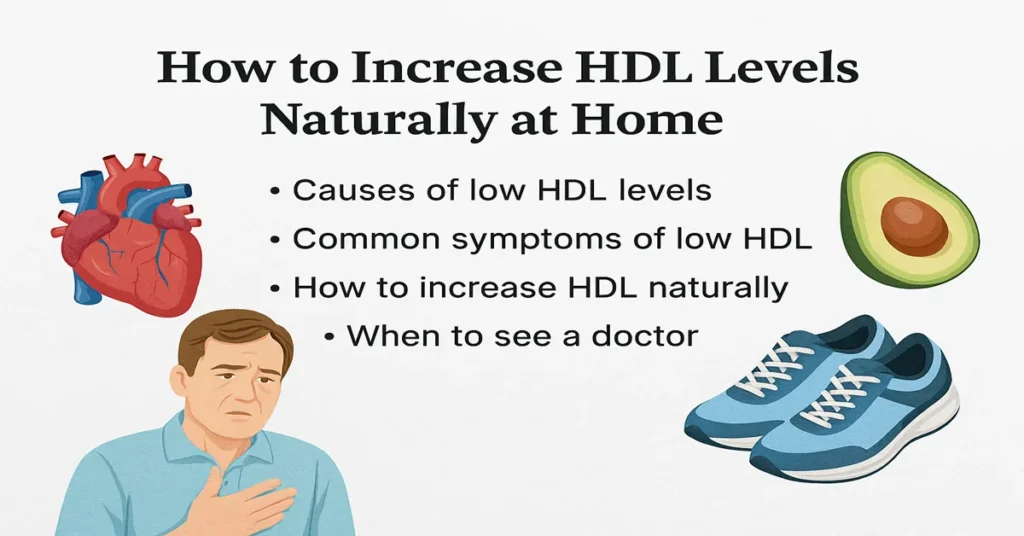
How to Increase HDL Cholesterol (Good Cholesterol) Naturally at Home
Overview
HDL (High-Density Lipoprotein) is commonly called the “good cholesterol” because it works like a cleaning system inside your blood vessels. It picks up excess LDL (bad cholesterol) from the arteries and carries it back to the liver, where it can be processed and removed from the body. Clinically, this is why doctors feel more reassured when HDL levels are higher—even if other cholesterol values are borderline.
When HDL is low, this natural protective mechanism weakens. Cholesterol tends to stay longer in the blood vessels, increasing the chance of plaque buildup over time. In routine lab practice, low HDL is very commonly seen alongside sedentary lifestyle, abdominal weight gain, smoking, or insulin resistance. The good news is that HDL is one part of the lipid profile that responds well to consistent lifestyle changes, often without the need for aggressive treatment.
This article explains why HDL becomes low, what it means for health, and how it can be improved naturally at home in a safe and practical way.
Causes of Low HDL Levels
Low HDL usually develops gradually and is often linked to everyday habits rather than a sudden illness.
Genetic factors
Some people inherit a tendency to produce less HDL. In such cases, HDL may remain on the lower side despite reasonable lifestyle habits. Doctors usually focus more on overall risk rather than HDL alone in these individuals.
Sedentary lifestyle
Lack of regular physical activity is one of the most common causes. When the body does not move enough, HDL production slows down.
Unhealthy dietary patterns
Diets high in trans fats, refined carbohydrates, and sugary foods lower HDL and worsen overall lipid balance.
Smoking
Smoking directly reduces HDL and damages the inner lining of blood vessels. In lab follow-ups, HDL often improves noticeably after smoking cessation.
Obesity and insulin resistance
Excess body fat, especially around the waist, is strongly linked to low HDL. This is commonly seen in people with type 2 diabetes or metabolic syndrome.
Underlying medical conditions
Conditions such as hypothyroidism, chronic inflammation, liver disease, kidney disease, and poorly controlled diabetes can keep HDL levels low.
Clinically, doctors always look at HDL together with triglycerides, LDL, blood sugar, and body weight before drawing conclusions.
Symptoms of Low HDL Levels
Low HDL by itself does not cause symptoms. However, it increases vulnerability to cardiovascular problems, which may show indirect signs.
Commonly noticed issues include:
Low stamina or easy fatigue
Shortness of breath during exertion
Reduced exercise tolerance
When cholesterol buildup progresses, symptoms may include:
Chest heaviness or discomfort on exertion
Pain radiating to the arm, jaw, or back
Leg pain or cramps while walking
These symptoms are not caused by HDL alone but indicate reduced cardiovascular protection.
Diet and Food Choices That Support HDL
Food quality matters more than food quantity when it comes to HDL.
Foods that support healthy HDL levels include:
Fatty fish such as salmon, sardines, and mackerel, which improve HDL function rather than just numbers
Olive oil, rich in monounsaturated fats that support good cholesterol
Nuts and seeds like almonds, walnuts, flaxseeds, and chia seeds
Avocados, which provide healthy fats and antioxidants
Whole grains such as oats and brown rice that improve lipid balance
Fruits rich in antioxidants, including berries, apples, and citrus fruits
Leafy green vegetables that support metabolic and vascular health
Legumes and beans that provide fiber and improve overall cholesterol handling
Foods that tend to suppress HDL include trans-fat-rich fried foods, refined flour products, sugary drinks, sweets, and heavily processed meats.
In routine practice, even small dietary improvements maintained over months can lead to measurable HDL improvement.
Lifestyle Changes That Raise HDL
Lifestyle has the strongest influence on HDL.
Regular physical activity
Exercise is the most reliable way to raise HDL. Brisk walking, cycling, swimming, jogging, or resistance training done consistently improves HDL production. Even 30 minutes most days makes a difference.
Weight reduction
Losing excess weight—especially abdominal fat—often leads to a rise in HDL. Even a modest 5–10% weight loss is beneficial.
Smoking cessation
HDL levels often begin to rise within weeks of quitting smoking, along with improvements in circulation and lung function.
Alcohol moderation
Excess alcohol lowers HDL and raises triglycerides. Limiting or avoiding alcohol supports better lipid balance.
Sleep and stress control
Poor sleep and chronic stress disturb metabolic hormones. Improving sleep quality and managing stress helps stabilize cholesterol patterns.
These changes work gradually, but their effects are durable and protective.
Supplements (Safe Context)
Supplements may support HDL but should never replace lifestyle measures.
Omega-3 fatty acids can support overall lipid balance
Vitamin D may help if levels are low
Coenzyme Q10 supports cardiovascular metabolism
Niacin can raise HDL but should only be used under medical supervision due to side effects
Doctors usually reserve supplements for people who have tried lifestyle measures consistently.
When to See a Doctor
Medical evaluation is advised when:
HDL stays below 40 mg/dL in men or below 50 mg/dL in women
There is a strong family history of heart disease
You experience chest discomfort, breathlessness, or unusual fatigue
You have diabetes, thyroid disease, kidney, or liver problems
HDL does not improve after several months of lifestyle correction
You are considering high-dose supplements
Early guidance helps reduce long-term cardiovascular risk.
Test Preparation
HDL testing usually does not require fasting unless part of a full lipid profile.
Avoid alcohol and heavy meals for 24 hours before testing
Inform your doctor about medications or supplements
Stay hydrated and avoid strenuous exercise just before the test
Important Word Explanations
Cholesterol: A fat-like substance essential for hormones and cell structure
HDL: High-density lipoprotein that removes excess cholesterol
LDL: Low-density lipoprotein that can deposit cholesterol in arteries
Triglycerides: Stored fats used for energy
Metabolism: The body’s process of converting food into energy
People Also Ask
Is low HDL cholesterol serious?
Low HDL increases long-term heart risk, especially when combined with other risk factors, but it is manageable.
Can HDL levels increase naturally?
Yes. Exercise, weight control, smoking cessation, and diet changes commonly raise HDL.
Does low HDL always mean heart disease?
No. It is a risk marker, not a diagnosis. Doctors interpret it with the full lipid profile and clinical context.
When do doctors worry about HDL levels?
When HDL remains low despite lifestyle changes or is associated with other risk factors.
Is repeat testing common for HDL?
Yes. Repeat tests help confirm trends and response to lifestyle changes.
Can medications increase HDL?
Some medications can, but lifestyle measures are usually the first and most effective approach.
~END~