
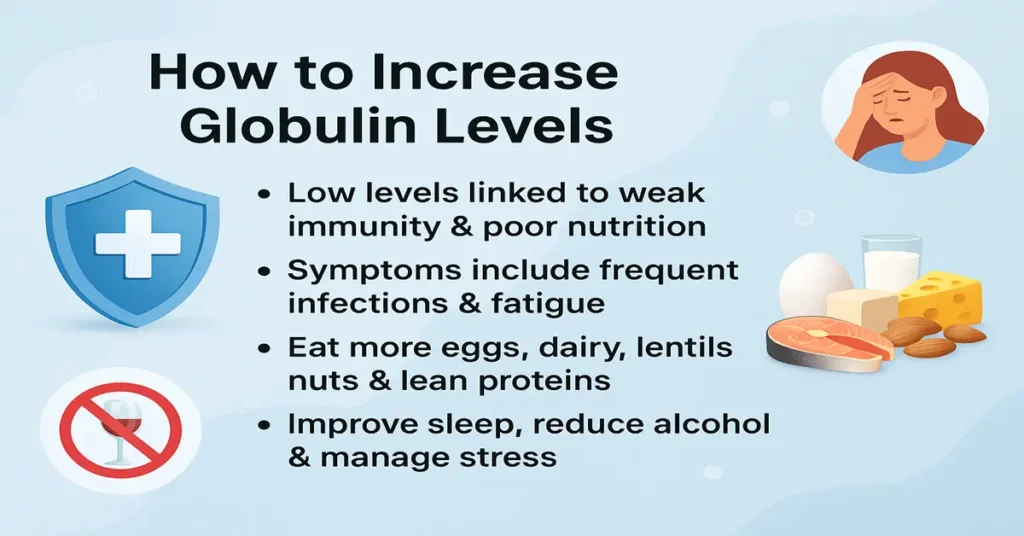
How to Increase Globulin Levels Naturally at Home
Overview
Globulins are an important group of proteins found in the blood. They play a central role in immunity, help transport hormones and nutrients, and support overall balance in the body. When globulin levels are low, the body may struggle to fight infections properly, recover from illness, or maintain normal immune strength.
In routine lab practice, low globulin is often seen alongside nutritional gaps, liver-related issues, immune weakness, or protein loss from the gut or kidneys. Doctors usually focus first on correcting lifestyle and dietary factors before moving toward medical treatment, unless the levels are very low or symptoms are significant.
This article explains why globulin levels drop, the symptoms you may notice, foods that help increase globulin naturally, supportive lifestyle changes, supplement considerations, and when medical advice becomes important.
Short Overview
Globulins are a group of proteins that include alpha, beta, and gamma globulins. Alpha and beta globulins help transport fats, hormones, and minerals, while gamma globulins are mainly antibodies that protect against infections.
Low globulin levels, also called hypoglobulinemia, can occur due to poor nutrition, liver problems, weak immunity, intestinal absorption issues, or excessive protein loss. Improving globulin levels naturally usually requires steady dietary protein intake, good gut health, proper rest, and immune support rather than quick fixes.
Causes of Low Globulin Levels
Low globulin does not usually happen for just one reason. In clinical settings, it is often a combined effect of nutrition, immunity, and organ function.
Poor diet and inadequate protein intake
When daily protein intake is low, the body does not have enough raw material to produce globulins. This is commonly seen in people who skip meals, follow very restrictive diets, or have poor appetite for long periods.
Liver disorders
The liver produces several globulin fractions. Conditions such as fatty liver, chronic hepatitis, or cirrhosis can reduce globulin synthesis over time.
Immune system weakness
Gamma globulins are antibodies. If the immune system is suppressed or underactive, antibody production falls, lowering overall globulin levels.
Intestinal malabsorption
Even with a good diet, conditions like celiac disease, chronic diarrhea, or inflammatory bowel disease can prevent proper absorption of proteins.
Kidney-related protein loss
Certain kidney conditions cause proteins to leak into urine. While albumin loss is more obvious, globulins can also be affected.
Chronic stress and illness
Long-standing stress, infections, or inflammation can disturb immune balance and protein production.
Identifying the cause helps guide recovery, but supportive daily habits remain the foundation.
Symptoms of Low Globulin Levels
Symptoms vary depending on which globulin fraction is low, but common patterns are seen.
Frequent or repeated infections
Slow recovery from illness
Fatigue and low stamina
Poor wound healing
Reduced appetite
Digestive discomfort
Muscle weakness
Hair thinning or brittle nails
Clinically, people with low gamma globulins often report getting colds or infections more often than usual.
Diet to Increase Globulin Levels Naturally
Because globulins are proteins, nutrition plays a central role. A steady supply of quality protein and supportive nutrients helps the liver and immune system restore normal levels.
Protein-rich foods
Eggs
Chicken, turkey, and lean meats
Fish such as salmon, tuna, and sardines
Milk, yogurt, paneer, and curd
Lentils, pulses, and chickpeas
Soy products like tofu and soy milk
These provide essential amino acids needed for globulin production.
Nuts and seeds
Almonds
Walnuts
Pumpkin seeds
Sunflower seeds
They supply healthy fats and micronutrients that support protein synthesis.
Legumes and plant proteins
Beans, peas, kidney beans, and black beans provide sustained protein intake and are easier to digest for many people.
Immunity-supporting foods
Garlic and ginger
Citrus fruits
Berries
Green leafy vegetables
These do not directly increase globulin but support immune activity, which is closely linked to gamma globulin levels.
Healthy fats
Olive oil
Avocado
Flaxseeds and chia seeds
Healthy fats improve absorption of nutrients and support hormone balance, indirectly helping protein metabolism.
Lifestyle Changes to Support Healthy Globulin Levels
Diet works best when supported by consistent daily habits.
Stay adequately hydrated
Water supports digestion, circulation, and nutrient transport.
Limit alcohol intake
Alcohol stresses the liver, which plays a key role in globulin production.
Reduce or stop smoking
Smoking weakens immune responses and interferes with protein balance.
Prioritise sleep
During sleep, immune repair and antibody production are more active.
Manage stress
Chronic stress suppresses immunity. Gentle exercise, breathing practices, and regular rest help restore balance.
Regular moderate exercise
Physical activity improves circulation, immune function, and overall protein utilisation.
Avoid heavily processed foods
Highly processed and sugary foods can worsen inflammation and reduce nutrient absorption.
These changes do not act overnight, but they steadily improve globulin levels over weeks.
Supplements That May Help (Safe Note)
Supplements are supportive, not primary treatment, and should be used carefully.
Protein supplements
Whey or plant-based protein powders may help if dietary intake is consistently low.
Immune-support nutrients
Vitamin C
Vitamin D
Zinc
Omega-3 fatty acids
These support antibody production and immune health.
Probiotics
They improve gut health and nutrient absorption, which helps the body make proteins more efficiently.
B-complex vitamins
Important for protein metabolism and immune function.
Supplements should always be discussed with a doctor, especially in liver disease, kidney disease, pregnancy, or chronic illness.
When to See a Doctor
Medical advice is important if:
Infections keep recurring
Fatigue is persistent and unexplained
There is sudden weight loss
Digestive problems do not improve
There are signs of liver or kidney disease
Globulin levels are very low on reports
Levels do not improve despite good nutrition
Doctors may look for hidden causes such as malabsorption, immune disorders, or protein-losing conditions.
Test Preparation
For accurate globulin or total protein testing:
Drink water normally
Avoid alcohol for 24 hours before the test
Eat regular meals unless told otherwise
Inform your doctor about medications
Avoid heavy exercise just before blood collection
Good preparation avoids misleading results.
Important Word Explanations
Globulin: A group of blood proteins involved in immunity and transport
Hypoglobulinemia: Low globulin levels
Gamma globulins: Antibody-containing proteins
Protein synthesis: The process by which the body makes proteins
Malabsorption: Poor absorption of nutrients from the intestine
People Also Ask
Is low globulin always serious?
Not always. Mild reductions are common with poor diet or temporary illness, but persistent low levels need evaluation.
Can globulin levels improve naturally?
Yes. In many cases, diet, rest, and immune support gradually restore normal levels.
Does low globulin always mean weak immunity?
Not necessarily. Some types of globulins may be low due to nutrition or liver issues rather than immune failure.
When do doctors worry about low globulin?
When infections are frequent, levels are very low, or other tests show liver, kidney, or immune problems.
Is repeat testing common for globulin levels?
Yes. Doctors often repeat tests after dietary correction or recovery from illness.
Can dehydration affect globulin levels?
Dehydration mainly affects concentration, but it can slightly alter globulin readings, which is why hydration matters before testing.
~END~