
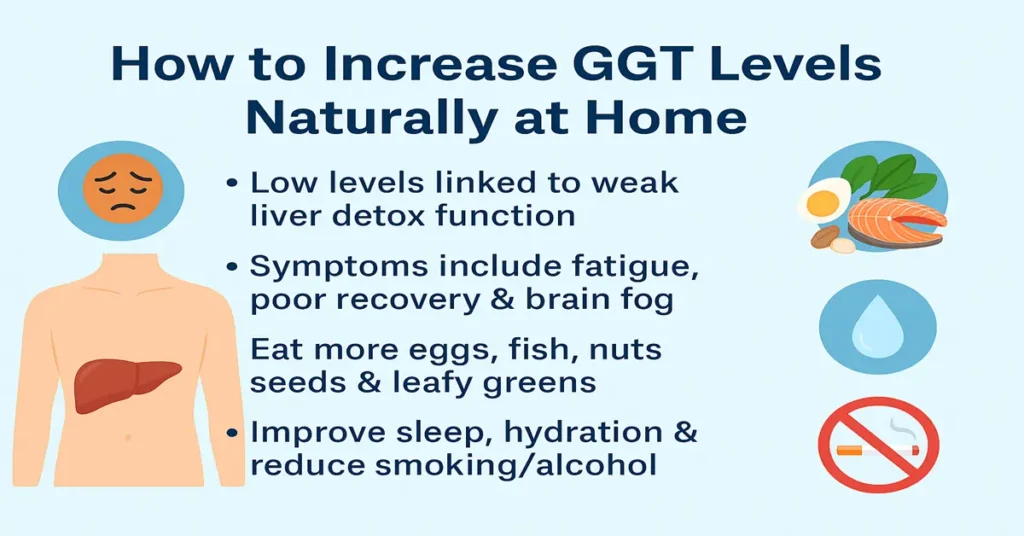
How to Increase GGT Levels Naturally at Home
Gamma-Glutamyl Transferase (GGT) is an important enzyme found mainly in the liver and bile ducts. In day-to-day clinical practice, doctors usually talk about high GGT, because it often reflects alcohol use, fatty liver, or bile duct problems. Low GGT is discussed much less, but it does exist and can be confusing for patients when they see it on a report.
Low GGT does not automatically mean disease. In many cases, it reflects nutritional factors, low enzyme activity, or a liver that is not being stimulated much metabolically. Clinically, this is where doctors pause, look at the full liver panel, and correlate symptoms before deciding whether it actually matters.
This article explains what low GGT means, why it happens, how it can be supported naturally, and when medical review is needed.
Short Overview
GGT plays a role in liver detoxification and antioxidant balance. It helps recycle glutathione, one of the body’s most important protective molecules. When GGT is low, it usually suggests reduced enzyme activity, not liver damage.
In routine lab practice, low GGT is often seen in people who do not drink alcohol, eat lightly, take antioxidants or supplements regularly, or have a generally slow metabolic profile. The focus is not on “treating” GGT, but on supporting healthy liver function overall.
Causes of Low GGT Levels
Low GGT is uncommon and usually not dangerous, but several factors can contribute.
Nutritional deficiency
Low protein intake or lack of essential micronutrients can reduce enzyme production. The liver needs raw materials to make enzymes.
Zinc or magnesium deficiency
These minerals support enzyme activation. In routine practice, low-normal GGT is often seen alongside borderline mineral status.
Low metabolic or liver activity
When liver metabolism is slow, enzyme turnover may be lower. This can happen in people with low calorie intake or sedentary lifestyle.
Excess antioxidant intake
Very high intake of antioxidant supplements can suppress GGT expression because oxidative stress signals are reduced.
Genetic tendency
Some individuals naturally run low GGT throughout life without any illness.
Medication effects
Certain long-term medicines may alter liver enzyme pathways and keep GGT on the lower side.
Chronic metabolic conditions
Some chronic conditions slow enzyme synthesis rather than damaging the liver.
Understanding the context is more important than the number itself.
Symptoms of Low GGT Levels
Low GGT alone does not cause symptoms. Any symptoms usually relate to overall liver efficiency or nutrition rather than the enzyme value.
Some people may notice:
Persistent fatigue
Low tolerance to alcohol or medications
Slower recovery after illness
Brain fog or reduced concentration
Mild digestive discomfort
General low energy or stress intolerance
In routine OPD settings, many people with low GGT feel completely normal.
Diet to Support Healthy GGT Levels
The goal is to support liver enzyme activity, not to force GGT up.
Protein-rich foods
Protein provides the building blocks for enzymes.
Eggs
Fish (salmon, sardines, tuna)
Chicken or turkey
Paneer, curd, Greek yogurt
Lentils, chickpeas, beans
Liver-supportive vegetables
These supply vitamins and cofactors used in enzyme pathways.
Spinach and leafy greens
Broccoli and cauliflower
Beetroot
Carrots
Avocado
Mineral-rich foods
Help support enzyme activation.
Pumpkin seeds
Cashews
Whole grains
Dark chocolate (small amounts)
Healthy fats
Support liver cell membranes.
Olive oil
Walnuts
Flaxseeds
Chia seeds
Hydration-supporting foods
Adequate fluids help metabolic processes.
Water
Cucumber
Citrus fruits
Clear soups
Consistency matters more than any single food.
Lifestyle Changes That Help Normalize GGT
Lifestyle plays a larger role than people realise.
Adequate hydration
Water supports nutrient transport and liver metabolism.
Quality sleep
Most liver repair and enzyme regulation happens during sleep.
Balanced physical activity
Moderate exercise improves metabolic turnover and liver efficiency.
Avoid unnecessary supplements
Especially high-dose antioxidants unless prescribed.
Limit smoking and alcohol
Both interfere with liver enzyme balance, even at low levels.
Regular meals
Skipping meals repeatedly can slow enzyme production.
In routine lab follow-up, lifestyle correction alone often brings GGT into a mid-normal range.
Supplements That May Help (With Caution)
Supplements are not always required and should be used carefully.
Zinc
Supports enzyme synthesis.
Magnesium
Helps enzyme activation and energy metabolism.
B-complex vitamins
Support liver enzyme pathways.
Protein supplements
Helpful only if dietary intake is inadequate.
Milk thistle
Often used for liver support, though effects vary between individuals.
Excessive supplementation, especially antioxidants like glutathione, may further suppress GGT and should not be used without medical advice.
When to See a Doctor
Medical review is advised if:
GGT remains very low on repeated tests
You have symptoms of liver dysfunction
There is unexplained fatigue or weakness
You take long-term medications affecting the liver
Other liver enzymes are also abnormal
There is poor tolerance to alcohol or medicines
Doctors usually interpret GGT together with ALT, AST, ALP, bilirubin, and clinical history before drawing conclusions.
Test Preparation
For accurate GGT results:
Avoid alcohol for 24 hours
Stay well hydrated
Avoid intense exercise just before testing
Inform the doctor about medicines and supplements
Eat normal meals unless instructed otherwise
Good preparation prevents misleading values.
Important Word Explanations
GGT (Gamma-Glutamyl Transferase): Liver enzyme involved in detox pathways
Enzyme: A protein that speeds up chemical reactions
Detoxification: Liver process of breaking down harmful substances
Oxidative stress: Cell damage caused by free radicals
Antioxidants: Substances that neutralize free radicals
People Also Ask
Is low GGT dangerous?
Usually no. Low GGT is often a benign finding when other liver tests are normal.
Can GGT be naturally low in healthy people?
Yes. Many healthy individuals have low GGT without any problem.
Does low GGT mean liver failure?
No. Liver failure is associated with multiple abnormal tests, not isolated low GGT.
Can low GGT be temporary?
Yes. Diet changes, hydration, supplements, or illness recovery can change levels.
Do doctors treat low GGT directly?
No. Doctors focus on overall liver health, not raising GGT itself.
Is repeat testing common for low GGT?
Usually only if symptoms are present or other liver values are abnormal.
~END~