
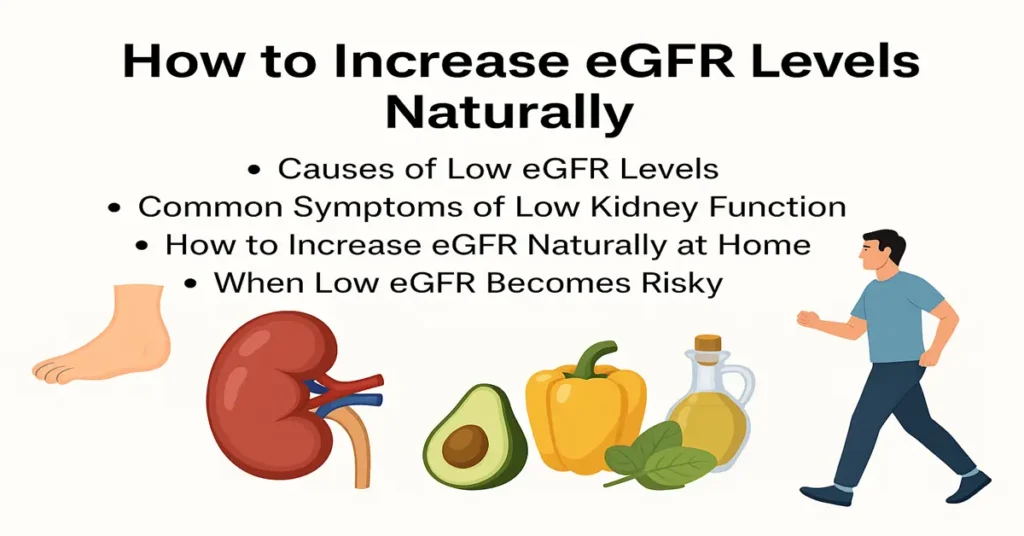
How to Increase eGFR Levels Naturally at Home
What Is eGFR?
Estimated Glomerular Filtration Rate, commonly called eGFR, is a calculated value that tells doctors how efficiently your kidneys are filtering waste and excess fluid from the blood. It is derived mainly from your blood creatinine level, along with age and sex. In routine lab practice, an eGFR of 90 or above is generally considered healthy for most adults. Values below this range suggest that kidney filtration has slowed down.
A low eGFR does not automatically mean kidney failure. Clinically, doctors first look at whether the value is mildly reduced, stable over time, or falling rapidly. In early stages, eGFR can improve or stabilize with correct hydration, blood pressure control, sugar control, and lifestyle changes. This article focuses on practical, safe steps that support kidney function at home, especially in early or mild reductions.
Causes of Low eGFR Levels
Low eGFR can develop for many reasons. Identifying the cause is important because not all low values mean permanent damage.
Chronic dehydration is one of the most common and reversible causes. When fluid intake is low, blood flow to the kidneys decreases, and filtration slows down.
Uncontrolled diabetes damages small kidney blood vessels over time. In OPD settings, this is one of the most frequent reasons for a gradual eGFR decline.
High blood pressure puts constant pressure on kidney filters, leading to scarring and reduced filtration capacity.
Kidney infections, whether acute or long-standing, can temporarily or permanently lower eGFR if not treated properly.
Very high protein intake, especially from red meat or supplements, increases kidney workload and can lower eGFR readings.
Certain medicines, particularly frequent use of painkillers like NSAIDs, some antibiotics, and a few BP drugs, can affect kidney filtration.
Age-related decline is normal. After the age of 60, a slow reduction in eGFR is commonly seen, even without disease.
Urinary obstruction due to stones, prostate enlargement, or other blockages can reduce filtration until the obstruction is relieved.
Common Symptoms of Low eGFR Levels
Early-stage low eGFR often causes no symptoms. This is why it is commonly detected during routine blood tests.
As kidney function reduces further, some people may notice swelling in the legs, feet, face, or around the eyes due to fluid retention.
Fatigue and low energy are common, as waste products are not cleared efficiently from the blood.
Changes in urine, such as reduced quantity or foamy appearance, may indicate altered filtration or protein leakage.
Loss of appetite, nausea, or a heavy feeling after meals can occur when toxins accumulate.
Blood pressure may rise because kidneys play a central role in BP regulation.
Muscle cramps can develop due to electrolyte imbalance, which is often seen alongside reduced kidney function.
Persistent or worsening symptoms always need medical correlation with blood tests.
Diet to Support eGFR Naturally
Diet plays a supportive role in kidney health. The aim is to reduce kidney strain, control BP and sugar, and maintain good hydration.
Adequate hydration helps kidneys flush waste smoothly. For most people, 1.5 to 2.5 liters per day is sufficient unless fluid restriction is advised by a doctor.
Lower sodium intake is essential. Excess salt raises blood pressure and forces kidneys to work harder. Fresh, home-cooked food is preferred over packaged items.
Fruits that are generally kidney-friendly include apples, berries, grapes, pineapple, and papaya. These support circulation and reduce oxidative stress.
Vegetables such as cauliflower, cabbage, onion, capsicum, and broccoli are commonly recommended in kidney-friendly diets because they are lower in sodium and easier on kidneys.
Protein intake should be moderate. Egg whites, small portions of fish, controlled lentils, and plant proteins are usually preferred over red meat. Clinically, excess protein is a frequent reason for worsening kidney parameters.
Foods that may worsen kidney stress when taken in excess include processed meats, sugary drinks, high-salt snacks, and very high-potassium fruits if potassium levels are already raised.
Healthy fats such as olive oil and small quantities of nuts support blood flow and reduce inflammation.
Lifestyle Changes That Help Improve eGFR
Kidney health improves gradually with consistent daily habits rather than sudden changes.
Blood pressure control is critical. Keeping BP within a healthy range significantly slows kidney damage.
Blood sugar control is equally important, especially for people with diabetes. Stable sugars protect kidney filters.
Regular physical activity such as walking, light yoga, or stretching improves circulation to the kidneys. Very intense workouts may temporarily raise creatinine and should be avoided in advanced kidney disease.
Avoiding frequent use of painkillers like ibuprofen or diclofenac protects kidney tissue. In clinical practice, these medicines are a common hidden cause of kidney decline.
Good sleep supports cellular repair, including kidney cells. Poor sleep often worsens BP and sugar control.
Stress management helps indirectly. Chronic stress raises BP and affects kidney blood flow.
Supplements and Kidney Health (Safe Perspective)
Supplements should never be taken casually when kidney function is reduced.
Omega-3 fatty acids are sometimes used under medical guidance to reduce inflammation.
Vitamin D may be advised if levels are low, as deficiency is common in kidney disease.
Vitamin B-complex is often used to support energy levels and nerve health.
Probiotics may help reduce toxin load in the gut, indirectly supporting kidneys.
Creatine, high-protein powders, and unregulated herbal supplements should be avoided unless specifically cleared by a doctor.
When to See a Doctor
Medical review is essential if eGFR remains consistently below 60, as this suggests chronic kidney disease and needs regular monitoring.
A rapid fall in eGFR between two tests is always concerning and needs prompt evaluation.
Severe swelling, reduced urine output, or sudden weight gain may indicate worsening kidney function.
Persistent high blood pressure or uncontrolled diabetes requires closer kidney monitoring.
Blood in urine or very frothy urine often signals kidney damage and should not be ignored.
People with diabetes or hypertension are usually advised to check eGFR every 3 to 6 months.
Important Word Explanations
eGFR is a calculated estimate of how well kidneys filter blood.
Creatinine is a muscle waste product used to calculate eGFR.
CKD refers to long-term, usually progressive kidney damage.
Proteinuria means protein leaking into urine.
Electrolytes are minerals like sodium and potassium that maintain fluid balance.
People Also Ask
Is a low eGFR always permanent?
No. In early stages, low eGFR can improve if the cause is dehydration, infection, or medication-related.
Can eGFR fluctuate from test to test?
Yes. Hydration status, recent illness, exercise, and medications can cause temporary changes.
Does low eGFR always mean kidney failure?
No. Many people live with stable, mildly reduced eGFR without progressing to kidney failure.
When do doctors worry about eGFR values?
Doctors become more concerned when eGFR falls rapidly, stays below 60, or is associated with symptoms.
Is repeat testing common for eGFR?
Yes. Repeat tests help confirm whether the change is temporary or part of a chronic pattern.
Can lifestyle changes really help eGFR?
In early or mild cases, lifestyle and medical control can slow decline and sometimes improve values.
~END~