
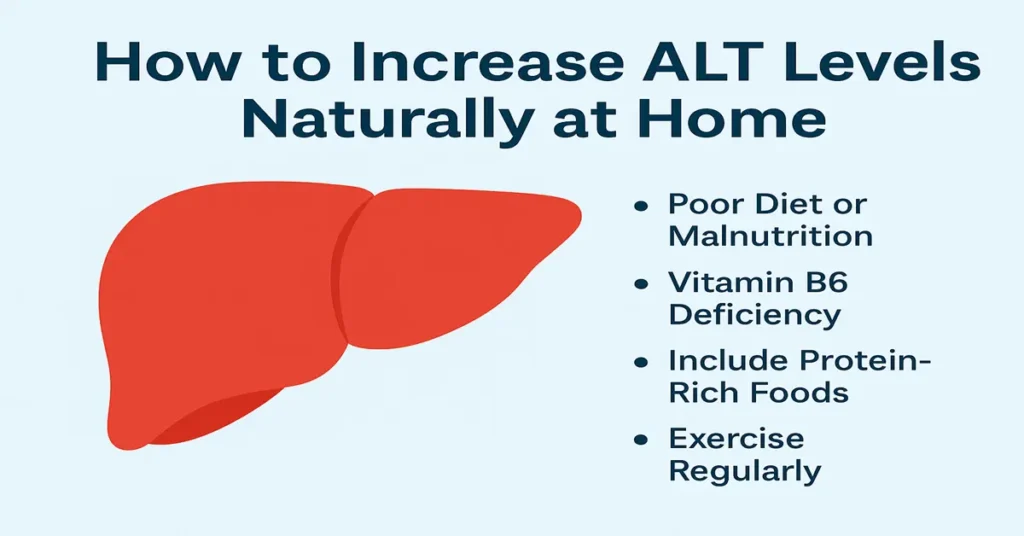
How to Increase ALT Levels Naturally at Home (When They Are Too Low)
Short Overview
ALT (Alanine Aminotransferase) is an enzyme found mainly in the liver. It plays a role in protein metabolism and helps the body convert nutrients into usable energy. ALT is routinely checked as part of a Liver Function Test (LFT), and most attention is usually given when ALT is high, because that often reflects liver irritation or inflammation.
Occasionally, a blood report shows ALT below the reference range, which can be confusing. In real clinical practice, low ALT is usually harmless and does not indicate liver disease. In many people, it simply reflects a well-functioning liver or a temporary nutritional gap. Only when ALT remains consistently low along with symptoms such as fatigue or poor nutrition does it prompt a closer look.
This article explains why ALT can be low, what symptoms may sometimes be associated, and how nutrition and daily habits can support normal enzyme activity.
Causes of Low ALT Levels
Low ALT is rarely a medical concern. When it does appear, it is usually related to nutritional or metabolic factors rather than liver damage.
Vitamin B6 deficiency
ALT requires vitamin B6 (pyridoxine) to function properly. When B6 levels are low, ALT activity drops and the blood value may appear low. In routine lab practice, this is one of the most common explanations.
Vitamin B6 deficiency may occur due to poor diet, heavy alcohol intake, certain medications, or long-standing digestive issues.
Low protein intake
ALT is a protein-based enzyme. People who eat very little protein, skip meals frequently, follow extreme diets, or practice prolonged fasting may show lower ALT values simply because enzyme production is reduced.
Low muscle mass or low overall metabolic activity
Although ALT is mainly a liver enzyme, overall protein metabolism influences enzyme levels. Very low muscle mass due to inactivity, aging, or severe calorie restriction can be associated with lower ALT.
Overhydration or blood dilution
Drinking excessive amounts of water in a short time can dilute blood components, including enzymes. This effect is temporary and usually corrects on its own.
Chronic kidney disease (rare)
In advanced kidney disease, metabolic changes can lead to slightly lower ALT. This is uncommon and usually seen along with several other abnormal findings.
Pregnancy
Hormonal and metabolic shifts during pregnancy can cause mildly lower ALT values. In most cases, this is a normal finding unless other symptoms or abnormal tests are present.
Certain medications
Some drugs can temporarily reduce enzyme activity or alter liver metabolism, leading to lower ALT readings.
Symptoms of Low ALT Levels
Low ALT itself does not cause symptoms. When symptoms are present, they usually reflect the underlying issue rather than the enzyme level.
Some people may notice:
Persistent tiredness
Low appetite
General weakness or low energy
Slow recovery after physical activity
Mild nerve tingling in more severe vitamin B6 deficiency
Clinically, these symptoms point more toward nutritional imbalance than liver disease.
Diet and Food Choices to Support ALT Naturally
Supporting ALT levels naturally means supporting overall liver health and proper nutrition, not forcing the enzyme up.
Vitamin B6–rich foods
Because ALT depends on vitamin B6, improving intake often helps normalize enzyme activity.
Common sources include bananas, chickpeas, eggs, fish such as tuna and salmon, avocado, spinach, sweet potatoes, sunflower seeds, and fortified cereals.
Adequate protein intake
Sufficient protein supports enzyme production and metabolic balance.
Eggs, paneer, chicken, fish, lentils, beans, Greek yogurt, nuts, seeds, soy, and tofu are commonly included.
Foods that support liver metabolism
A healthy liver maintains ALT naturally within range.
Green leafy vegetables, beetroot, carrots, garlic, berries, apples, oats, and small amounts of healthy oils support normal liver function.
Whole grains
Whole grains help stabilize energy metabolism, indirectly supporting enzyme activity. Brown rice, whole wheat, millets, oats, and barley are good examples.
Lifestyle Habits That Support ALT Levels
Moderate physical activity
Regular, moderate exercise supports metabolism and liver health. Brisk walking, cycling, yoga, and light bodyweight exercises are usually sufficient. Extremely intense workouts are best avoided until nutrition is balanced.
Maintaining a stable, healthy weight
Rapid weight loss or extreme calorie restriction can suppress enzyme activity. Gradual, steady weight management is safer for metabolic health.
Sleep quality
Adequate sleep supports hormonal and metabolic balance. Consistent sleep timing and 7–8 hours of rest are commonly advised.
Alcohol avoidance
Even when ALT is low, alcohol can still irritate liver cells. Avoiding alcohol supports stable enzyme levels.
Stress management
Chronic stress affects metabolism and energy use. Simple stress-reduction practices help maintain biochemical balance.
Supplements (Safe Note)
Supplements may help when dietary intake is inadequate, but they should be used cautiously.
Vitamin B6
If deficiency is confirmed, supplementation can support ALT activity. Excessive doses over long periods can cause nerve symptoms, so dosing should remain modest.
Protein supplements
Protein powders may help people who struggle to meet protein needs through food alone.
Basic multivitamin
A standard multivitamin can correct mild, unrecognized deficiencies affecting enzyme levels.
Supplements should always be discussed with a doctor, especially in people with kidney, liver, or metabolic conditions.
When to See a Doctor
Low ALT is usually harmless, but medical advice is reasonable if:
ALT remains very low on repeated tests
There is extreme or persistent fatigue
Diet is consistently poor or unbalanced
Symptoms of vitamin deficiency appear
You are pregnant and have unusual symptoms
There is known kidney or thyroid disease
Muscle weakness or nerve tingling is present
Doctors may suggest checking vitamin B6 levels, repeating a full liver function panel, reviewing nutrition, or ordering additional tests only if other abnormalities are found.
People Also Ask
Is low ALT a serious finding?
Usually no. In most people, it is a benign and harmless result.
Can ALT levels be temporarily low?
Yes. Temporary dietary changes, overhydration, pregnancy, or certain medicines can lower ALT briefly.
Does low ALT always mean liver disease?
No. Low ALT is rarely linked to liver disease and often reflects good liver health or nutrition-related factors.
When do doctors worry about low ALT?
Only when it stays very low over time and is associated with symptoms or other abnormal tests.
Is repeat testing common for low ALT?
Yes. Repeat tests help confirm whether the value is temporary or persistent.
Can ALT return to normal naturally?
In many cases, yes. Levels often normalize once nutrition and metabolic balance improve.
~END~