
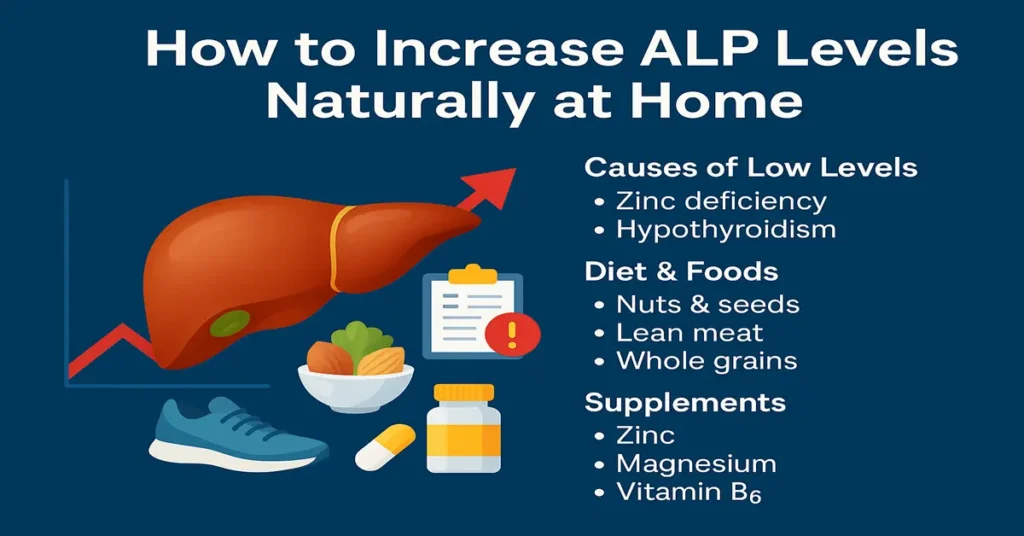
How to Increase ALP Levels Naturally at Home (When They Are Too Low)
Short Overview
ALP (Alkaline Phosphatase) is an enzyme present in several tissues of the body, mainly the liver and bones, and to a lesser extent the intestines and kidneys. It plays an important role in bone formation, mineral metabolism, and bile flow from the liver.
Most discussions focus on high ALP, but in routine lab practice we also see reports where ALP is below the reference range. This often creates confusion. In reality, low ALP is not always dangerous and is frequently related to nutritional gaps, low bone activity, or slowed metabolism rather than a serious disease.
When ALP stays low over time or appears along with symptoms, it deserves attention. The encouraging part is that many cases improve naturally once nutrition and lifestyle are corrected.
Causes of Low ALP Levels
Low ALP usually reflects reduced enzyme activity rather than organ damage. Identifying the cause helps guide simple corrective steps.
Zinc deficiency (most common cause)
Zinc is essential for ALP enzyme activity. In lab practice, low ALP is one of the earliest biochemical clues of zinc deficiency. This is often seen in people with poor dietary intake, limited nuts and seeds, digestive issues, chronic diarrhea, or diets heavy in processed foods.
Magnesium deficiency
Magnesium supports both bone metabolism and enzyme function. Low magnesium, especially in older adults, can reduce ALP levels.
Vitamin B6 deficiency
Vitamin B6 is involved in many enzyme reactions. When B6 is low, ALP activity may drop.
Protein malnutrition
ALP is a protein-based enzyme. Diets very low in protein—due to crash dieting, prolonged fasting, poor appetite, or undernutrition—can reduce enzyme production.
Hypothyroidism
Low thyroid activity slows overall metabolism. In such cases, ALP may appear low along with other subtle metabolic changes.
Anemia
Iron deficiency anemia and some chronic anemias may be associated with reduced ALP activity.
Genetic condition (hypophosphatasia – rare)
This is a very rare inherited disorder causing persistently very low ALP and bone problems. It is uncommon and usually identified early in life.
Pregnancy (late stages)
In late pregnancy, ALP may appear lower due to dilutional changes in blood volume. This is usually temporary.
Certain medications
Some hormonal drugs, oral contraceptives, steroids, or long-term medications can lower ALP levels mildly.
Symptoms of Low ALP Levels
Low ALP itself does not cause symptoms. When symptoms are present, they usually reflect the underlying deficiency or bone-related issue.
Some people may notice fatigue, bone or joint discomfort, muscle weakness, slow wound healing, poor appetite, brittle nails, hair thinning, frequent infections, or tingling and numbness in vitamin deficiencies. Clinically, these symptoms guide doctors to look beyond the number and assess nutrition and bone health.
Diet and Food Choices to Support ALP Naturally
Improving ALP naturally focuses on restoring nutrients required for enzyme and bone activity.
Zinc-rich foods (top priority)
Because zinc deficiency is the most frequent cause, daily intake is important. Common sources include pumpkin seeds, cashews, almonds, peanuts, chickpeas, lentils, whole grains, eggs, dairy products, fish, and meat where appropriate.
Magnesium-rich foods
Magnesium supports enzyme balance and bone health. Nuts, seeds, dark chocolate, spinach, bananas, oats, whole grains, legumes, and avocado are commonly recommended.
Vitamin B6–rich foods
Bananas, potatoes, tuna, salmon, chicken, eggs, sunflower seeds, spinach, and chickpeas support enzyme activation.
Adequate protein intake
Protein supports enzyme production and tissue repair. Eggs, paneer, chicken, fish, lentils, soy products, Greek yogurt, beans, and nuts are useful options.
Bone-supportive foods
Since ALP is closely linked to bone activity, foods that support bone metabolism indirectly help ALP balance. Milk and milk products, sesame seeds, almonds, green leafy vegetables, fortified foods, and mushrooms are commonly included.
Vitamin D and sunlight
Vitamin D supports bone turnover. Regular sunlight exposure helps maintain healthy bone metabolism, which in turn supports ALP levels.
Lifestyle Habits That Support ALP Levels
Regular moderate exercise
Bone activity responds to movement. Walking, yoga, light strength training, cycling, and stretching stimulate bone metabolism and enzyme balance.
Good sleep routine
Sleep supports hormonal regulation and nutrient utilization. Consistent sleep timing and adequate rest are important.
Avoiding crash diets
Extreme calorie restriction reduces intake of protein and minerals essential for ALP. Balanced meals are key.
Managing thyroid health
When low ALP is linked to hypothyroidism, correcting thyroid imbalance often normalizes ALP.
Stress reduction
Chronic stress affects digestion and nutrient absorption. Simple relaxation practices improve overall metabolic health.
Supplements (Safe Note)
When diet alone is insufficient, supplements may help, but they should be used carefully.
Zinc supplements
Often effective when deficiency is present. Moderate dosing is important, as long-term high doses can cause imbalance.
Magnesium supplements
Helpful in people with cramps, fatigue, or sleep issues. Forms with better absorption are usually preferred.
Vitamin B6 supplements
Support enzyme activity when deficiency exists. Excessive doses should be avoided.
Multivitamin
A basic multivitamin can correct mild, combined deficiencies safely.
Supplements should always be discussed with a doctor, especially during pregnancy or in people with kidney or liver conditions.
When to See a Doctor
Medical advice is recommended if ALP is persistently very low, if it remains low on repeated tests, if there is bone pain, fractures, or clear signs of malnutrition, if numbness or severe fatigue appears, if thyroid symptoms are present, or if low ALP is noted during pregnancy with symptoms.
Doctors may suggest checking zinc, vitamin D, thyroid function, or bone health only when clinically indicated.
People Also Ask
Is low ALP always a serious problem?
No. In most cases, it reflects nutritional or metabolic factors and is not dangerous.
Can ALP levels be temporarily low?
Yes. Diet changes, pregnancy-related dilution, or short-term nutritional gaps can lower ALP temporarily.
Does low ALP always mean bone disease?
No. Bone disease is rare. Nutrient deficiencies are far more common causes.
When do doctors usually worry about low ALP?
When it stays very low over time or appears with bone pain, fractures, or clear deficiency symptoms.
Is repeat testing common for low ALP?
Yes. Repeat tests help confirm whether the finding is temporary or persistent.
Can ALP return to normal naturally?
In many cases, yes. Levels often normalize once nutrition, metabolism, and bone activity improve.
~END~
Related Posts
None found