
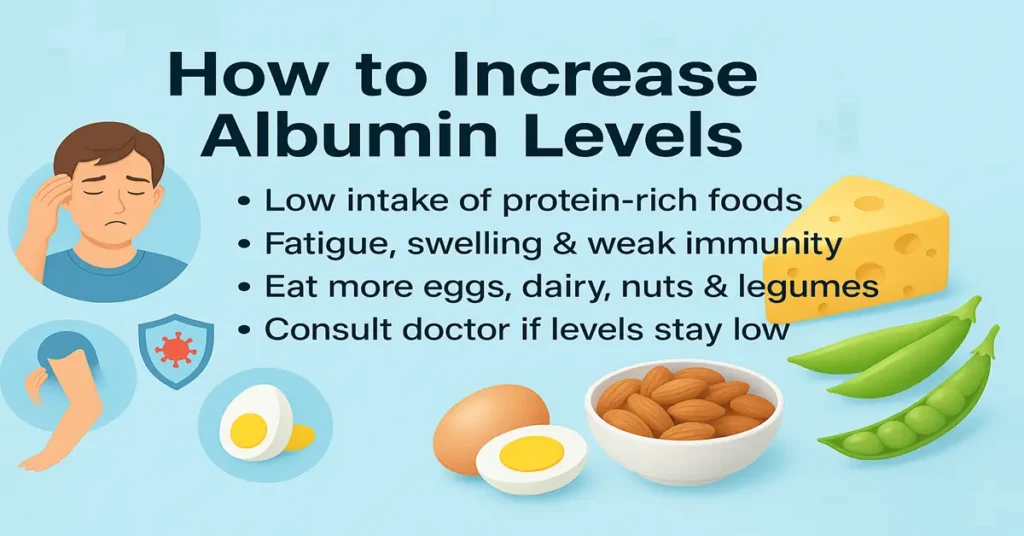
How to Increase Albumin Levels Naturally at Home
Albumin is one of the most important proteins made by the liver. In routine lab practice, it is often the first value doctors look at when a patient has swelling, weakness, or signs of poor nutrition. Albumin helps keep fluid inside blood vessels, carries hormones and medicines through the bloodstream, supports tissue repair, and plays a quiet but essential role in immunity.
When albumin levels fall below the normal range, it is not a disease by itself. It is a signal that something in the body—nutrition, liver function, kidney filtration, digestion, or inflammation—is not working optimally. Low albumin can lead to fatigue, swelling, slow healing, and increased susceptibility to infections if not addressed.
This article explains, in simple and practical terms, why albumin becomes low, what symptoms may appear, how albumin can be supported naturally at home, and when medical evaluation is necessary.
Short Overview of Albumin
Albumin is a blood protein produced mainly by the liver and makes up nearly 60% of total blood protein. Its most important job is maintaining fluid balance by preventing water from leaking out of blood vessels into surrounding tissues. Clinically, this is why low albumin is commonly associated with swelling in the legs, feet, or face.
Albumin also acts as a carrier, transporting hormones, vitamins, fatty acids, and many medicines to where they are needed. It supports tissue repair and helps the body cope with stress, illness, and recovery.
The usual adult reference range for albumin is 3.5–5.0 g/dL, though slight variation exists between laboratories. A low value means the body is either not producing enough, losing too much, or using protein faster than it can be replaced.
Causes of Low Albumin Levels
Low albumin, also called hypoalbuminemia, can occur for several reasons. In clinical settings, identifying the cause is more important than the number itself.
Poor nutrition or low protein intake
If the diet lacks adequate high-quality protein, the liver does not have enough building material to produce albumin. This is one of the most common and reversible causes, especially in elderly patients, people with poor appetite, or those on restrictive diets.
Liver diseases
Because albumin is made in the liver, conditions such as chronic hepatitis, fatty liver disease, cirrhosis, or prolonged liver inflammation reduce albumin production over time.
Kidney problems
In certain kidney disorders, especially those affecting the filtration barrier, albumin leaks into the urine. In routine practice, this is suspected when low albumin is seen along with foamy urine or swelling.
Chronic inflammation or infection
During long-standing infections, autoimmune conditions, or severe illness, the body prioritizes inflammation and healing. Albumin production drops as a result, even if dietary intake is adequate.
Digestive and absorption disorders
Conditions that impair nutrient absorption—such as chronic diarrhea, intestinal inflammation, or enzyme deficiencies—prevent proper utilization of dietary protein.
Fluid imbalance
Overhydration can dilute albumin levels in blood tests. This does not always mean true deficiency but still needs clinical correlation.
Symptoms of Low Albumin Levels
Low albumin often develops gradually, so early symptoms may be subtle.
Commonly observed signs include swelling of the feet, ankles, or around the eyes, easy fatigue, weakness, muscle loss, slow wound healing, reduced appetite, and frequent infections. In more advanced cases, fluid may collect in the abdomen, and general strength declines noticeably.
Clinically, symptoms usually reflect the cause of low albumin, not just the low value itself.
Diet to Increase Albumin Levels Naturally
From practical experience, improving nutrition is the most effective natural step when low albumin is related to intake or recovery from illness.
Protein-rich foods
Regular inclusion of good-quality protein supports albumin production. Useful options include eggs, fish, chicken, dairy products, lentils, chickpeas, soy products, nuts, seeds, oats, and quinoa. The goal is not excess protein, but consistent intake across meals.
Anti-inflammatory foods
Chronic inflammation suppresses albumin production. Foods such as leafy greens, berries, turmeric, olive oil, fatty fish, and vegetables help reduce inflammatory stress on the liver.
Balanced hydration
Albumin values can appear falsely low in overhydration. Drinking water evenly through the day helps maintain stable readings.
Lifestyle Changes to Support Albumin
Diet alone is often not enough. Certain habits strongly influence albumin levels.
Supporting liver health by limiting alcohol, avoiding heavily processed foods, and maintaining a balanced diet helps restore normal protein synthesis. Protecting kidney health by controlling blood pressure and sugar levels is equally important.
Regular moderate physical activity improves circulation and protein utilization. Adequate sleep and stress reduction reduce inflammatory load, which indirectly supports albumin recovery.
Managing chronic conditions like diabetes, thyroid disorders, or infections prevents ongoing protein loss.
Supplements (Safe Note)
In some cases, supplements are considered, especially during recovery or poor intake periods. Protein supplements, omega-3 fatty acids, zinc, vitamin D, and probiotics may be used, but only after understanding the cause of low albumin.
In routine practice, supplements are avoided or used cautiously in patients with kidney or advanced liver disease, as excess protein may worsen the condition. Medical guidance is always advised.
When to See a Doctor
Medical evaluation is important if albumin remains low despite adequate diet, or if swelling, fatigue, weight loss, foamy urine, jaundice, or long-standing digestive symptoms are present. Persistent low albumin often signals an underlying condition that needs targeted treatment rather than dietary correction alone.
Test Preparation
For accurate albumin results, avoid heavy exercise the day before testing, stay well hydrated, avoid alcohol for at least 24 hours, and inform your doctor about medications such as steroids or diuretics. Fasting is usually not required.
Important Word Explanations
Albumin is a liver-produced protein that maintains fluid balance and transports substances.
Hypoalbuminemia means lower-than-normal albumin levels.
Nephrotic syndrome refers to kidney conditions where protein leaks into urine.
Malabsorption means poor nutrient absorption from the gut.
Inflammation is the body’s response to injury or illness that can suppress albumin production.
People Also Ask
Is low albumin always serious?
No. Mild reductions are common during illness or poor intake. Persistent low levels need evaluation.
Can albumin levels improve naturally?
Yes, especially when caused by poor nutrition, recovery from illness, or temporary inflammation.
Does low albumin always mean liver disease?
No. Kidney loss, inflammation, or malnutrition are equally common causes.
When do doctors worry about low albumin?
When it stays low on repeat tests or is associated with swelling, weight loss, or weakness.
Is repeat testing common for albumin?
Yes. Doctors often repeat the test after correcting diet, hydration, or treating infection.
Can albumin rise quickly?
Albumin improves gradually. Sudden changes usually reflect fluid shifts rather than true protein recovery.
~END~