
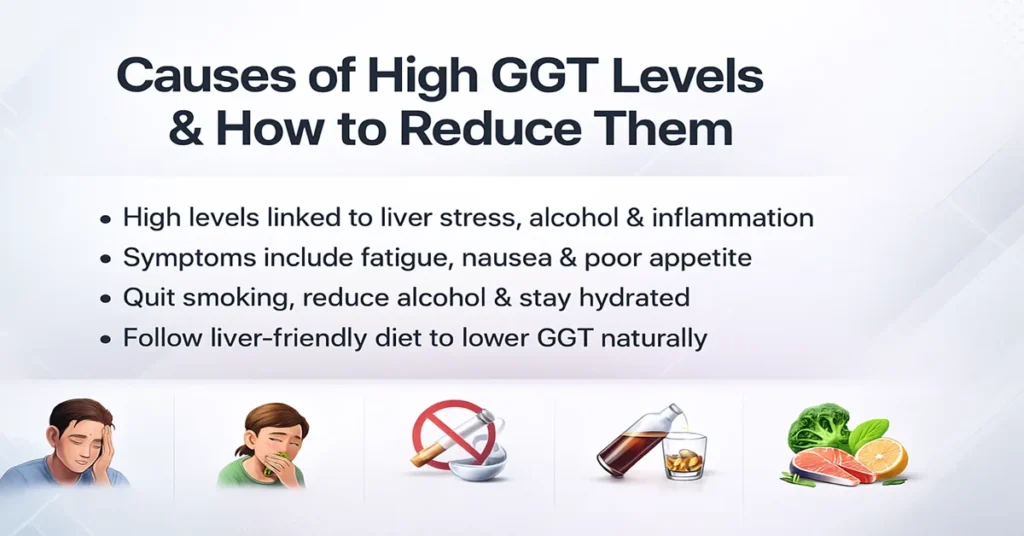
Causes of High GGT Levels and How to Reduce Them Naturally
Overview
Gamma-Glutamyl Transferase (GGT) is a liver enzyme that plays an important role in detoxification, bile flow, and antioxidant balance. In everyday lab practice, GGT is one of the earliest enzymes to rise when the liver is under stress. That is why doctors pay close attention to it, even when other liver tests look only mildly abnormal.
A high GGT result does not automatically mean serious liver disease. Clinically, this is where doctors pause, look at alcohol history, medications, weight, sugar levels, and then correlate with other enzymes like ALT, AST, and ALP. Many times, GGT rises because the liver is being overworked rather than permanently damaged.
This article explains why GGT becomes high, what conditions are commonly associated with it, how lifestyle factors influence it, natural ways doctors usually recommend to lower it, and when elevated GGT needs urgent attention.
Medical Causes of High GGT Levels
High GGT reflects liver or bile system stress, not a single disease. Common medical causes include:
Liver inflammation or injury
Any condition that irritates liver cells can raise GGT. This includes fatty liver, hepatitis, long-standing liver inflammation, and early cirrhosis. GGT often rises before symptoms appear.
Bile duct problems
When bile flow is slowed or blocked, GGT increases quickly. Gallstones, bile duct inflammation, or pressure on bile channels commonly cause this pattern, especially when ALP is also high.
Medication-related liver stress
Many commonly used medicines can raise GGT without causing permanent damage. In routine practice, this is often seen with long-term use of anti-seizure drugs, antidepressants, painkillers, cholesterol medicines, and some antibiotics.
Pancreatic or digestive conditions
Pancreatic inflammation and chronic digestive disorders can indirectly affect liver enzymes, including GGT.
Oxidative stress
When the body is under high toxin or oxidative load, GGT increases as part of the liver’s defence mechanism.
Dehydration-Related Factors
Dehydration alone rarely causes very high GGT, but it can worsen existing elevations.
Low water intake
Insufficient hydration stresses the liver and concentrates enzymes in blood.
Heavy sweating
Intense exercise, heat exposure, or fever can reduce fluid balance and temporarily affect liver enzymes.
Alcohol-related dehydration
Alcohol both dehydrates the body and directly stimulates GGT production.
Excess caffeine
Large amounts of coffee or energy drinks may worsen dehydration and liver irritation in sensitive individuals.
Correcting hydration helps mild elevations but does not resolve underlying liver causes.
Chronic Diseases Linked to High GGT
Persistently high GGT is often associated with long-term metabolic or inflammatory conditions.
Fatty liver disease
Both alcohol-related and non-alcoholic fatty liver disease are among the most common reasons for raised GGT.
Diabetes and insulin resistance
High blood sugar increases liver fat and oxidative stress, pushing GGT upward.
Obesity
Excess abdominal fat directly affects liver metabolism and enzyme balance.
Heart and vascular disease
High GGT is frequently seen alongside cardiovascular risk factors due to chronic inflammation.
Thyroid disorders
An overactive thyroid may accelerate metabolism and indirectly increase liver enzyme activity.
Chronic infections
Long-standing infections can keep the liver in a constant inflammatory state.
In these cases, lowering GGT depends on managing the underlying condition.
Smoking and Alcohol as Major Contributors
In real-world clinical settings, alcohol and smoking are the most common non-disease causes of high GGT.
Alcohol
Alcohol strongly stimulates GGT production. Some people show significant rises even with moderate drinking. When alcohol is stopped, GGT often falls noticeably within a few weeks.
Smoking
Cigarette toxins increase oxidative stress, forcing the liver to work harder. GGT rises as part of this response.
Combined exposure
People who both smoke and drink often have disproportionately high GGT compared to other liver enzymes.
Symptoms of High GGT Levels
High GGT itself does not cause symptoms. Symptoms usually come from the underlying liver or metabolic issue.
Commonly reported complaints include:
Persistent fatigue
Upper abdominal heaviness
Reduced appetite
Mild nausea
Dark-coloured urine
Low stamina
Poor recovery after exertion
Mental fog or irritability
In alcohol-related or fatty liver cases, bloating, sleep disturbance, and weight gain may also be present.
How to Reduce High GGT Levels Naturally
Lowering GGT is mainly about reducing liver workload, not targeting the enzyme directly.
Stop or reduce alcohol
Even a short break of 2–4 weeks can significantly reduce GGT in many people.
Quit smoking
Removing cigarette toxins reduces oxidative stress and liver strain.
Follow a liver-supportive diet
Foods commonly advised in practice include leafy greens, broccoli, cauliflower, garlic, turmeric, beetroot, berries, avocado, olive oil, and omega-3-rich fish. These support inflammation control and liver metabolism.
Maintain proper hydration
Adequate water intake supports detox pathways and enzyme balance.
Manage body weight
Even modest weight loss improves fatty liver and lowers GGT.
Exercise regularly
Moderate activity like walking, cycling, or yoga improves insulin sensitivity and liver health.
Reduce sugar and processed foods
Cutting sugary drinks, fried foods, and packaged snacks reduces liver fat.
Avoid unnecessary medications
Self-medication and excessive supplements increase liver burden.
Improve sleep
The liver regenerates during sleep. Poor sleep slows recovery.
Consistency matters more than intensity. Small daily changes often bring steady improvement.
When High GGT Levels Become Dangerous
High GGT needs urgent attention when:
It remains elevated over several tests
Alcohol intake continues
ALT, AST, or ALP are also high
Symptoms like jaundice or severe fatigue appear
There is abdominal pain or unexplained weight loss
Blood sugar and cholesterol are uncontrolled
Imaging shows fatty liver or bile obstruction
There is known hepatitis or chronic liver disease
Very high or rising GGT should never be ignored.
Test Preparation
For reliable GGT results:
Avoid alcohol for 24–72 hours
Drink normal amounts of water
Inform the doctor about all medications and supplements
Avoid heavy exercise before testing
Eat regular meals unless instructed otherwise
Good preparation avoids misleading elevations.
When to Consult a Doctor
Consult a doctor if:
GGT stays high on repeat tests
You drink alcohol regularly
Other liver enzymes are abnormal
You have diabetes, obesity, or fatty liver
Symptoms of liver stress are present
Lifestyle changes are not improving levels
Early evaluation helps prevent long-term liver damage.
Important Word Explanations
GGT: A liver enzyme reflecting detox and bile flow activity
Oxidative stress: Cell damage caused by toxins and free radicals
Fatty liver: Excess fat accumulation in liver cells
Inflammation: Body’s response to injury or stress
Bile ducts: Channels that carry bile from liver to intestine
People Also Ask
Is high GGT always serious?
Not always. Mild elevation is common and often reversible, especially with lifestyle changes.
Can high GGT be temporary?
Yes. Alcohol intake, medications, or dehydration can cause temporary rises.
Does high GGT always mean liver disease?
No. It often reflects liver stress rather than permanent damage.
When do doctors worry about GGT levels?
When it stays high over time or rises along with other liver enzymes.
Is repeat testing common for high GGT?
Yes. Doctors often repeat tests after lifestyle correction.
Can GGT go back to normal naturally?
In many cases, yes—especially when alcohol, weight, and diet are addressed.
~END~