
Overview
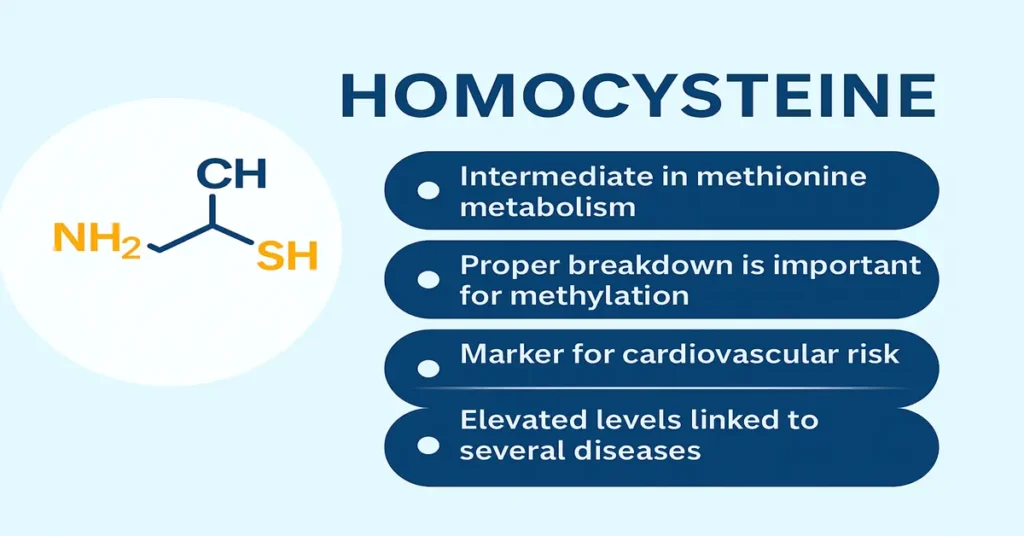
Homocysteine is an amino acid that forms naturally in the body during the metabolism of methionine, an essential amino acid obtained from dietary protein sources such as meat, eggs, and dairy products. Under normal conditions, homocysteine does not accumulate. It is rapidly converted into other useful compounds with the help of key vitamins—vitamin B6, vitamin B12, and folate (vitamin B9).
When this metabolic process becomes inefficient, homocysteine levels rise in the blood. Persistently elevated levels are considered a metabolic warning signal and are associated with a higher risk of cardiovascular disease, stroke, abnormal blood clotting, cognitive decline, and certain bone disorders. A homocysteine blood test measures the concentration of this amino acid and helps clinicians evaluate vitamin status, metabolic balance, and overall vascular risk.
Where Homocysteine Is Produced in the Body
Homocysteine is produced as part of the body’s normal metabolic cycle, primarily in the liver. It appears when methionine from dietary protein is broken down. The body carefully regulates homocysteine through two well-coordinated pathways:
1. Remethylation
In this pathway, homocysteine is recycled back into methionine. This process depends on adequate levels of:
- Vitamin B12
- Folate (Vitamin B9)
2. Trans-sulfuration
Here, homocysteine is converted into cysteine, another amino acid. This step requires:
- Vitamin B6
When any of these vitamins are deficient or the pathways are impaired, homocysteine metabolism slows down, allowing levels to rise in the bloodstream.
Main Functions and Importance
Homocysteine itself does not perform a direct functional role, but its metabolism is closely linked to several essential biological processes.
1. Intermediate in Amino Acid Metabolism
Homocysteine is a key intermediate in methionine metabolism. Efficient handling of this step is necessary for normal cellular activity.
2. Supports Methylation Reactions
Proper homocysteine balance supports methylation processes involved in:
- DNA synthesis and repair
- Hormone regulation
- Cellular detoxification pathways
3. Antioxidant Production
Through the trans-sulfuration pathway, homocysteine metabolism contributes to the formation of glutathione, one of the body’s most important antioxidants.
4. Important Marker for Disease Risk
Elevated homocysteine levels are associated with increased risk of:
- Cardiovascular disease
- Stroke
- Abnormal blood clot formation
- Cognitive decline and dementia
- Osteoporosis
For this reason, homocysteine testing is often used as part of a broader assessment of metabolic and cardiovascular health.
Causes of Low Homocysteine Levels
Low homocysteine levels are relatively uncommon and are generally not considered harmful. Possible contributing factors include:
1. Adequate or High B-Vitamin Status
Sufficient levels of vitamin B6, B12, and folate promote efficient homocysteine metabolism.
2. Genetic Variations
Some individuals naturally metabolize homocysteine more efficiently due to genetic factors.
3. Lower Methionine Intake
Reduced dietary protein intake may result in lower homocysteine production.
Symptoms of Low Levels
Low homocysteine levels typically cause no symptoms and are not linked to adverse health effects.
Causes of High Homocysteine Levels
Elevated homocysteine levels, also called hyperhomocysteinemia, are more common and may result from several conditions:
1. Vitamin B6, B12, or Folate Deficiency
This is the most frequent cause. Insufficient vitamin availability disrupts normal metabolism.
2. Chronic Kidney Disease
Reduced kidney function limits clearance of homocysteine from the blood.
3. Hypothyroidism
An underactive thyroid can slow metabolic pathways involved in homocysteine regulation.
4. Genetic Disorders
Inherited conditions such as homocystinuria lead to markedly elevated levels due to enzyme defects.
5. Certain Medications
Some medicines may influence homocysteine metabolism, including:
- Methotrexate
- Certain anti-seizure medications
- Metformin (in select situations)
6. Lifestyle-Related Factors
Factors associated with higher homocysteine levels include smoking, excessive alcohol use, physical inactivity, and diets high in processed foods.
Symptoms of High Homocysteine Levels
Elevated homocysteine does not usually cause specific symptoms on its own. Instead, it acts as a risk marker for underlying conditions, including:
1. Cardiovascular Concerns
- Atherosclerosis
- Increased risk of heart attack and stroke
2. Blood Clotting Tendencies
- Greater likelihood of venous or arterial thrombosis
3. Bone Health Effects
- Reduced bone density
- Higher fracture risk
4. Severe Genetic Conditions (Homocystinuria)
In rare inherited cases, very high levels may be associated with:
- Developmental delays
- Vision abnormalities
- Cognitive or behavioral changes
- Skeletal weakness
Reference Ranges
Typical reference ranges are:
- 5 – 15 µmol/L → Normal
- 15 – 30 µmol/L → Mild to moderate elevation
- 30 – 100 µmol/L → Intermediate elevation
- >100 µmol/L → Severe elevation (often genetic)
Ranges may vary slightly between laboratories, but these values are widely used in clinical practice.
Sample Type
- Blood sample (serum or plasma)
- Collected from a vein in the arm
In some cases, fasting for 10–12 hours is recommended for consistent results.
Test Preparation
If fasting is advised, avoid food and beverages other than water for 10–12 hours before testing.
Inform your doctor about:
- Vitamin supplements (B6, B12, folate)
- Current medications
- Family history of metabolic or genetic disorders
Avoid smoking and alcohol before the test when possible.
When to Consult a Doctor
Medical evaluation is recommended if you have:
- A family history of early cardiovascular disease
- Unexplained blood clots
- Symptoms suggestive of vitamin deficiency
- Persistent fatigue or memory concerns
- Bone pain or frequent fractures
- Neurological symptoms such as numbness or tingling
- Known thyroid or kidney disease
Homocysteine results are best interpreted alongside vitamin levels, kidney and thyroid tests, and overall clinical context.
Important Word Explanations
- Amino acid – A basic building block of proteins
- Methionine – An essential amino acid obtained from dietary protein
- Folate – Vitamin B9, important for cell growth and metabolism
- Homocystinuria – A rare genetic disorder causing very high homocysteine levels
- Atherosclerosis – Narrowing and hardening of arteries
- Methylation – A chemical process essential for DNA repair and cellular regulation
~END~
Related Posts
None found
Cool blog.
Nice Post.