
Overview
The HLA-B27 test is a laboratory test used to check for the presence of a specific immune protein called Human Leukocyte Antigen B27 (HLA-B27) on the surface of white blood cells. This protein belongs to the broader HLA system, which helps the immune system recognize what belongs to the body and what does not, such as infections or abnormal cells.
HLA-B27 is medically important because it is strongly associated with a group of inflammatory and autoimmune conditions, particularly those affecting the spine, joints, eyes, skin, and intestines. These include ankylosing spondylitis, reactive arthritis, psoriatic arthritis, uveitis, and some bowel-related joint diseases. It is important to understand that HLA-B27 is a risk marker, not a diagnosis. Many people who carry HLA-B27 remain completely healthy throughout their lives.
Where HLA-B27 Is Produced in the Body
HLA-B27 is produced inside cells based on genetic instructions from the HLA-B gene, which is located on chromosome 6. Once formed, the HLA-B27 protein is transported to the surface of certain white blood cells, especially lymphocytes.
On the cell surface, HLA-B27 plays a role in immune surveillance. It presents small protein fragments to immune cells (T-cells), helping the immune system decide whether a response is needed. This process is normal and essential for immune defense, but in some individuals it may also be linked to abnormal inflammatory responses.
Main Functions and Importance
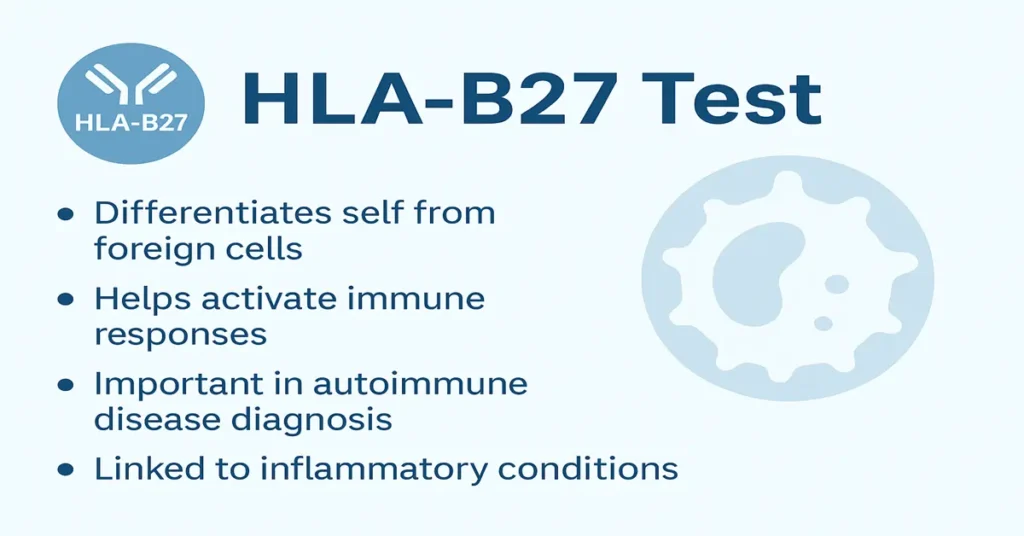
1. Differentiates Self vs. Foreign Cells
HLA-B27 helps the immune system recognize which cells belong to the body and which may represent infections or abnormal activity. This distinction is central to immune balance.
2. Helps Activate Immune Responses
Through antigen presentation, HLA-B27 assists in triggering immune responses when harmful substances are detected. This function is part of normal immune protection.
3. Important Marker in Autoimmune Diseases
Clinicians often request the HLA-B27 test when symptoms suggest inflammatory or autoimmune disease, especially when spine or joint involvement is present. Conditions commonly evaluated include:
- Ankylosing spondylitis
- Reactive arthritis
- Psoriatic arthritis
- Uveitis
- Juvenile idiopathic arthritis
- IBD-related arthritis (Crohn’s disease or ulcerative colitis)
A positive result supports clinical suspicion but is always interpreted alongside symptoms, imaging, and other laboratory findings.
Causes of Low/Negative Levels
The HLA-B27 test does not measure quantity. It only determines whether the protein is present or absent.
A negative result means:
- The HLA-B27 gene is not present.
- The risk of HLA-B27–associated diseases is lower.
A negative test does not fully exclude autoimmune or inflammatory disease, as many such conditions occur in HLA-B27–negative individuals.
Symptoms of Low/Negative Levels
There are no symptoms related to a negative HLA-B27 result. It simply reflects genetic status. People without HLA-B27 may still experience joint, spine, or autoimmune symptoms from other causes.
Causes of High/Positive Levels
A positive HLA-B27 test indicates that the individual carries the HLA-B27 gene variant. This genetic trait is associated with a higher likelihood of developing certain inflammatory conditions, including:
- Ankylosing spondylitis
- Reactive arthritis
- Psoriatic arthritis
- Inflammatory bowel disease–associated arthritis
- Juvenile idiopathic arthritis
- Uveitis
It is equally important to note that a large proportion of HLA-B27–positive individuals never develop disease.
Symptoms of High/Positive Levels
HLA-B27 itself does not cause symptoms. Symptoms arise only if an associated inflammatory condition develops. These may include:
1. Musculoskeletal Symptoms
- Chronic lower back pain
- Morning stiffness that improves with movement
- Joint swelling or discomfort
- Reduced spinal flexibility
2. Eye Symptoms
- Eye redness or pain
- Light sensitivity
- Blurred vision
3. Skin Symptoms
- Scaly or inflamed patches, as seen in psoriasis
4. Gastrointestinal Symptoms
- Abdominal discomfort
- Diarrhea or blood in stools
Persistent or recurring symptoms should be medically evaluated.
Reference Range
HLA-B27 results are reported as:
- Negative – HLA-B27 not detected
- Positive – HLA-B27 detected
There is no numerical range because this is a genetic presence-or-absence test.
Sample Type
The test requires a blood sample, drawn from a vein in the arm.
Common testing methods include:
- Flow cytometry
- DNA-based genetic testing
Test Preparation
No fasting is required.
There are no dietary restrictions.
Patients should inform their doctor about ongoing symptoms such as back pain, joint stiffness, or eye inflammation. Regular medications are usually continued unless advised otherwise.
When to Consult a Doctor
Medical evaluation is recommended if you experience:
- Chronic back pain lasting more than three months
- Morning stiffness that improves with activity
- Persistent joint swelling or pain
- Recurrent eye inflammation
- Long-standing digestive symptoms
- A family history of inflammatory spine or joint disease
A positive HLA-B27 result alone does not confirm disease, but when combined with symptoms, further assessment by a specialist—often a rheumatologist—is appropriate.
Important Word Explanations
- Antigen – A substance that can trigger an immune response
- Autoimmune disease – A condition where the immune system reacts against the body’s own tissues
- Lymphocytes – White blood cells involved in immune defense
- Flow cytometry – A laboratory method used to analyze cell surface markers
- Uveitis – Inflammation inside the eye
- Ankylosing spondylitis – A chronic inflammatory condition mainly affecting the spine
~END~
Related Posts
None found