
Overview
The HIV Genotyping and Drug Resistance Test is a specialized laboratory test that analyzes the genetic makeup of the Human Immunodeficiency Virus (HIV) present in a person’s blood. HIV is a virus that changes continuously as it multiplies inside the body. During this process, small genetic changes—called mutations—can develop. Some of these mutations allow the virus to resist certain antiretroviral medicines, reducing how well those drugs work.
This test is an important part of modern HIV care. It helps doctors understand whether the virus has developed resistance to any medications and supports informed decisions when selecting or adjusting treatment. Because HIV management is long-term and highly individualized, genotyping helps ensure that the chosen medicines remain effective over time.
How HIV Mutations Develop Inside the Body
HIV is not produced by the body. Once it enters the bloodstream, it targets immune cells, especially CD4 T-cells, and uses them to replicate. HIV copies itself very rapidly, and during this copying process, errors can occur in its genetic material.
Most of these changes have little effect. However, some mutations alter the virus in ways that reduce the effectiveness of certain antiretroviral drugs. The HIV Genotyping Test identifies these mutations by examining viral RNA, giving clinicians a clearer picture of how the virus may respond to available medications.
Why HIV Genotyping Test is Important
This test plays a key role at specific points in HIV care. It is commonly performed before starting treatment, when viral load rises unexpectedly, or when a previously stable treatment regimen stops working as expected. It may also be used during pregnancy to help guide medication choices that reduce transmission risk.
By revealing resistance patterns early, the test helps avoid ineffective drug combinations and supports more stable long-term viral control.
Main Functions and Importance
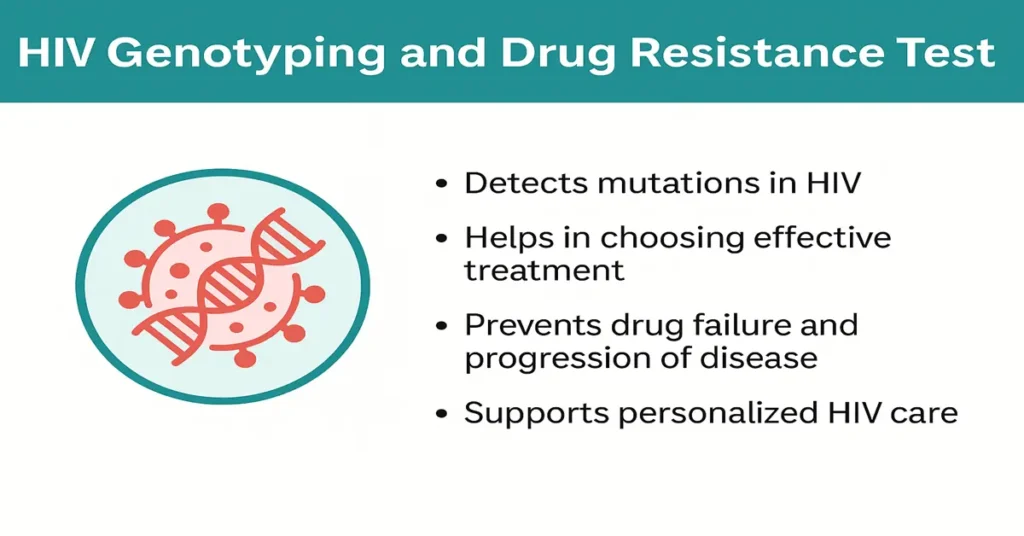
1. Detects Resistance Mutations
The primary role of the test is to identify genetic changes that make HIV less responsive to certain drug classes. These may involve medicines from groups such as nucleoside or non-nucleoside reverse transcriptase inhibitors, protease inhibitors, or integrase inhibitors. The report indicates which drug classes may be affected.
2. Helps in Choosing Effective Treatment
Not every person’s virus behaves the same way. Genotyping results help doctors select medications that are more likely to remain effective, based on the virus’s current genetic profile.
3. Prevents Drug Failure
Continuing medicines that no longer work allows the virus to multiply unchecked. By identifying resistance early, this test helps reduce the risk of ongoing viral replication due to ineffective therapy.
4. Supports Personalized Care
HIV care is not one-size-fits-all. Genotyping supports individualized decision-making, which is especially important for long-term disease monitoring and stability.
Causes of Low/Negative Values
A result showing no resistance mutations detected does not mean HIV is absent. Instead, it usually indicates that the virus remains sensitive to commonly used medications. This may be seen when treatment is working well or when the virus has not yet developed resistance.
In some cases, viral levels may be too low for mutations to be reliably detected. For accurate analysis, the viral load generally needs to be above a minimum threshold.
Symptoms of Low/Negative Values
There are no physical symptoms directly linked to a negative resistance result. Clinically, it is often a reassuring finding, suggesting that the current treatment approach remains effective and does not require immediate adjustment.
Causes of High/Positive Values
A positive resistance result means that one or more resistance-associated mutations are present. This can occur when the virus has had repeated opportunities to replicate, when medication intake has been inconsistent, or after long periods on the same drug regimen. In some cases, resistant virus strains may be acquired at the time of infection.
Symptoms of High/Positive Values
Resistance itself does not cause symptoms. However, it may be associated with signs that HIV control is weakening, such as rising viral load or declining CD4 counts. Some individuals may experience recurrent infections, prolonged fatigue, or other signs suggesting that treatment effectiveness has decreased.
Reference Range
This test does not have a numeric reference range. Results are reported descriptively, usually as:
- No resistance mutations detected – the virus is expected to respond to standard medications.
- Resistance mutations detected – specific mutations are listed, along with information about which drug classes may be affected.
These findings are interpreted alongside viral load, CD4 count, and clinical history.
Sample Type
The test requires a blood sample (plasma) collected through a standard venous draw. Viral RNA is extracted from the sample for genetic analysis.
Test Preparation
No fasting is required. Patients are usually advised to continue regular medicines unless directed otherwise. For accurate testing, viral levels should be detectable. Bringing previous treatment or laboratory records can help with interpretation.
When to Consult a Doctor
Medical review is important if viral load increases despite regular treatment, if CD4 counts decline, or if new HIV-related symptoms appear. The test is also commonly discussed when starting treatment for the first time, considering a change in therapy, or during pregnancy.
Important Word Explanations
- Mutation – A change in the virus’s genetic material
- Drug Resistance – Reduced response of HIV to certain medicines
- Viral Load – Amount of HIV present in the blood
- CD4 Cells – Immune cells targeted by HIV
- Genotyping – Analysis of viral genes to detect mutations
- Antiretroviral Therapy (ART) – Medicines used to control HIV infection
~END~
Related Posts
None found