
Overview
HIV (Human Immunodeficiency Virus) is a virus that targets the immune system, particularly CD4 T-helper cells, which play a central role in protecting the body from infections. As HIV damages and gradually reduces these cells, the body’s ability to fight infections and certain cancers becomes weaker.
There are two main types of HIV:
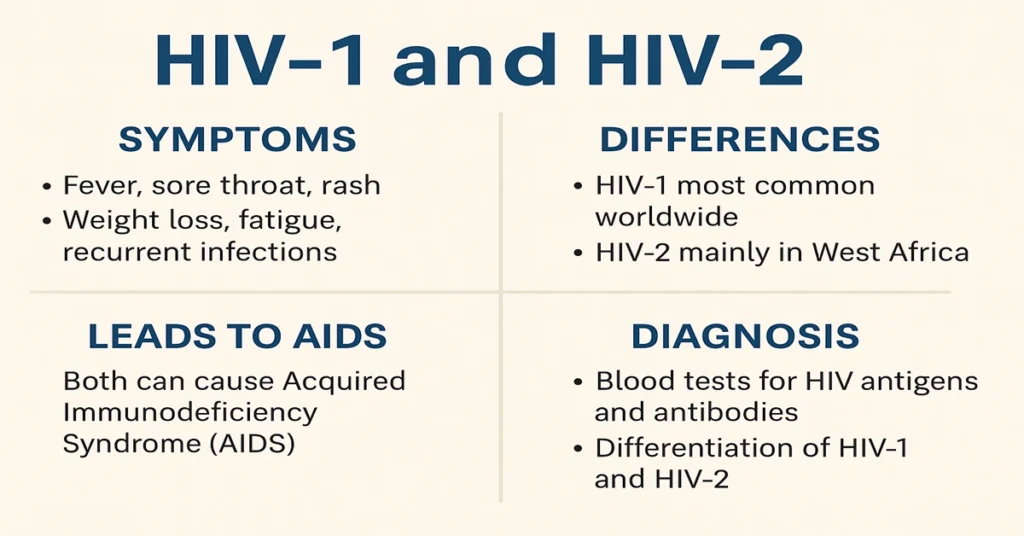
1. HIV-1
This is the most common form worldwide and accounts for the vast majority of HIV infections. It spreads more efficiently and, if untreated, tends to progress more quickly.
2. HIV-2
HIV-2 is seen mainly in parts of West Africa. It spreads less easily, usually progresses more slowly, and responds differently to some antiretroviral medicines.
If HIV is not identified and managed in time, it can progress to AIDS (Acquired Immunodeficiency Syndrome). At this stage, immune damage is severe, and the risk of serious infections and cancers rises significantly.
Where HIV Comes From and How It Replicates in the Body
HIV is not produced by the body. It enters through exposure to infected body fluids such as blood, semen, vaginal or rectal fluids, and breast milk.
Once in the bloodstream, HIV specifically targets CD4 T-cells. Inside these cells, the virus uses the cell’s own machinery to make new copies of itself. Over time, this process steadily lowers the CD4 count and weakens immune defense.
Some HIV particles remain hidden inside long-lived cells, known as viral reservoirs. This explains why HIV is a long-term infection and why ongoing medical care is essential once infection is established.
Importance of Understanding HIV-1 and HIV-2
HIV serves no beneficial role in the human body. Understanding the type of HIV infection is important because it helps guide accurate diagnosis and long-term care.
✔ 1. Diagnosing HIV Correctly
Identifying whether a person has HIV-1, HIV-2, or both ensures that test interpretation and follow-up are appropriate.
✔ 2. Starting Proper Treatment (ART)
HIV-2 responds differently to certain medicines. Correct classification helps clinicians choose the most suitable treatment approach.
✔ 3. Preventing Opportunistic Infections
As immunity weakens, the risk of infections such as tuberculosis, pneumonia, fungal diseases, and viral reactivations increases. Early diagnosis reduces this risk.
✔ 4. Reducing Risk of Transmission
Knowing one’s HIV status supports timely prevention steps, protecting partners and reducing the risk of mother-to-child transmission.
Causes of Low or Negative HIV Test Values
A negative HIV test means that HIV antibodies or viral markers were not detected at the time of testing. This can occur for several reasons.
First, the person may not be infected.
Second, testing may have been done very early, during the window period, when markers are not yet detectable.
Third, in people on effective antiretroviral therapy, viral levels may be extremely low, sometimes below detection limits.
Symptoms When HIV Test Results Are Negative
A negative result generally suggests normal immune function and no HIV-related illness. Most individuals have no symptoms related to HIV.
If symptoms persist despite a negative result and recent exposure is suspected, repeat testing after the window period may be advised to confirm status.
Causes of High or Positive HIV Test Values
A positive HIV test indicates that HIV infection is present. This may reflect:
Active HIV-1 or HIV-2 infection
Ongoing viral replication in untreated or inadequately controlled infection
Advanced disease where immune damage is more pronounced
Symptoms When HIV Test Is Positive
Symptoms vary depending on the stage of infection.
Early Stage: Acute HIV Infection
This stage often occurs a few weeks after exposure. Symptoms may resemble a common viral illness and can include fever, sore throat, rash, body aches, mouth ulcers, and swollen lymph nodes. Because they are non-specific, they are often overlooked.
Chronic Stage: Progressive HIV Infection
Without treatment, immune damage progresses slowly. People may experience persistent fatigue, unintended weight loss, repeated infections, night sweats, skin problems, or prolonged diarrhea.
Advanced Stage: AIDS
At this stage, immune function is severely compromised. Opportunistic infections such as tuberculosis, pneumonia, serious fungal or viral infections, and certain cancers like Kaposi’s sarcoma or lymphoma may develop. Without medical care, this stage is life-threatening.
Reference Ranges
Negative / Non-Reactive
No HIV antibodies or viral RNA detected. If exposure was recent, repeat testing after a few weeks may be required.
Positive / Reactive
HIV infection is detected. Confirmatory testing using additional methods is performed to establish the diagnosis clearly.
Sample Types Used for HIV Testing
HIV testing may use different sample types depending on the test method.
1. Blood Sample (Serum or Plasma)
This is the most accurate and commonly used sample for antibody, antigen, and viral load testing.
2. Oral Fluid Tests
Used in some rapid screening kits. These are useful for initial screening but are generally less sensitive than blood-based tests.
How HIV Testing Helps Patients
HIV testing allows early diagnosis, timely medical care, and long-term monitoring. It supports immune preservation, reduces the risk of AIDS, helps prevent transmission to others, and improves long-term health outcomes. With current medical care, many people with HIV maintain stable health and normal life expectancy.
Test Preparation
No fasting is required. Patients should inform the healthcare provider about recent exposure risks or previous testing. Testing is confidential and routine. HIV screening is especially important during pregnancy. Avoid relying on unverified remedies before testing.
When to Consult a Doctor
Medical advice should be sought after potential exposure, if symptoms suggest acute infection, or if there are signs of ongoing immune weakness such as unexplained weight loss, repeated infections, night sweats, or chronic diarrhea. Prompt evaluation is especially important when symptoms suggest advanced disease.
Important Word Explanations
- HIV – A virus that damages the immune system
- HIV-1 & HIV-2 – Two types of HIV, with HIV-1 being more common
- CD4 Cells – Immune cells essential for fighting infections
- AIDS – Advanced stage of HIV infection
- Antiretroviral Therapy (ART) – Medicines used to control HIV
- Viral Load – Amount of HIV present in the blood
- Window Period – Early phase when HIV may not yet be detectable
~END~
Related Posts
None found