
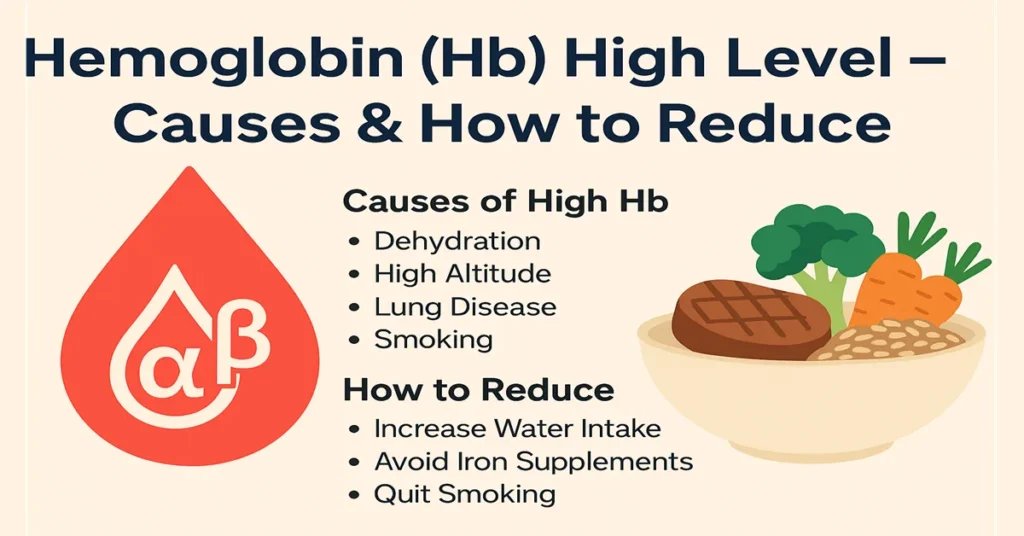
Causes of High Hemoglobin Levels and How to Reduce Them – Complete Guide
Hemoglobin (Hb) is a protein inside red blood cells that carries oxygen from the lungs to tissues throughout the body. While low hemoglobin is commonly discussed, high hemoglobin levels—often referred to as polycythemia or raised Hb—are also seen in clinical practice. When hemoglobin becomes too high, blood can thicken, which may slow circulation and increase strain on the heart and blood vessels.
In routine lab work, mildly elevated hemoglobin is sometimes linked to simple, temporary factors such as dehydration. However, persistently high or significantly raised Hb levels usually need medical attention to understand the underlying cause. This article explains why hemoglobin can become high, what symptoms may appear, the potential risks involved, and how levels are commonly reduced in a safe and medically appropriate way.
Overview
Hemoglobin levels rise either when the body produces more red blood cells than needed or when blood becomes concentrated due to reduced fluid volume. Clinically, high Hb may be associated with dehydration, smoking, lung or heart conditions, sleep-related breathing problems, kidney-related hormone changes, or bone marrow disorders.
Managing high hemoglobin is less about forcing the value down and more about identifying and correcting the underlying reason. In many cases, addressing hydration, oxygen supply, or contributing habits helps bring levels back toward normal.
Normal vs High Hemoglobin Levels
Hemoglobin reference ranges vary slightly by laboratory and population, but commonly accepted values are:
- Normal Hb (Men): 13.5–17.5 g/dL
- Normal Hb (Women): 12–15.5 g/dL
Values above these ranges are considered high. From a clinical perspective, repeated readings above the upper limit are more meaningful than a single isolated result. Very high levels should never be ignored, especially if symptoms are present.
Causes of High Hemoglobin Levels
High hemoglobin can develop for several reasons. In practice, doctors often first look for common and reversible causes before considering rare conditions.
1. Dehydration
One of the most frequent temporary reasons for raised Hb. When the body loses fluid due to inadequate intake, sweating, diarrhea, or vomiting, blood becomes concentrated, making hemoglobin appear higher than it truly is.
2. Living at High Altitudes
At higher elevations, oxygen levels in the air are lower. The body adapts by producing more red blood cells to improve oxygen delivery, which naturally raises hemoglobin.
3. Smoking
Smoking reduces effective oxygen delivery. Over time, the body compensates by increasing red blood cell production, which commonly results in higher Hb levels in chronic smokers.
4. Lung Diseases
Conditions that limit oxygen exchange—such as COPD, emphysema, chronic bronchitis, or pulmonary fibrosis—can stimulate the body to raise hemoglobin to compensate for reduced oxygen availability.
5. Heart Disorders
When heart function is reduced, oxygen delivery to tissues may be compromised. The body may respond by increasing red blood cell production, leading to higher Hb levels.
6. Sleep Apnea
In obstructive sleep apnea, breathing repeatedly stops and starts during sleep, causing intermittent drops in oxygen levels. This ongoing low-oxygen signal can push hemoglobin higher over time.
7. Kidney Diseases or Tumors
The kidneys produce erythropoietin (EPO), a hormone that stimulates red blood cell formation. Certain kidney conditions or tumors may increase EPO production, resulting in elevated hemoglobin.
8. Bone Marrow Disorders
Some disorders directly affect blood cell production, causing excessive red blood cell formation. Polycythemia vera is a well-known example and requires specialist evaluation.
9. Anabolic Steroids or Testosterone Therapy
Hormonal treatments or anabolic steroid use can stimulate red blood cell production and raise hemoglobin beyond normal limits.
10. Excessive Iron or Vitamin Supplement Use
Unnecessary intake of iron, vitamin B12, or folic acid—especially without documented deficiency—can support increased red blood cell production and contribute to high Hb levels.
Symptoms of High Hemoglobin Levels
Symptoms depend on how elevated the hemoglobin is and how quickly it has risen. Mild increases may cause no noticeable problems. As levels rise, patients may report headaches, dizziness, blurred vision, fatigue, flushed or reddish skin, or raised blood pressure.
Some people experience tingling in the hands or feet, itching (often after bathing), nosebleeds, chest discomfort, or shortness of breath. Clinically, these symptoms suggest thicker blood and reduced circulation, which require careful evaluation.
Health Risks of High Hemoglobin
Persistently high hemoglobin increases blood viscosity, meaning the blood flows more slowly and places extra strain on the cardiovascular system. Over time, this raises the risk of blood clots, stroke, heart attack, deep vein thrombosis, pulmonary embolism, and uncontrolled blood pressure.
For this reason, identifying the cause of high Hb and managing it appropriately is important.
How to Reduce High Hemoglobin Levels Naturally
The approach to reducing hemoglobin depends entirely on the underlying cause. In clinical practice, doctors first focus on reversible and lifestyle-related factors.
1. Improve Hydration
When dehydration is the reason, restoring adequate fluid intake often brings hemoglobin back toward normal without additional intervention.
2. Review Iron Intake (Only if Advised)
Iron supports red blood cell production. In people with high Hb, doctors may advise avoiding excess dietary iron or fortified products until levels stabilize.
3. Avoid Unnecessary Iron Supplements
Iron-containing supplements or multivitamins should not be taken unless specifically prescribed.
4. Review Vitamin B12 and Folic Acid Use
These vitamins support red blood cell formation. Temporary reduction may be advised if levels are already high.
5. Smoking Reduction or Cessation
Reducing or stopping smoking improves oxygen delivery and often leads to gradual normalization of hemoglobin.
6. Evaluate for Sleep Apnea
Snoring, daytime fatigue, or morning headaches may point toward sleep apnea. Treating it often improves Hb levels over time.
7. Support Lung Function
Optimizing lung health improves oxygen exchange and reduces the body’s drive to produce excess red blood cells.
8. Altitude Consideration
If high hemoglobin is altitude-related, spending time at lower elevations may reduce levels.
9. Maintain Regular Physical Activity
Moderate exercise improves circulation and oxygen use efficiency, reducing compensatory red blood cell production.
10. Medical Management When Needed
In conditions such as polycythemia vera, medical treatments like phlebotomy or medication may be required under specialist care.
When to See a Doctor
Medical evaluation is important if hemoglobin remains high on repeated testing or if symptoms such as chest pain, breathlessness, dizziness, numbness, or severe headaches occur. People with heavy smoking history, suspected sleep apnea, known heart or lung disease, or rising Hb during pregnancy should seek timely advice.
Clinically, hemoglobin values above 18 g/dL in men or 16 g/dL in women generally warrant further investigation.
Important Word Explanations
- Hemoglobin: Protein in red blood cells that carries oxygen
- Polycythemia: Condition characterized by increased red blood cells
- EPO (Erythropoietin): Kidney hormone that stimulates red blood cell production
- Blood viscosity: Thickness of blood, which increases with high Hb
- Phlebotomy: Medical removal of blood to reduce excess red cells
- Hypoxia: Reduced oxygen levels in the body
People Also Ask
Is high hemoglobin always dangerous?
Not always. Mild or temporary elevations can occur due to dehydration or altitude. Persistent or very high levels need evaluation.
Can high hemoglobin be temporary?
Yes. Dehydration, recent smoking, or short-term oxygen changes can cause temporary increases.
Does high hemoglobin always mean a disease?
No. It may be a normal response to low oxygen or lifestyle factors, but underlying conditions must be ruled out.
When do doctors usually worry about high Hb?
When levels remain high on repeated tests or are accompanied by symptoms like headache, dizziness, or chest discomfort.
Is repeat testing common?
Yes. Doctors often repeat the test after hydration or lifestyle correction to confirm whether the elevation persists.
~END~
Nice blog.
Great Post.
Cool blog. you should rank 1st on google.